The computer today is scattered. If we assume that to optimize it we have to have a mixed system, we end up with: new state = f(previous state). That if you think about it is basically a neural network. This is just a random thought with less than 30 seconds of thought, but if it turns to be the truth. That would be fun.
Took this many years for the mind to realize the problem with LLMs is that they are trained on human written text. Humans are specialized and non polymathy, while the whole point of a sum of all knowledge is connect the dots and introduce to new topics. Yet in each conversation it simulates yet another person.
There’s a possibility, that I have gone way beyond my line in the Blockly app.
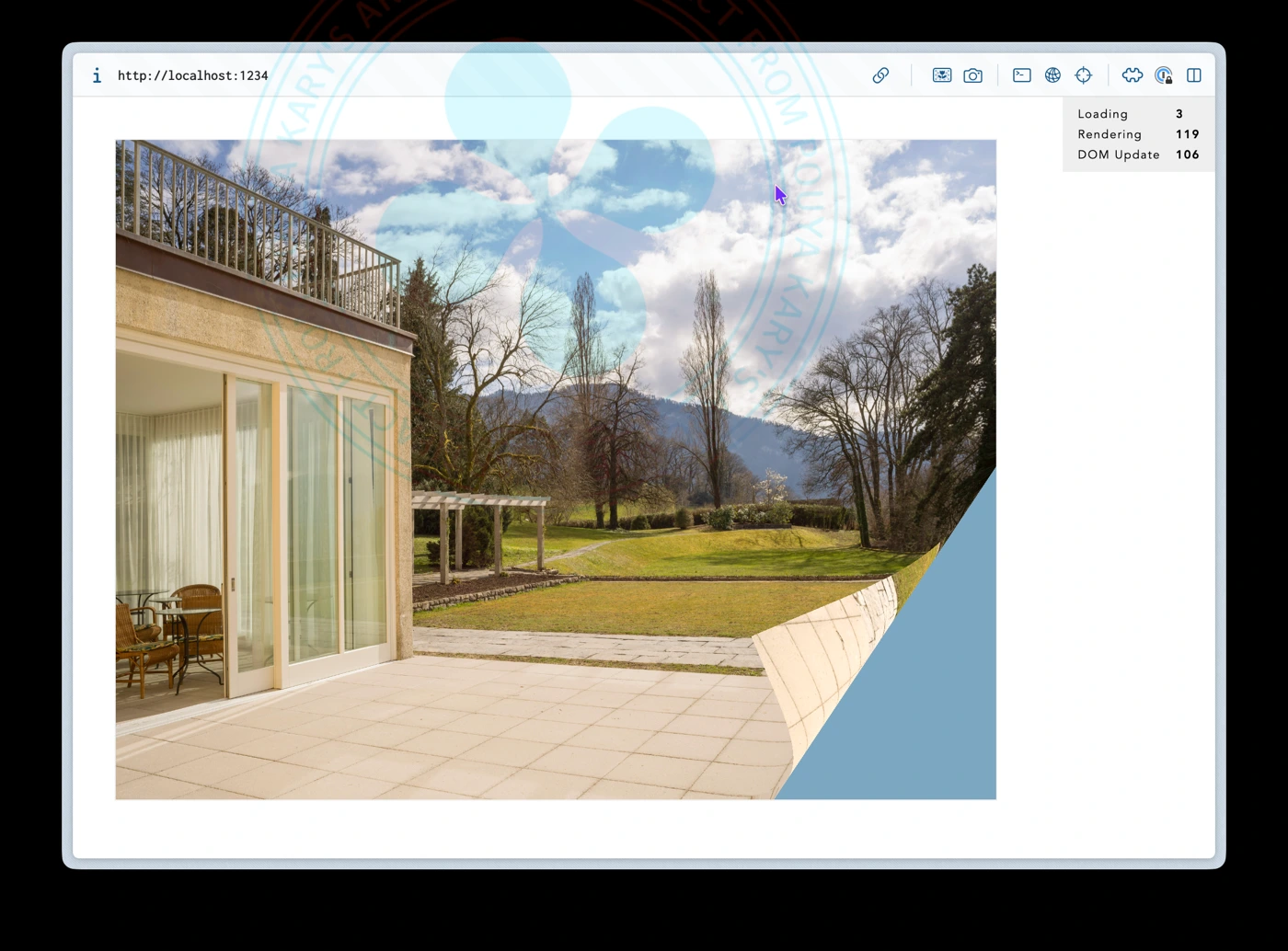
Porting Andrew Hung’s Paper Curl Shader effect to AnnotationsKit. I also tweaked the logic to have brightness adjustment on the curled potion and transparent background. Having this as a tool is a childhood wish come true.
The oppressed, having internalized the image of the oppressor and adopted his guidelines, are fearful of freedom. Freedom would require them to eject this image and replace it with autonomy and responsibility. Freedom is acquired by conquest, not by gift. It must be pursued constantly and responsibly. Freedom is not an ideal located outside of man; nor is it an idea which becomes myth. It is rather the indispensable condition for the quest for human completion.
This rightist and this leftist are both reactionary because, starting from their respectively false views of history, both develop forms of action that negate freedom.
The rightist sectarian differs from his or her leftist counterpart in that the former attempts to domesticate the present so that (he or she hopes) the future will reproduce this domesticated present, while the latter considers the future pre-established—a kind of inevitable fate, fortune, or destiny.
Sectarianism mythicizes and thereby alienates; radicalization criticizes and thereby liberates.
Accordingly, this admittedly tentative work is for radicals. I am certain that Christians and Marxists, though they may disagree with me in part or in whole, will continue reading to the end. But the reader who dogmatically assumes closed, “irrational” positions will reject the dialogue I hope this book will open.
Men and women rarely admit their fear of freedom openly, however, tending rather to camouflage it—sometimes unconsciously—by presenting themselves as defenders of freedom. They give their doubts and misgivings an air of profound sobriety, as befitting custodians of freedom. But they confuse freedom with the maintenance of the status quo; so that if conscientização threatens to place that status quo in question, it thereby seems to constitute a threat to freedom itself.
As Hegel testifies: It is solely by risking life that freedom is obtained; . . . the individual who has not staked his or her life may, no doubt, be recognized as a Person; but he or she has not attained the truth of this recognition as an independent self-consciousness.4
Critical consciousness, they say, is anarchic. Others add that critical consciousness may lead to disorder. Some, however, confess: Why deny it? I was afraid of freedom. I am no longer afraid!
“to speak about love without fear of being called ascientific, if not antiscientific,”
We need to say no to the neoliberal fatalism that we are witnessing at the end of this century, informed by the ethics of the market, an ethics in which a minority makes most profits against the lives of the majority. In other words, those who cannot compete, die. This is a perverse ethics that, in fact, lacks ethics. I insist on saying that I continue to be human . . .
I found comfort in the immeasurable hope that Paulo represented for those of us who are committed to imagine a world, in his own words, that is less ugly, more beautiful, less discriminatory, more democratic, less dehumanizing, and more humane.
One of the basic elements of the relationship between oppressor and oppressed is prescription. Every prescription represents the imposition of one individual’s choice upon another, transforming the consciousness of the person prescribed to into one that conforms with the prescriber’s consciousness.
One question that I have for all those “highly literate” academics who find Giroux’s and Freire’s discourse so difficult to understand is, Why is it that a sixteen-year-old boy and a poor, “semiliterate” woman could so easily understand and connect with the complexity of both Freire and Giroux’s language and ideas, and the academics, who should be the most literate, find the language incomprehensible? I believe that the answer has little to do with language and everything to do with ideology. That is, people often identify with representations that they are either comfortable with or that help deepen their understanding of themselves. The call for language clarity is an ideological issue, not merely a linguistic one.
If students are not able to transform their lived experiences into knowledge and to use the already acquired knowledge as a process to unveil new knowledge, they will never be able to participate rigorously in a dialogue as a process of learning and knowing.
Whereas students in the Third World and other nations struggling with totalitarian regimes would risk their freedom, if not their lives, to read Paulo Freire, in our so-called open societies his work suffers from a more sophisticated form of censorship: omission.
Harvard Graduate School of Education sanctions a graduate course called “Literacy Politics and Policies” without requiring students to read, critique, and analyze the work of Freire. In fact, one can get a doctoral degree from this school, or from others, without ever learning about, much less reading, Paulo Freire. This is tantamount to getting a doctoral degree in Linguistics without ever reading Noam Chomsky.
Even revolution, which transforms a concrete situation of oppression by establishing the process of liberation, must confront this phenomenon.
Almost always, during the initial stage of the struggle, the oppressed, instead of striving for liberation, tend themselves to become oppressors, or “sub-oppressors.” The very structure of their thought has been conditioned by the contradictions of the concrete, existential situation by which they were shaped. Their ideal is to be men; but for them, to be men is to be oppressors. This is their model of humanity. This phenomenon derives from the fact that the oppressed, at a certain moment of their existential experience, adopt an attitude of “adhesion” to the oppressor. Under these circumstances they cannot “consider” him sufficiently clearly to objectivize him—to discover him “outside” themselves.
This, then, is the great humanistic and historical task of the oppressed: to liberate themselves and their oppressors as well.
Because it is a distortion of being more fully human, sooner or later being less human leads the oppressed to struggle against those who made them so. In order for this struggle to have meaning, the oppressed must not, in seeking to regain their humanity (which is a way to create it), become in turn oppressors of the oppressors, but rather restorers of the humanity of both.
Both humanization and dehumanization are possibilities for a person as an uncompleted being conscious of their incompletion.
The pedagogy of the oppressed, the introductory outlines of which are presented in the following pages, is a task for radicals; it cannot be carried out by sectarians.
The radical, committed to human liberation, does not become the prisoner of a “circle of certainty” within which reality is also imprisoned. On the contrary, the more radical the person is, the more fully he or she enters into reality so that, knowing it better, he or she can better transform it.
I suspect this situation has something to do with how computers and appliances have been developed historically. Computers have their roots in academia. When they were sold, they were always advertised as blank slates, general purpose devices, as opportunities to do what you choose to do with them. Not so much for appliances. Those have always had a single purpose. Except they kept getting complicated, until they entered a level of complexity where they needed to incorporate computers in order to perform their function. But they kept being manufactured as appliances, with only a handful of people being expected or allowed to exercise control over them. Incorporating computers didn’t change the culture around them.
This is just a guess and I don’t know how correct it is. For example Apple was always a computer manufacturer, but they are making computers now as if those were appliances.