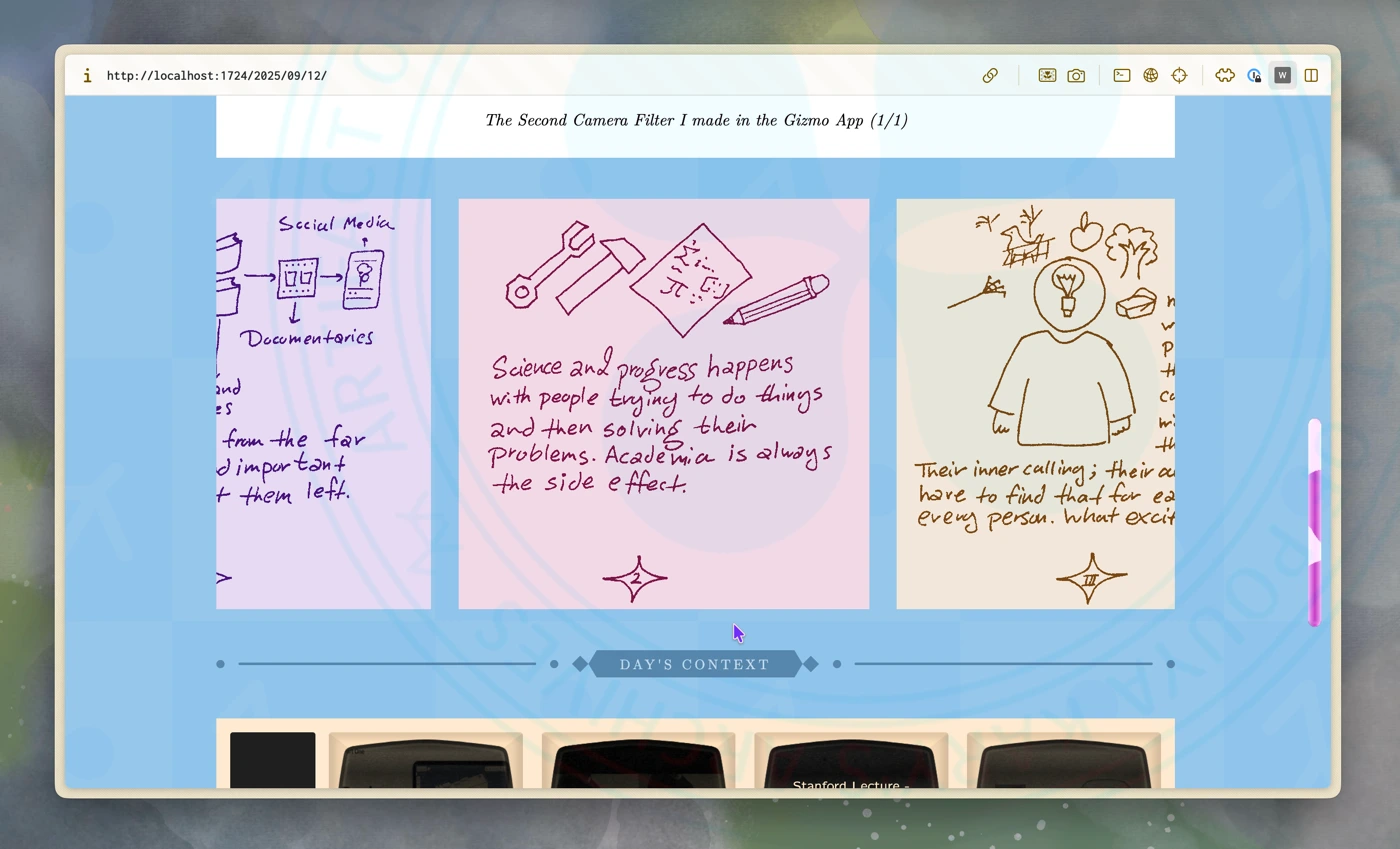
And with all that, Archive is also now able to read .topolets zips and load them into the pages. Making them work with the rest of Archive’s look is something I have no idea how to achieve.
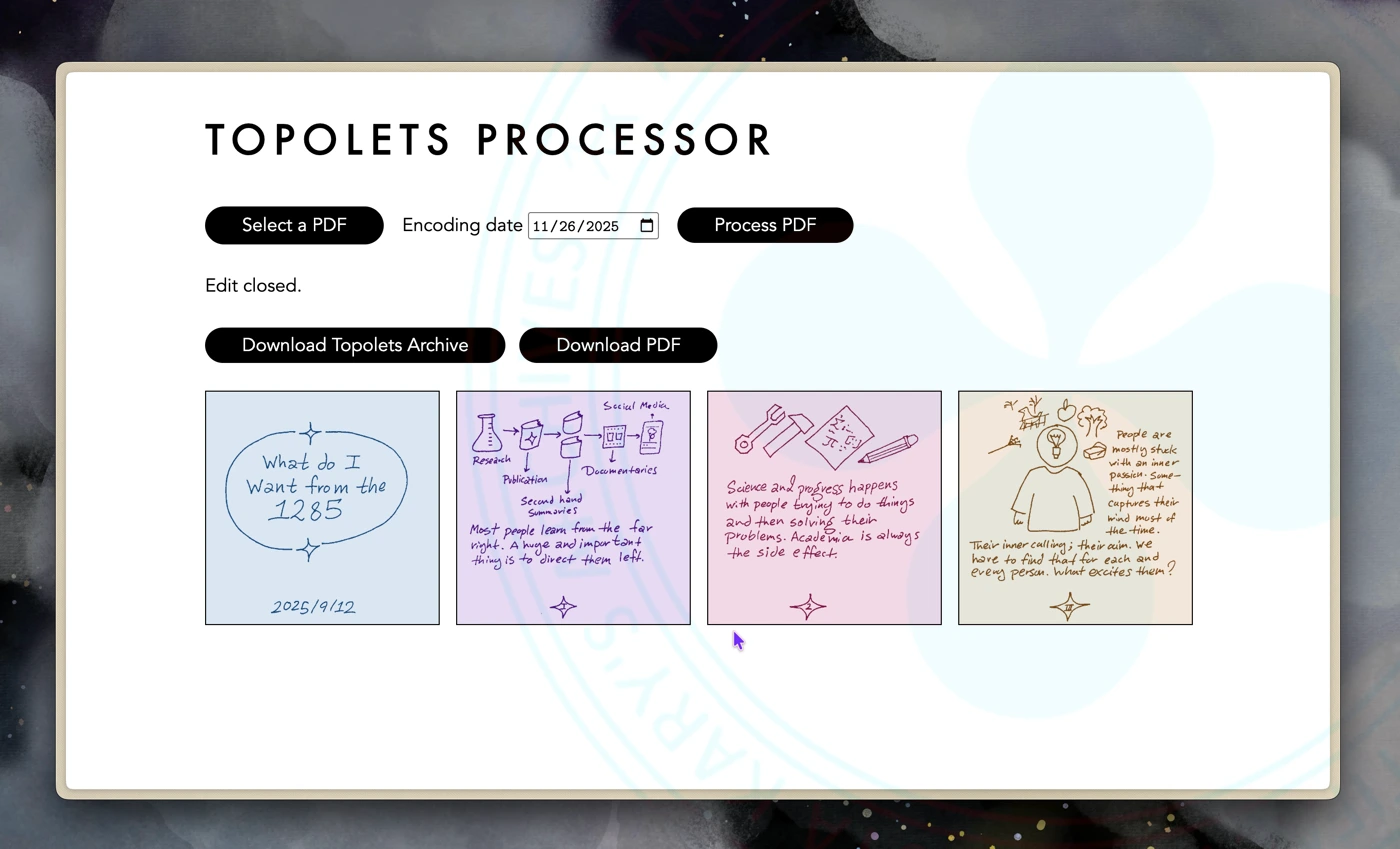
I modified the algorithm to have background color and hue change on the colors. Same HSL Hue means beautiful coherence.
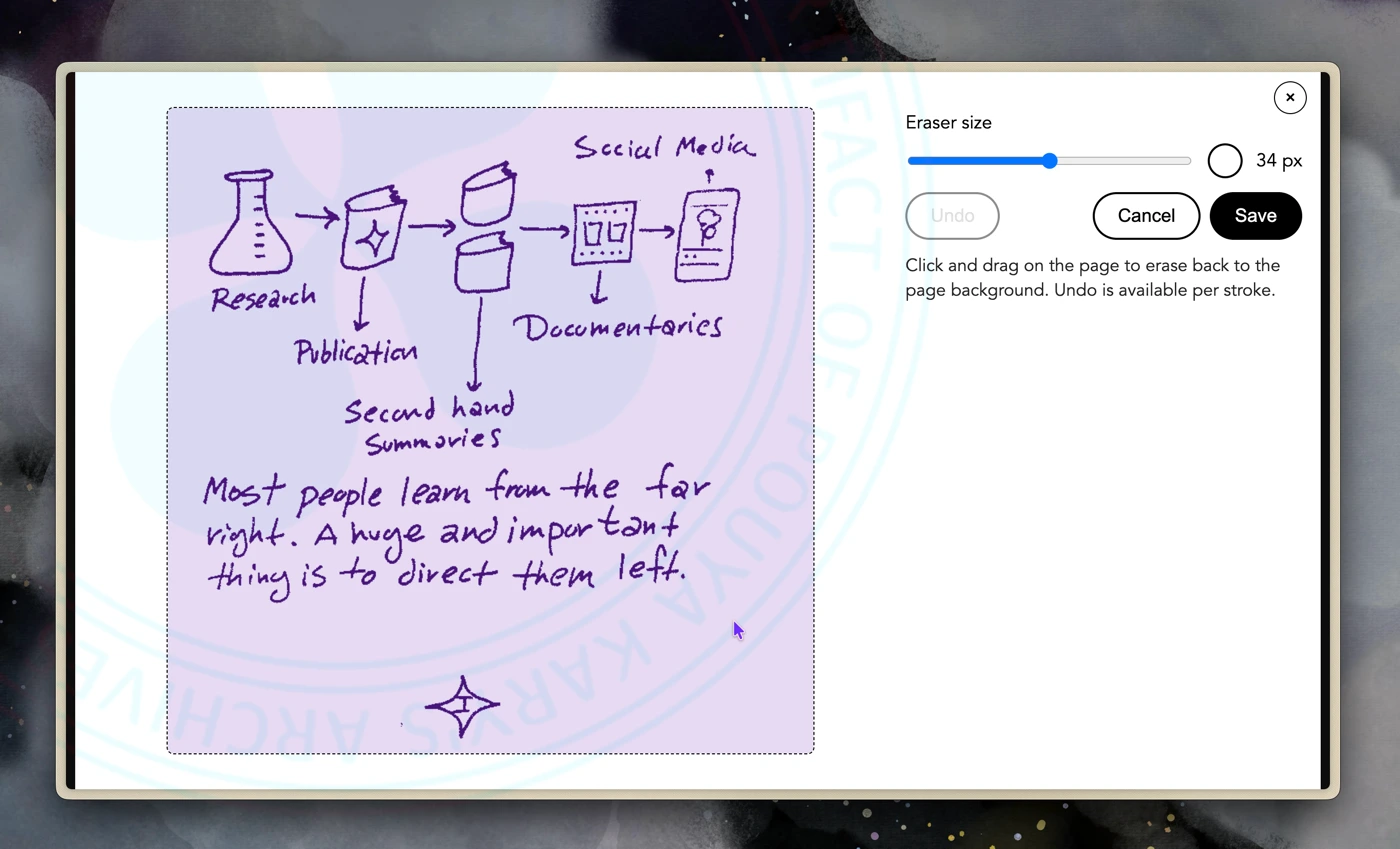
Topolets Processor now has a tool to erase from the pictures. This made sure I could get rid of the dates and scan errors. Now they look flawless.
There are some things that I wish to connect.
Me; Gottfried Leibniz ; and Maestro Wolfram wish to unify languages. That is about the Leibniz’s universal calculus or the idea of Wolfram language and well; my Meta Notation
Maestro Kay and the people of XEROX PARC LRG wished to have a fully live system where you could modify the system as it was running.
Maestro Nelson and Maestro Engelbart thought in multi-dimensional notations and data. Hyper documents and jumps and transpositions.
People at Apple had a vision of beauty. that is also shared with people like the Maestro Knuth .
Maestro Stallman saw how things like systems can be very freedom important. He cared much about the freedom and the good for society
People like Maestro McLuhan and Guy Debord and Jean Baudrillard and Postman knew the power and effects of Media and the Mediums. They warned us greatly
Maestro Girba saw how using custom views on data structures can be a hugely different way of creating systems. The model of Glamorous Toolkit was a life changer.
Maestro Victor showed the world what it means to have reactive and live instant feedback systems and then he went on to dismiss the idea of notations fully in order to introduce something far greater. Interestingly enough he did not stop there and kept pushing till he introduced the idea of RealTalk and the Dynamicland. A system that is not a product but a practice. something that does not simulate but augments the space with computation like electricity.
It is a freeing thing to not have to do any setup in advance of just running your program which can describe whole distributed systems. Rather than having to do a bunch of work “out of band” to ensure your compute resources are ready to run the code they need (like building containers, uploading a container image or jarfile somewhere, or whatever else), in the Unison model of distributed computing, you just run the code and whatever dependencies are missing can be sync’d on the fly.
Dependency conflicts are, fundamentally, due to different definitions “competing” for the same names. But why do we care if two different definitions use the same name? We shouldn’t. The limitation only arises because definitions are referenced by name. In Unison, definitions are referenced by hash (and the names are just separately stored metadata), so dependency conflicts and the diamond dependency problem are just not a thing.
Moreover, [