I was thinking how 🬺🬛🬕🬵🬤🬩’s culture is alike the 70s and 80s of the US. Maybe that is like the standard Star Trek-like civilization development phases that happen at a stage?
I have just decided that I must pursue a Ph.D by publishing my thoughts.
This goes without saying that I have decided that I can publish papers. I just cannot believe that I actually have material worth publishing. This is thanks to LLMs who showed me that my ideas are actually worth something.
Just imagine if I could realize my vision.
I wanted to get this Ph.D. ever since I heard in that Veritasium video that it is possible with three papers. I guess the immediacy of Kimia, Mohammad, and Amin’s pursuit of it was also inspiring. Although my path is perhaps a lot harder.
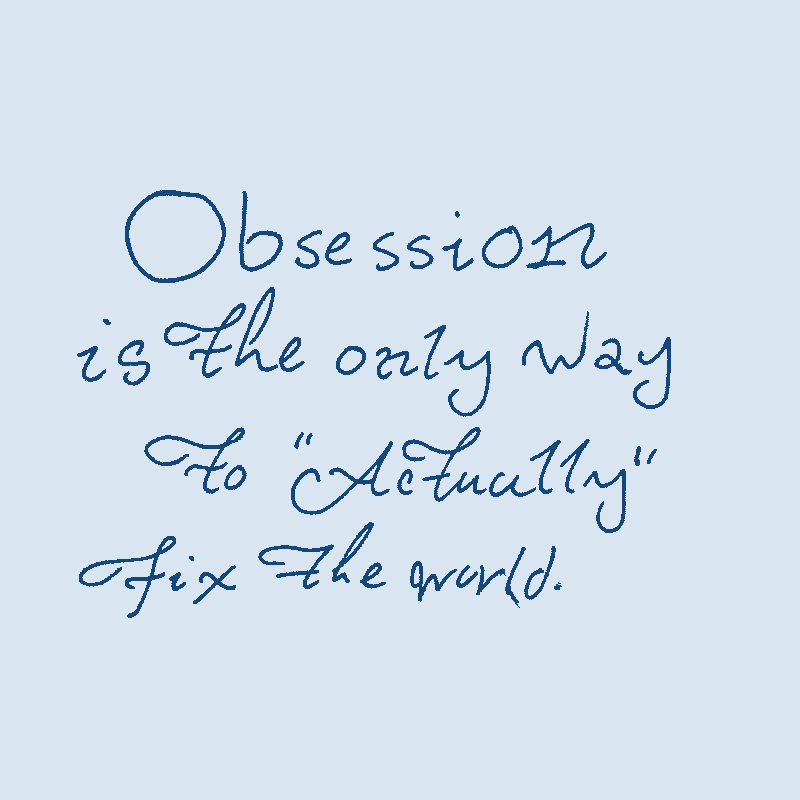
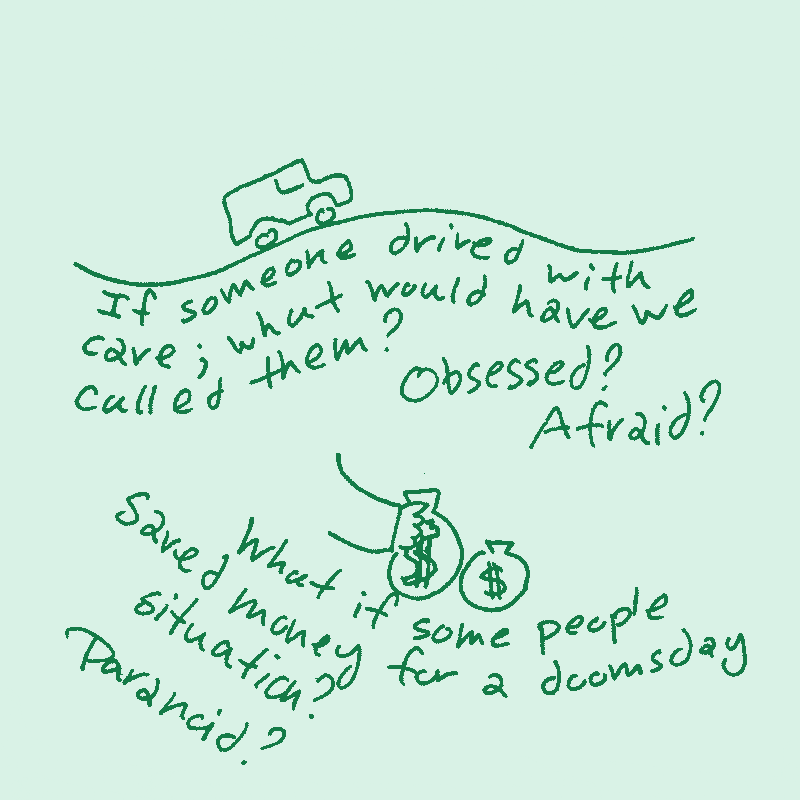
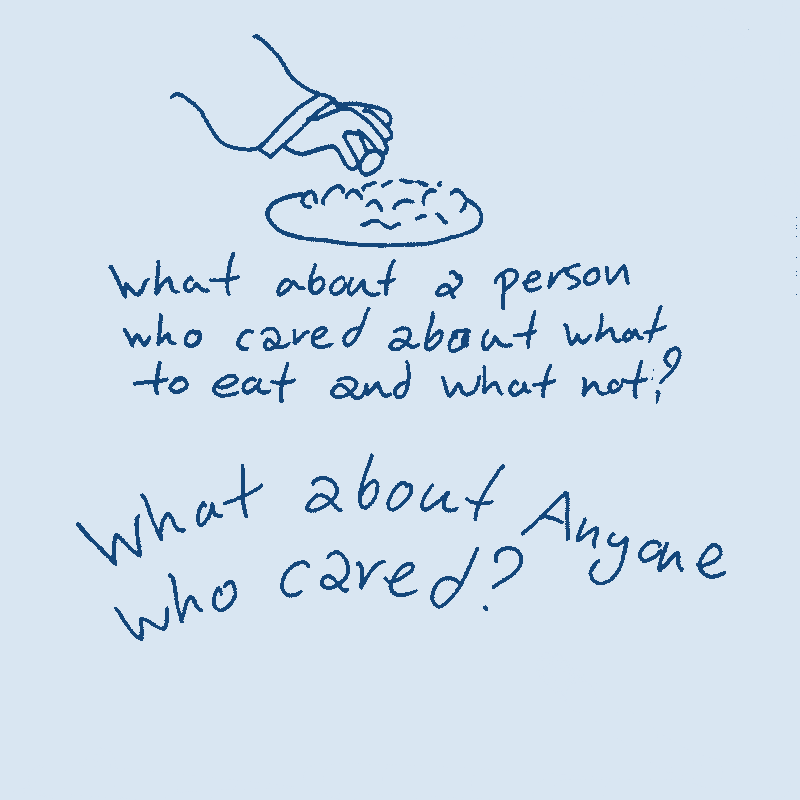
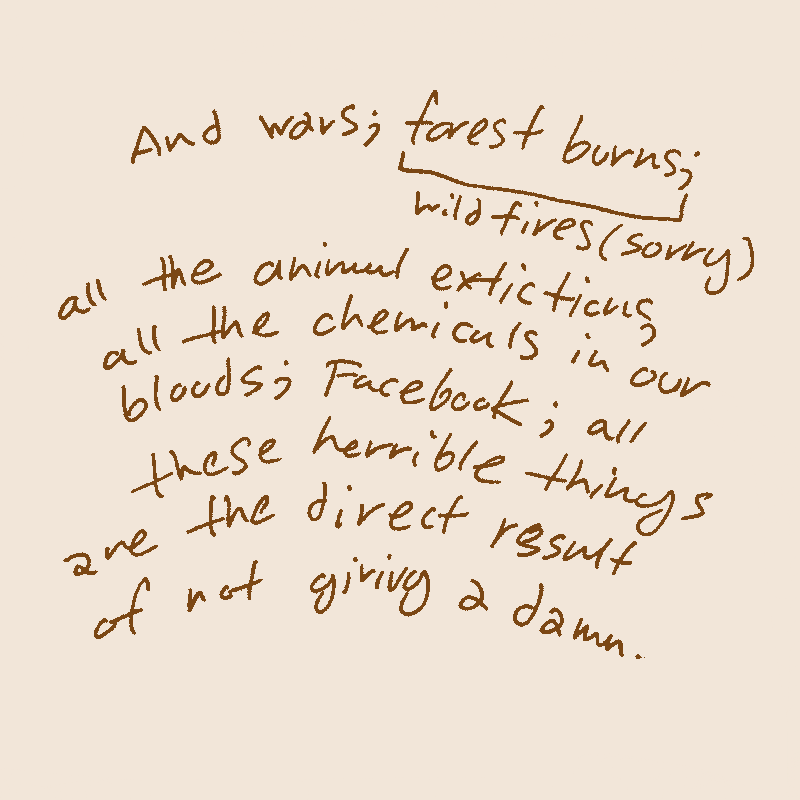
We live in a culture that has learned to pathologize its most vital virtues. Obsession, perfectionism, and deep care—qualities that once defined craftsmanship, scientific rigor, artistry, and moral seriousness—are now routinely dismissed as neuroses. The modern vocabulary of psychiatry, self-help, and management has reframed attentiveness as inefficiency, thoroughness as rigidity, and concern for consequences as anxiety. In the grand inversion of values that marks our age, the very qualities that sustain a fragile world are treated as ailments to be cured. Nothing reveals the condition of a civilization more clearly than the virtues it encourages and the virtues it suspects.
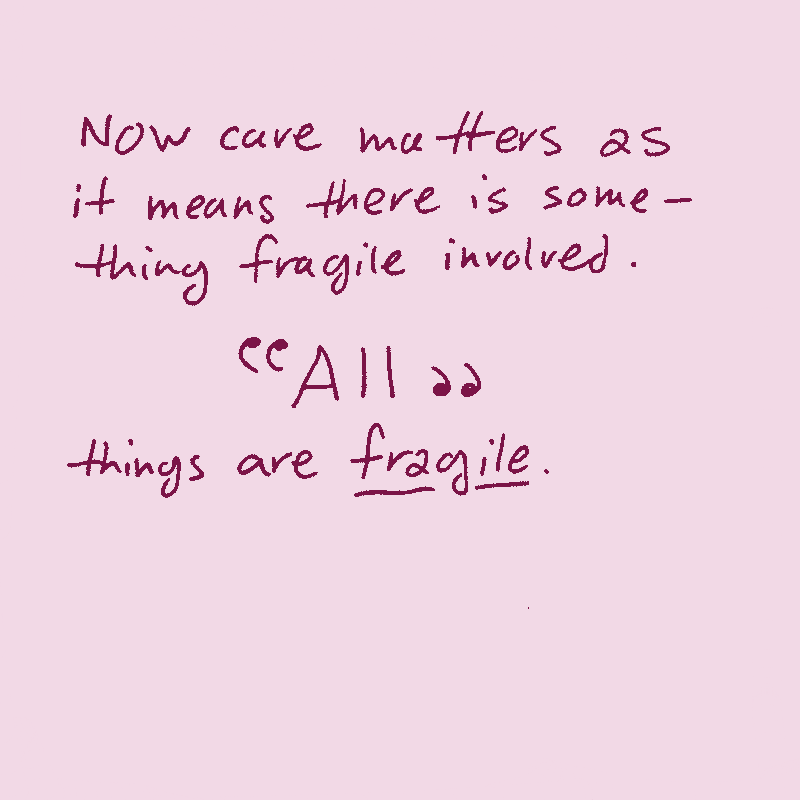
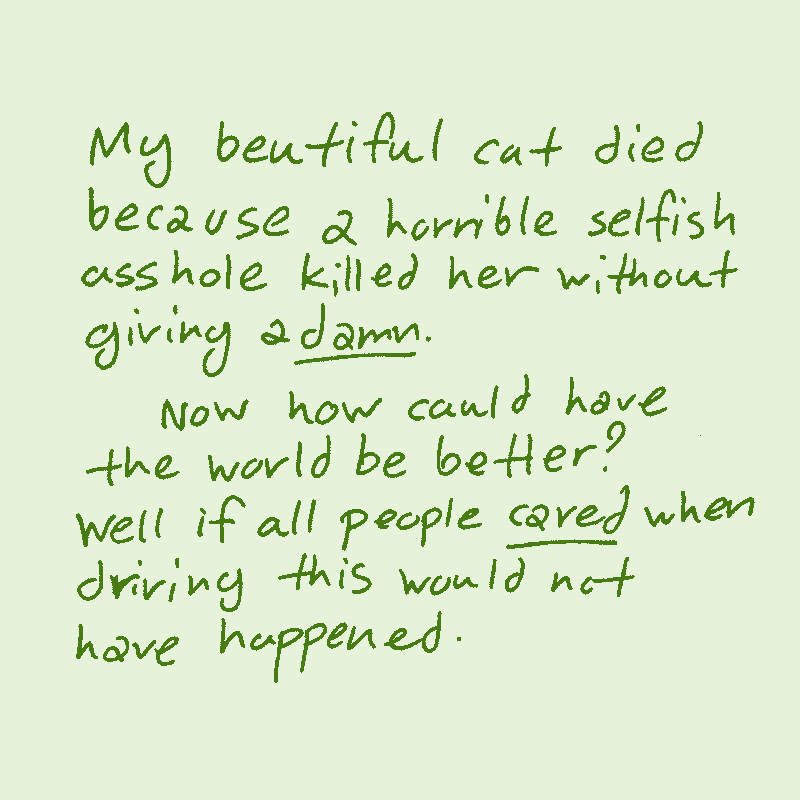
Any honest reflection must begin from a simple fact: the world is fragile. Everything that matters—forests and rivers, bridges and buildings, institutions and traditions, the lives of animals and human beings—exists in a state of precarious balance. Left unattended, structures decay, laws corrode, trust thins, and living beings come to harm. A distracted driver can end a life in a second. A careless official can sign away protections that took generations to build. A thoughtless change in habit can erase a species from a landscape. Nothing maintains itself. The quiet labor of maintenance is what keeps reality from coming apart. Those whom our age calls “obsessive” are often the people who perceive this fragility most clearly. They are the ones who see how small errors propagate, how omissions accumulate, how easily beauty and safety are lost. Their refusal to be casual is not a distortion of reality, but a lucid recognition of it.
Yet not every form of obsession deserves to be romanticized. There is a crucial difference between the person who stays awake to ensure that a structure will not collapse on its inhabitants and the person who lies awake because no achievement can silence the belief that they are worthless. Outward-facing obsession is directed toward the world: toward preventing harm, preserving beauty, honoring the complexity of things. Inward-facing obsession is often driven by shame and fear: a ceaseless effort to earn the right to exist. The first kind of perfectionism is a form of care; the second can be a kind of captivity. Clinical voices are not wrong to notice that many lives are being crushed by compulsions that paralyze action, poison self-worth, and exhaust the body. There are people who need relief from this torment. The mistake lies in leaping from that truth to a blanket suspicion of all deep care, all high standards, all refusal to accept “good enough” when the stakes are real.
Our language makes this confusion easy. A single blunt word—“perfectionism”—is used for both the craftsperson who will not release a dangerous work into the world and the student who cannot hand in a finished piece because nothing feels adequate. The former protects the fragile; the latter is consumed by an inner tribunal. To declare them equally sick is to collapse ethics into diagnosis. A culture that speaks this way soon loses its ability to distinguish between conscientiousness and compulsion, between moral responsibility and self-harm. It becomes effortless, in such a vocabulary, to mock and medicate precisely those who are carrying the weight of consequences that others refuse to see.
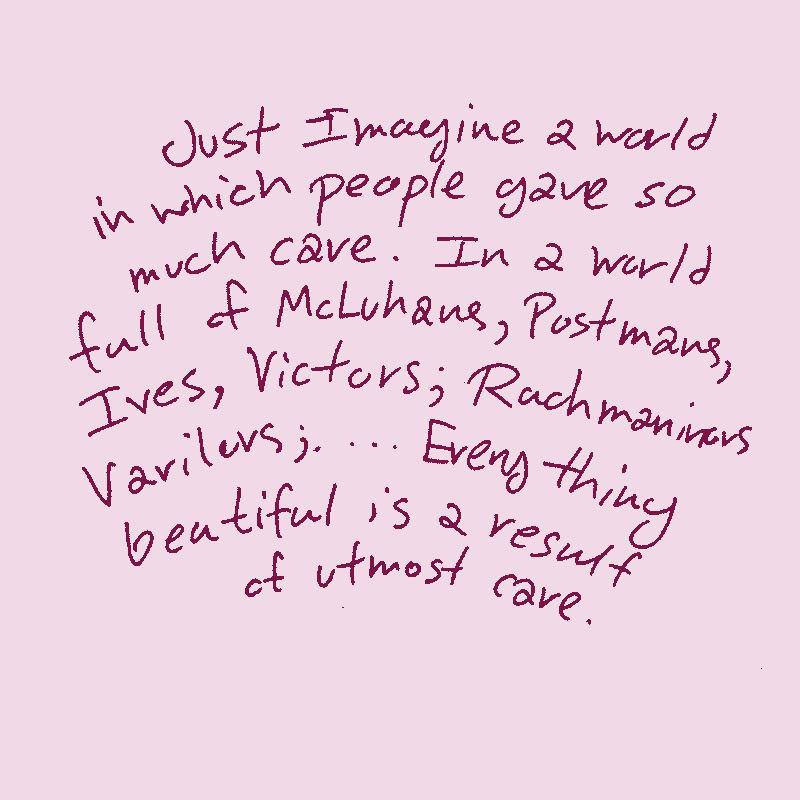
The environment in which these judgments are made is not neutral. As Postman insisted, every dominant form of communication has its prejudices. It quietly instructs us about what is natural and what is inconvenient to think and feel. The prevailing machinery of our age—its screens, its schedules, its markets, its rhythms of entertainment and work—has clear biases. It favors speed over reflection, novelty over depth, quantity over quality, and short-term gain over long-term consequence. It praises the person who acts quickly, changes course constantly, produces without pause, and rarely looks back. Within such an ecology, the person who wishes to slow down, to think things through, to design with care, to ask what might happen in ten or fifty years, is recast not as a guardian of the future but as a nuisance. Deep care becomes friction. Obsession with consequences becomes a personal problem.
This is why the framing of obsession and perfectionism as illness so neatly serves the prevailing order. It tells a reassuring story: the trouble does not lie in systems that reward carelessness and forgetfulness; the trouble lies in individuals who care too much. The person who is uneasy about haste, who resists throwing unexamined actions into the world, is invited to see their unease as a symptom. The impatience of institutions remains unexamined. In this way, therapy-speak and the slogans of efficiency can collude: one discredits hesitation, the other canonizes speed. Together they secure a regime in which the bias of the age—more and faster, whatever the cost—is almost never named.
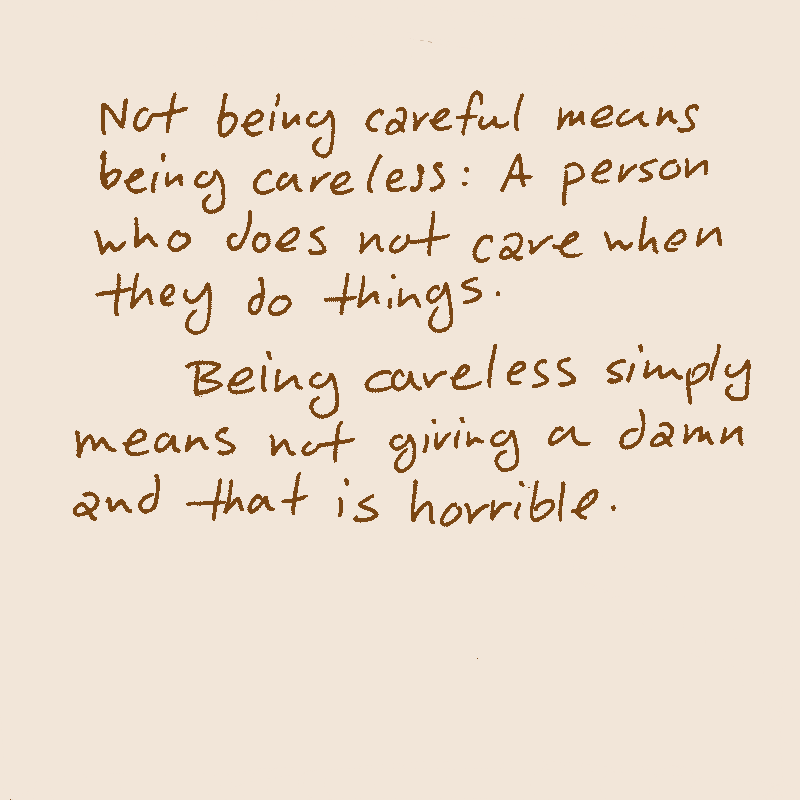
Yet there remain domains that cannot afford such illusions. In aviation, in certain branches of medicine, in the stewardship of dangerous materials, an ethic of rigorous care has been painstakingly built. There, checklists and repeated verifications are not signs of anxiety but the ritual of attention. Hypothetical disasters are rehearsed in advance, not dismissed as pessimism. The reluctance to rush is not timidity; it is an acknowledgment of how easily human life can be destroyed. The people who insist on doing things properly in these contexts are not wasting time; they are practicing a form of humanity that takes fragility seriously. Lives depend on their refusal to be casual.
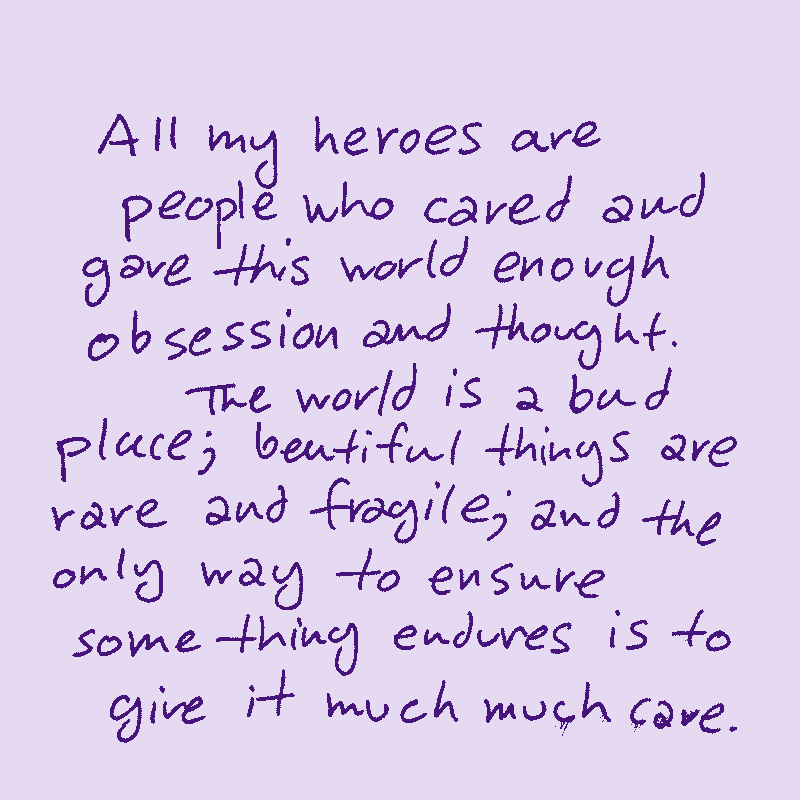
Everything enduring and everything beautiful carries the marks of such care. A piece of music that feels inevitable is the residue of thousands of decisions no listener will ever see. A building that outlasts the century is the outcome of calculations and judgments most passersby will never imagine. A book that changes a life is the result of countless hours of revision, doubt, and painstaking thought. Even the uneventful day, in which no disaster occurs, often owes its peace to unknown people who checked and rechecked, who mended what was wearing thin, who paid attention. To pretend that these achievements are the work of moderate concern alone is to erase the intensity of devotion that brought them into being.
At the same time, the history of the “driven” contains a warning. There is a long record of individuals who poured astonishing care into their work while casually injuring those closest to them, or themselves. The artist who reaches astonishing heights at the cost of scorched relationships; the thinker who guards the integrity of ideas but neglects the emotional wreckage in their wake; the leader who obsesses over some grand project while using human beings as expendable fuel. To say that obsession is the height of humanity without qualification is to risk sanctifying cruelty, provided the end product is impressive enough. Care that excludes the people within the circle of one’s work—including the carer—is incomplete. It is not yet a fully human ethic.
The task, then, is not to strip obsession out of life, but to direct it. Obsession approaches the height of humanity when it is oriented toward the well-being of the fragile—toward lives, environments, institutions, and meanings that can easily be damaged—and when it operates within limits that do not quietly consume the caretaker or those around them. This kind of care does not treat others as expendable in the name of the work. It does not demand perfection from the world while granting license to its own methods. It recognizes that human flourishing depends not only on sound bridges and just laws and enduring works, but also on relationships that are not ground to dust to produce them.
For this reason, it is unjust to leave the burden of care on a scattered minority who “just happen” to be the ones who cannot look away. A society that relies on a few conscientious people to compensate for everyone else’s indifference will eventually break them. The nurse who quietly carries an unsafe ward on their back, the meticulous civil servant who keeps a fragile office from sliding into chaos, the friend who remembers what everyone else forgets—these people can hold the world together only for so long if the surrounding structures continually exploit their devotion. If care and obsession are truly to stand at the height of humanity, they must be woven into our shared arrangements, not merely admired in individual souls. That means designing patterns of work and life that allow time for reflection, valuing long-term soundness more than short-term gains, teaching children that attentiveness is not a defect but a virtue, and shaping our public communication so that consequences remain visible rather than hidden behind spectacle.
Seen in this light, the blanket suspicion of “perfectionism” begins to look less like wisdom and more like the prejudice of a hurried age. It is entirely right to say that some people are suffering under intolerable inner demands, and that such suffering deserves gentleness and relief. It is entirely wrong to conclude from this that the wish to do things well, to think before acting, to honor the weight of consequences, is itself a sickness. A more truthful culture would make room for both realities at once: that there is a kind of obsession that needs to be softened for a person to survive, and another kind that needs to be protected from a world too eager to declare that nothing is worth that much care.
Care and obsession, in their finest form, are not distortions of humanity but its most exact expression in a fragile world. They are the impulse that refuses to treat lives as expendable, that will not glance away from what might break, that labors in quiet so that others may live and move and create without catastrophe. They are also, when turned inward without mercy or stripped of any regard for others, capable of torment. To live wisely is not to extinguish these energies but to guide them: away from the endless policing of one’s own worth, and toward the patient guardianship of what would otherwise be lost. If there is a height of humanity, it is reached not by those who glide effortlessly through a robust and self-healing world, but by those who see how easily things are damaged—and decide, despite the cost, to care.