Sometimes we think so much and build on that thinking so much that we never understand where we have reached and how much we have changed. Just like therapy. Our obvious becomes others’ wonders.
There is this thing about making code, and it is that you always have a version better that what is in “production”, but also it is half baked. So almost always you have to use a bad version, and this is why you never believe your work is done. It is the comparison.
I think Farsi has a subculture/mini-language for ranting. And I was thinking about how structurally it locks people down as their grammar dictates much of the navigable world. This locks people down to self-destruction.
There is so many quotes I can use for 1285 ’s website. It is driving me crazy.
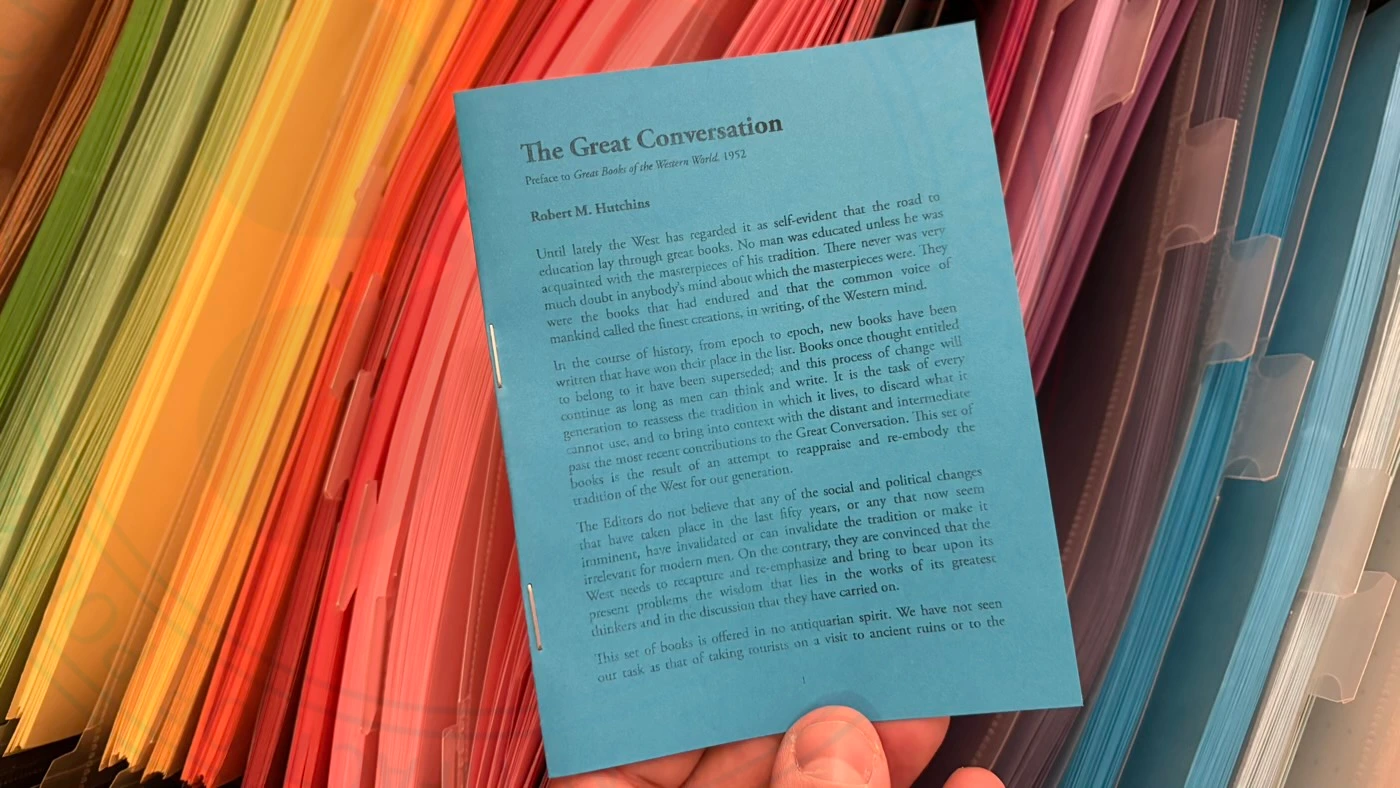
Navigating Maestro Victor ’s website today (as always), I found the booklets and printed four of them. My printer is not in good shape, and I have to buy a large stapler.
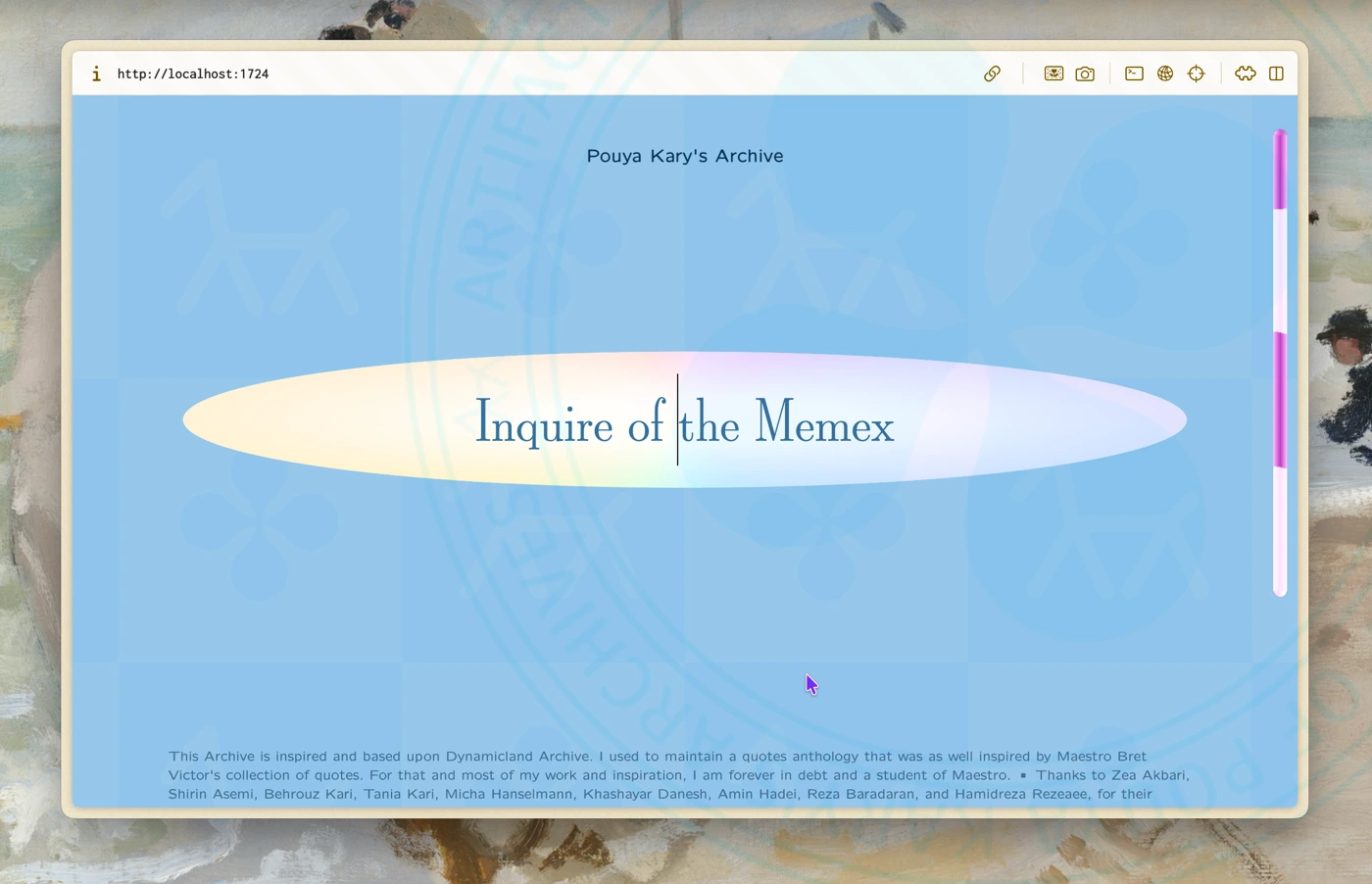
I have almost perfected the search bar of the Archive. Both Dark and Light versions are now awesome. (1/2)
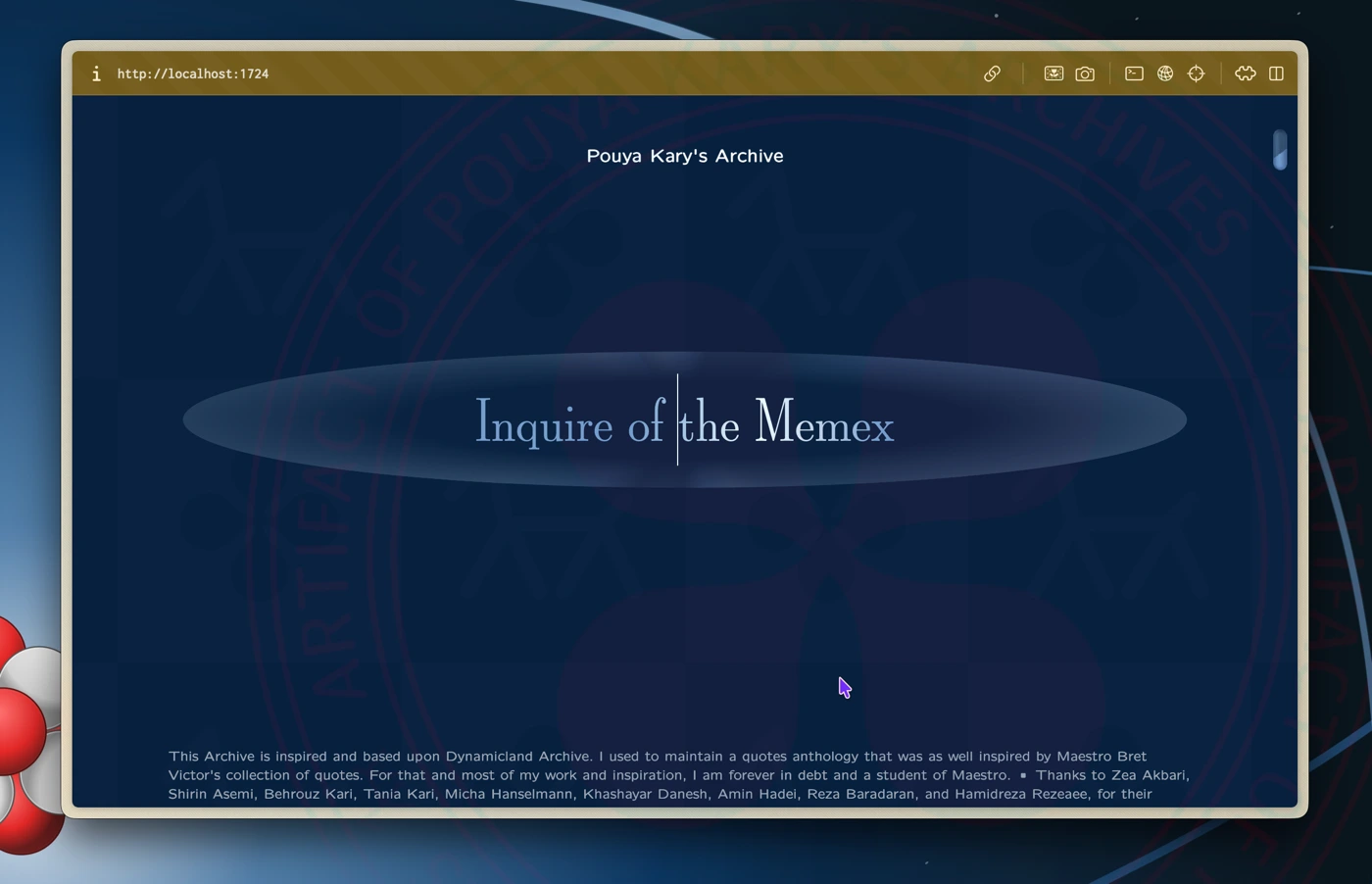
Archive: Almost Perfecting the Search Bar (2/2)
I guess much of what is happening is a form of compartmentalization. Take civilization. Every form of activity is commoditized today. One cannot simply eat in a normal place anymore. It has to be a restaurant.
I have seen what happened to iOS and other operating systems. The game used to be that one could do whatever was possible with the operating system itself — and then iOS came in. All apps became fully isolated islands, unable to do anything outside themselves.
Then the magical thing happened. One by one, the features of iOS were opened up to developers. From “not possible” to “heavily guarded,” it slowly walked backwards. People complained, and bridges were built. This is important, because it reached a point where the system was still not open, but people no longer complained.
Now, why do I talk about operating systems here? Think about all of humanity, and everything that has been happening in it. It is going the other way around. Instead of opening up, all things are being compartmentalized and mechanized. We ordered a few times from a kebab place we recently found, and each time they sent something different to us. The vegetables changed, the additions mutated. And what got me thinking was that this is no longer the case, almost anywhere. Every single place has a strict, professional menu that — like a mathematically pure function — returns the same thing every time. You can’t go to a place and say “put more of this and less of that” anymore.
Look everywhere, and that is the case. Imagine editing a website with pure web technologies today. That is practically impossible. You must use the indirection of virtual DOM tools like React. Have something to publish? Outside academia, it has no place (I actually like this one, since I value peer review). But still. It is strange that we are systematically compartmentalizing everything, giving it a mechanical machinery and, by all means, removing all of the human touch.
And I guess our path will end up where iOS is today. Everything (and I mean everything) being mechanized, with protocols, with compartmentalization. And we — all docile people — accepting it happily. Just as people think that, to have fun, they should use a consumer path provided by capitalism: a club; a trip; shopping; cinema; an escape room; … a defined experience in the spectacle.
I guess much of what that is happening is a form of compartmentalization. Take civilization. Any form of any activity is commodity today. One can not eat in a normal place these days. It has to be a restaurant.
I have seen what happened to iOS and other operating systems. The game used to be that one could do whatever that is possible with your operating system and then iOS came in. All apps being fully isolated islands not able to do anything.
Then the magical thing happened. One by one the features of iOS were opened up to developers. From not being possible; to heavily guarded. So it worked all the way backwards. People complained and bridges were made. This is important as it reached a place where the system was not open but people no longer complained.
Now why do I talk about operating systems here? Think about all of humanity and everything that has been happening in it. It is going the other way around. Instead of opening up; all things are being compartmentalized; and mechanized. We ordered a few times from a Kebab place we recently found and each time they sent something different to us. So vegetables get changed; some additions mutated. And what got me thinking was that this no longer is the case. Every single place has a professional strict menu that like a mathematical pure function returns the same thing every time. You can’t go to a place and say “put more of this and less of that” anymore.
Look everywhere and that is the case. Imagine editing a website with pure web tech today. That is not possible. You must use the indirect Virtual DOM tools like react.
have something to publish? Out of Academia it has no place (I actually like this one since I value peer review). But still. It is strange that we are systematically compartmentalizing everything. Giving them a mechanical machinery and by all means removing all of the human touch.
And I guess our path will end up where iOS is today. All (and I mean all) being machinised. with protocol; with compartmentalization. And we be all docile people taking it with happiness. Just as people think to have fun they should use a consumer path provided by capitalism: A club; a trip; shopping; cinema; escape room; a trip; … a form of defined experience in the spectacle.
We do not need money primarily to satisfy our present needs. A trivial observation: if we really satisfied all our present needs, we would have no money left. So money does not essentially relate to the present.
We need money in order to be reassured toward the future—to be reassured in the present with regard to our indistinct, unknown, unknowable future, and particularly with regard to future needs. We do not know what will happen in the future; we do not know what we will need tomorrow. But we [
The only thing we know is that if we have money, we will be able to satisfy these needs when they arise. If we have money, we will be able to pay; if we can pay, we can satisfy what we need.
Therefore, we need to have money—and money is never enough. Present needs can in principle be finite and theoretically satisfiable, but future needs are never fully satisfiable, because the future is unknown. That is why money is never enough: we always need more, because we cannot know our future needs.
From a sociological point of view, the social use of money has first of all this meaning: a kind of non-specific reassurance against the indeterminacy of the future. It relies on the indeterminacy of money itself. Money, as we know, has no use-value of its own; it stands for an unspecified range of possible uses. We can use money for almost everything that can be bought. Money stands for all these possible needs. It stands for future possibilities; that is why we need money now, referring to the future.