There is something about Douglas Adams ’ writing that makes it flawless. I cannot count how many times I have randomly opened up Hitchhiker’s Guide to the Galaxy only to read a few pages and have a cup of delight for the day. Listening to Stephen Fry’s reading of it has really kept me going in these days of horrible horrible atmosphere…
I have been thinking about this for a whole while now; We know that the brain works with neural networks; this is also a very nice architecture to understand mathematically:
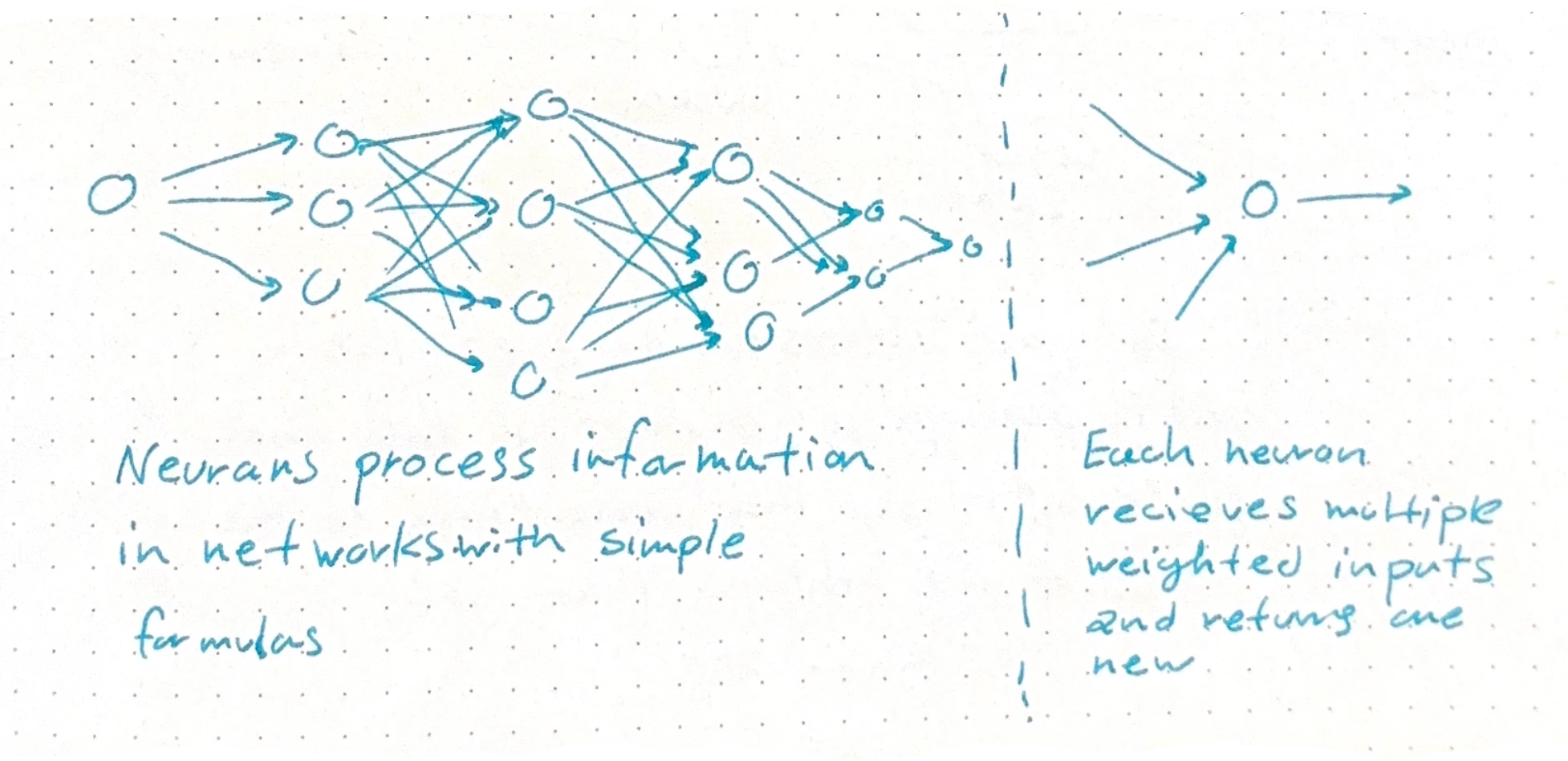
Once you have that; the embedding spaces start show we recognize that things have vector coordinates within our minds and we must have a “weighted world view” Given that and the understanding of our architecture; we may go to say that our mind has a graph of things in it. I imagine your understanding of foods for example.
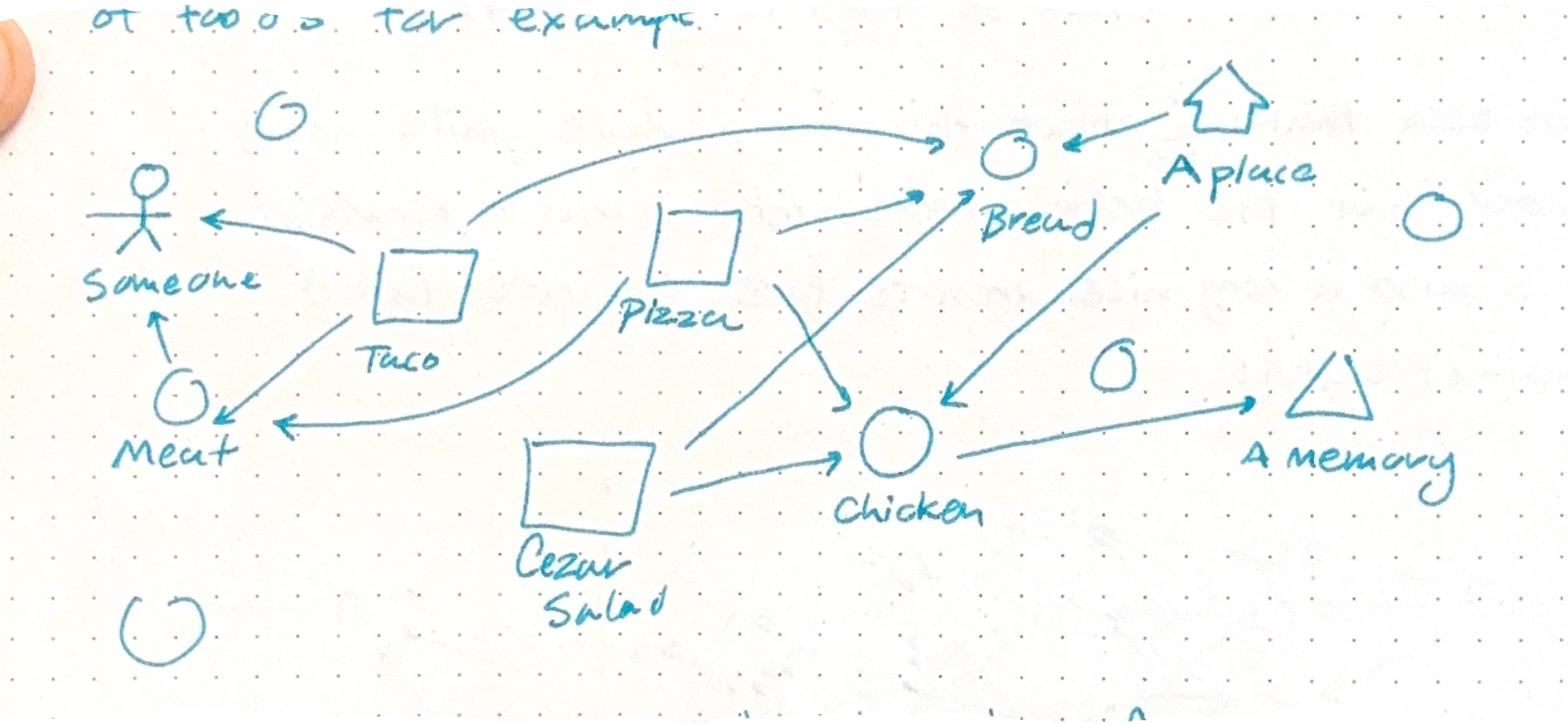
In your understanding of the world is perhaps a graph of all the food you " know " of and their connections to the rest of the things that you “Know Of”. If we think about education then, we are left with an interesting understanding that our media and our educational systems are both tools for transmitting graphs.
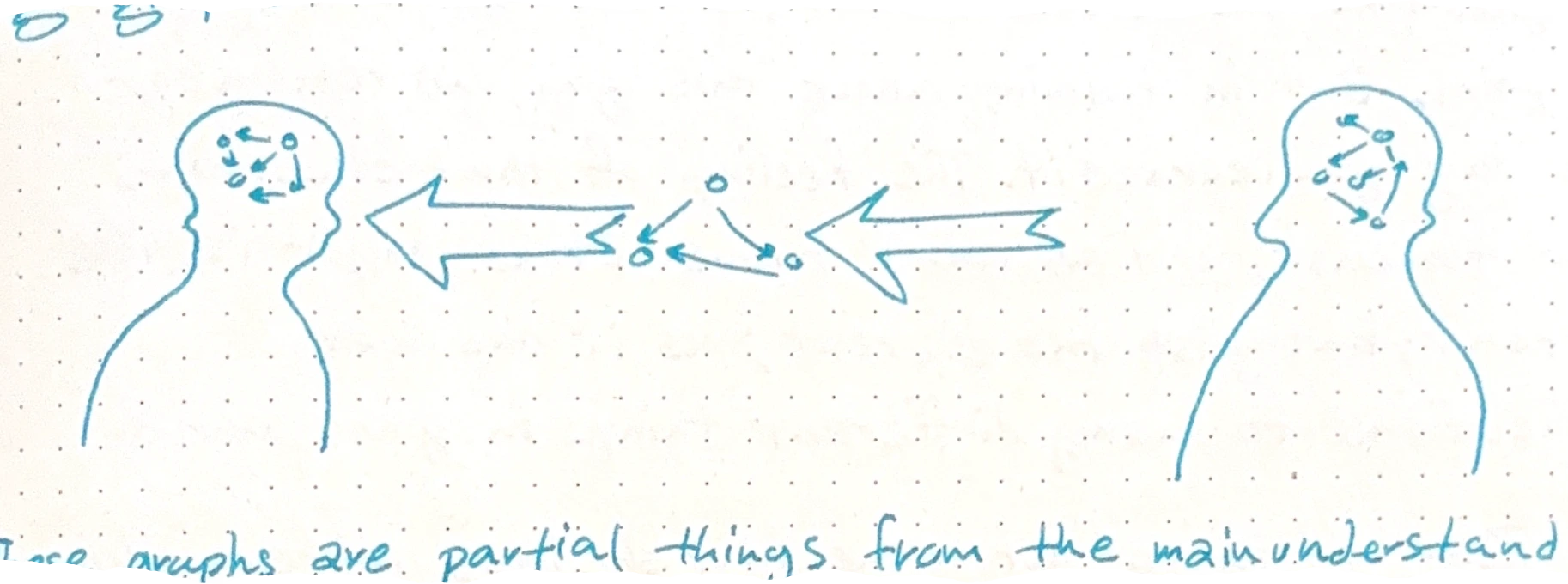
These graphs are partial things from the main understandings of someone else. A sub-graph to be precise.
To me; these graphs are in more human terms. We can not describe them perfectly and we always fail to actually transmit them to one other. It is perhaps because of the weights of different things to different people. That is perhaps a contributing reason why abstraction fails to capture our inner worlds. That is perhaps the reason we find it so hard to sometimes understand what others say and so on and so forth.
Now given this; it becomes more understandable that our forms of communication are basically encodings of those graphs. For example. Think about the phrase a2+b2=c2 It gives you the idea of a triangle. And you surely get the point. But in talking about this you will remember the day you learned it. The feeling of that classroom; your teacher; and all that follows. It no longer is the content; but also the context; as it has many connections to many different things in your world.
Zea had pointed out to me that she loves writers who bring a scene to life and in the best ways possible. This has been something that I had not examined myself before. That basically great writers ( Zea ’s example being Proust) bring the context to life as well. Their writing has more information and that is exactly why they work. Now take more interesting things to the account. For example; The video medium is still a very curated one. Shots are heavily cropped and edited and cut to mostly lengths of seconds and therefore they have much much more context while at the same time have even more curation.
This is again (and very much) graph transformation while also having lots and lots of more weights; and edges in their system. This is somewhat a higher band width form of sub-graph transfer .
Now if we think about the transfer as the essence of communication; then the question would be this: what makes a better medium? The recent TV Series from Apple; “Pluribus” makes it plainly visible that the ultimate medium is the unity — the state in which all minds are connected. I would argue that given that; the whole essence of humanity can be looked at as communication and without it (as in Pluribus) nothing makes any sense any longer. Yet; lets pause and think about where good communication can be?
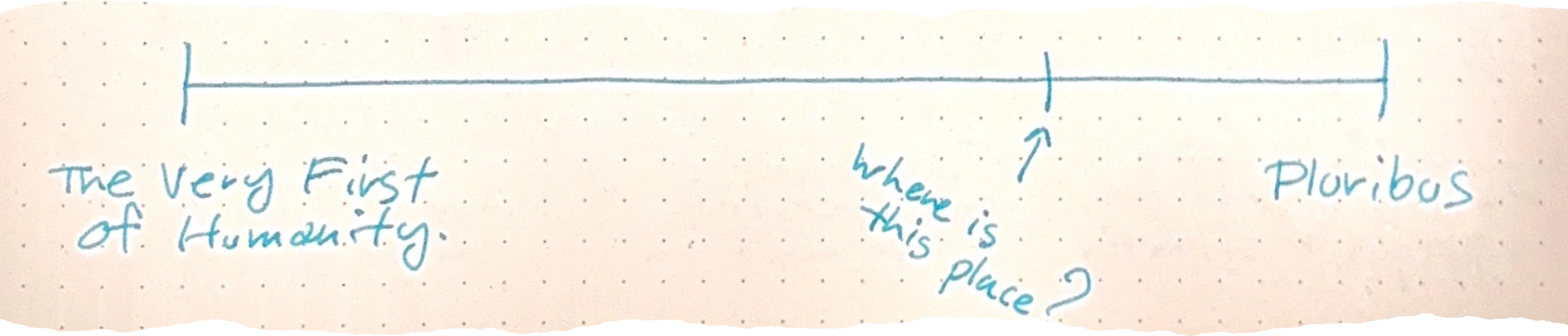
I think here the beautiful part would be a medium that given the mechanics of this world transfers the most of the graph and its connections per unit of time.
But then the question asks us about the technology and not merley the ways to measure the results. If we are to do so then our medium must transfer three main ingredients:
NODES — then — EDGES — then — WEIGHTS
I think one of the best ways of telling stories is to first establish the situation and the environment and then begin navigating the characters in the story and have the listener move them in their own version of that reality
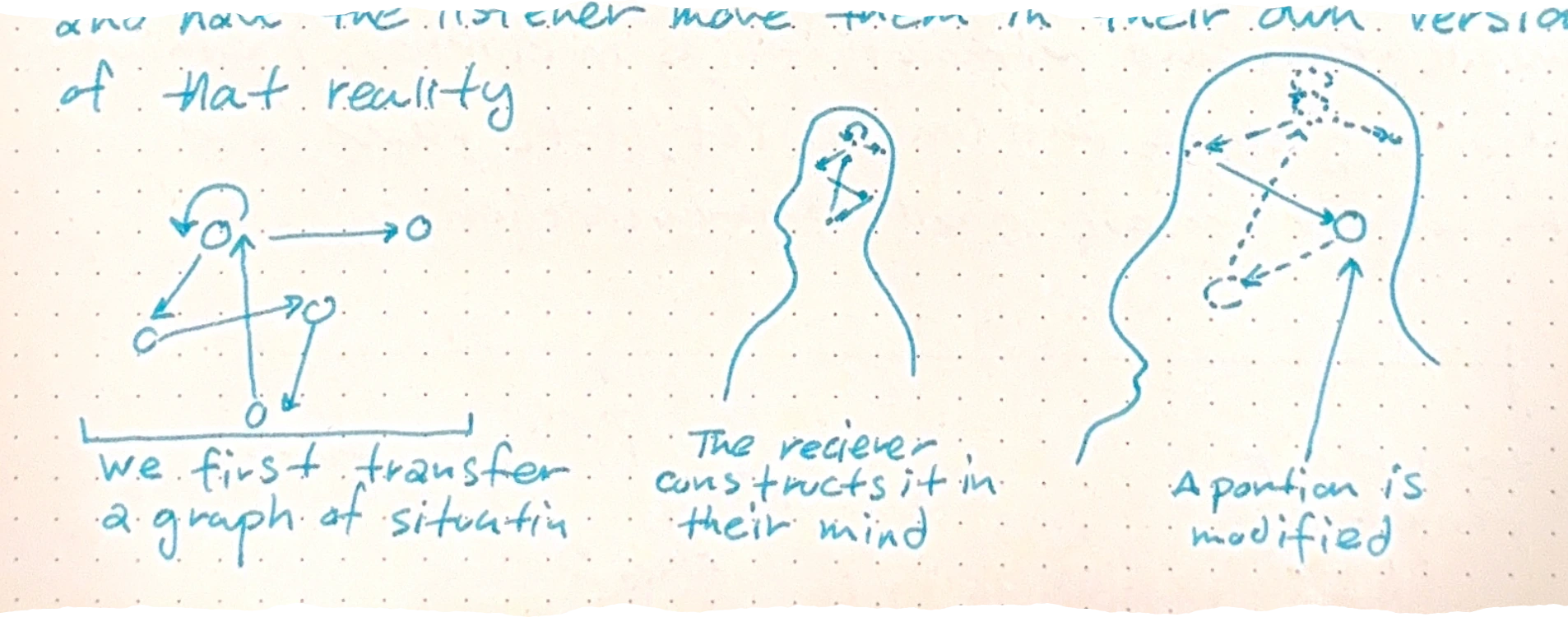
Given all of this the good medium should also do some other things related to the graphs.
Graphs are very complicated things and given the limitations of our cognitive loads, it must be established that our mind can only focus on a very narrow portion of this graph .
In the design of Retrieval-Augmented Generation (RAG) models we have a world where the model can hardly remember big amounts of data; what we do here is limited exposure to the backgrounds and information that might benefit it. The same technique must be made for the graph transfer media. It has to load the context; the neighboring nodes and edges so that new connections can be made.
The medium has to give enough examples and repetition to the node it is transferring that new connections get some muscle memory in terms of graph weights. Imagine a book written by some great scientist. One thing in common with the great ones here is these books give their information slowly and with many many iterations, versions; examples; … This makes one digest what they have been given as the content.
And perhaps you have noticed that almost in all great books that is the same; but when it comes to their cheap teaching material or other forms; the content is shrank into very small sizes with no repetition and the people who read these things never get deep. Perhaps because they never get the time to
There is so much more to say here but lets just leave it here for now…
[…] Demoscene era of the 1980s and 1990s.