I have been informed that Babak Germichi ’s cancer has spread into various parts of his body and grown to the metastasis stage. I am so very concerned and so incredibly sad.
The saddest reality of our lives is that the kindest, softest, most amazing of the people are the ones to who develop autoimmune diseases. Fuck this life.
Imagine opening up your phone in the midst of a war, only to find out after more than a decade of not having insurance, you are finally insured by the 🬆🬧🬍🬜🬬🬙.
I have to create a tree of my intellectual ancestors (and even explain a little bit why they are there)
I really wish to be free and create a GUI library based on AnnotationsKit .
I’m so tired of working, and then I haven’t worked the way I work for a long time now.
There is an insane amount of work I have ahead of me, more than any group or organization is able to do, and I have so little time. I wake up, work and then I get to sleep with nothing being done and I have so much stress because of that.
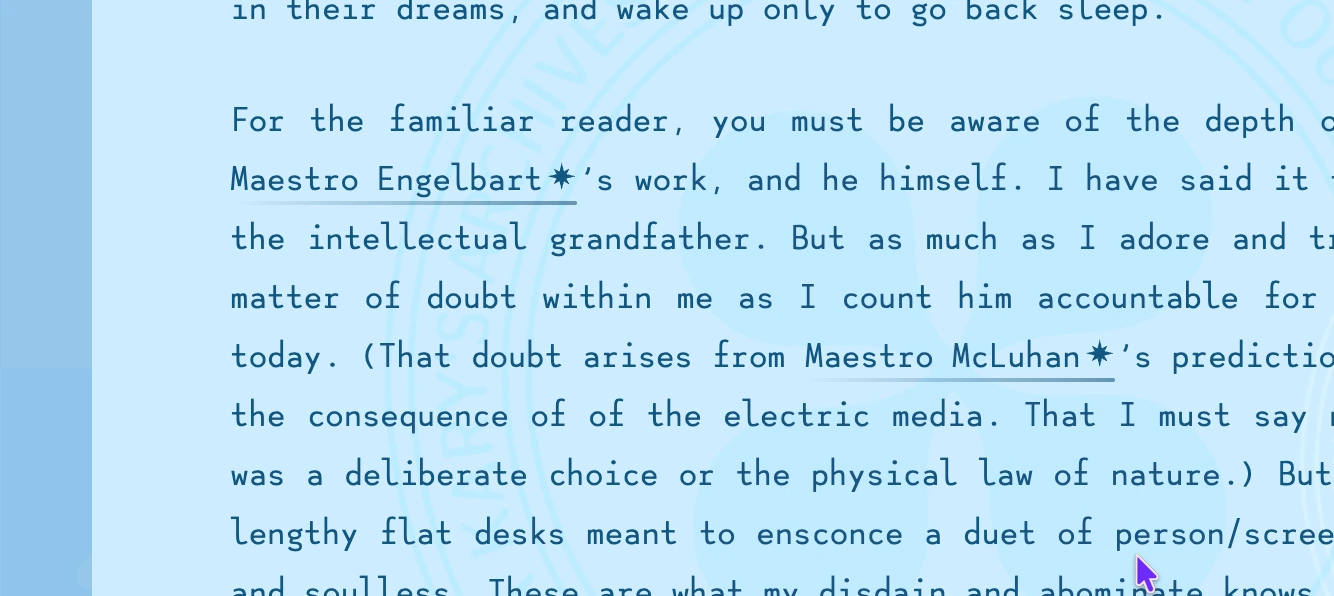
Since I changed the symbol for references in Archive , the jumps looked so bad, so today I toyed with some ideas until it ended up with this underline gradient that combined with the symbol of the reference creates a true comet look.
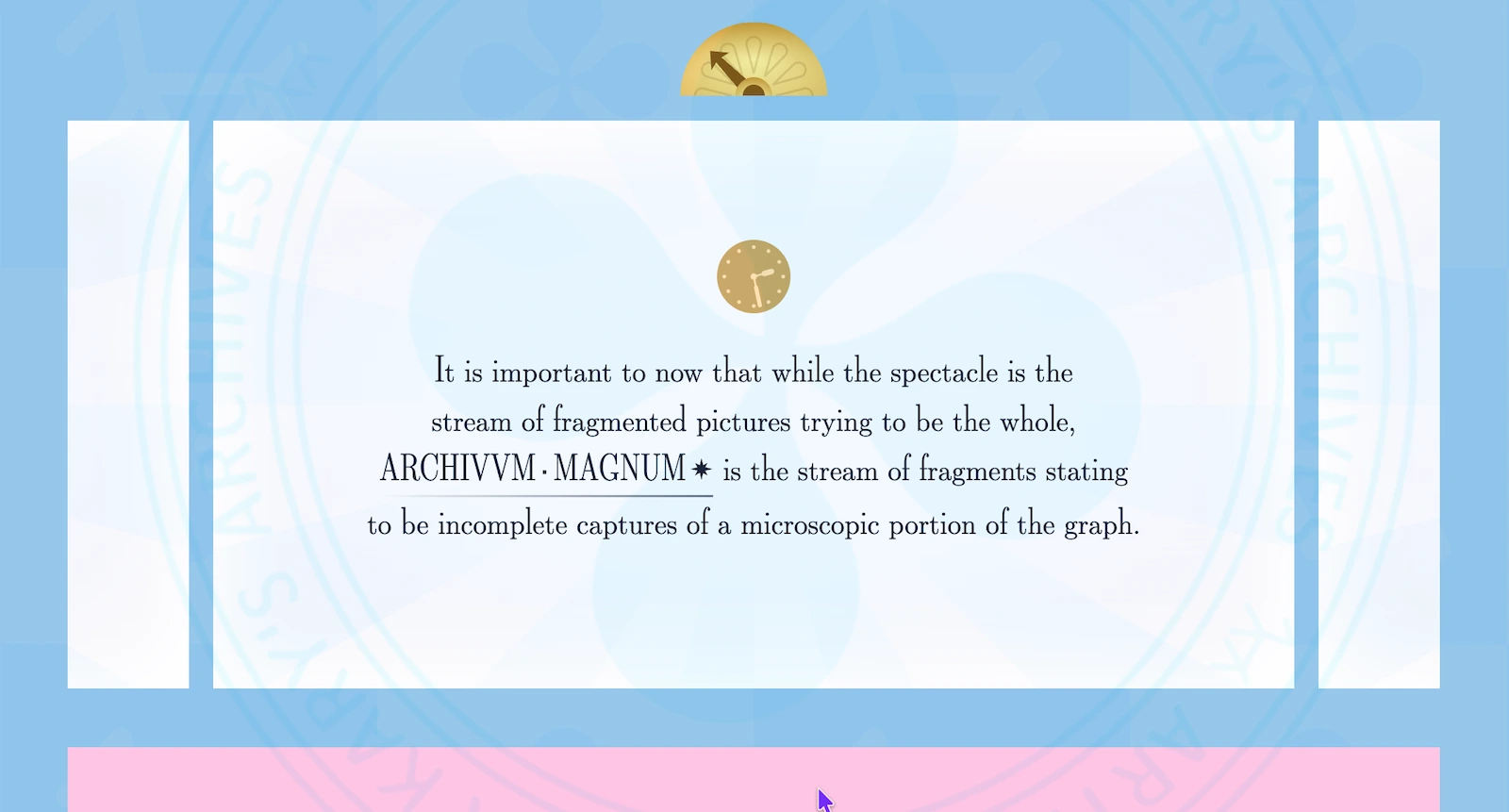
Another view of the comet jumps.
For the most of the humanity; people take one vector; one direction; and they advance their lives as such. I have chosen a whole different path
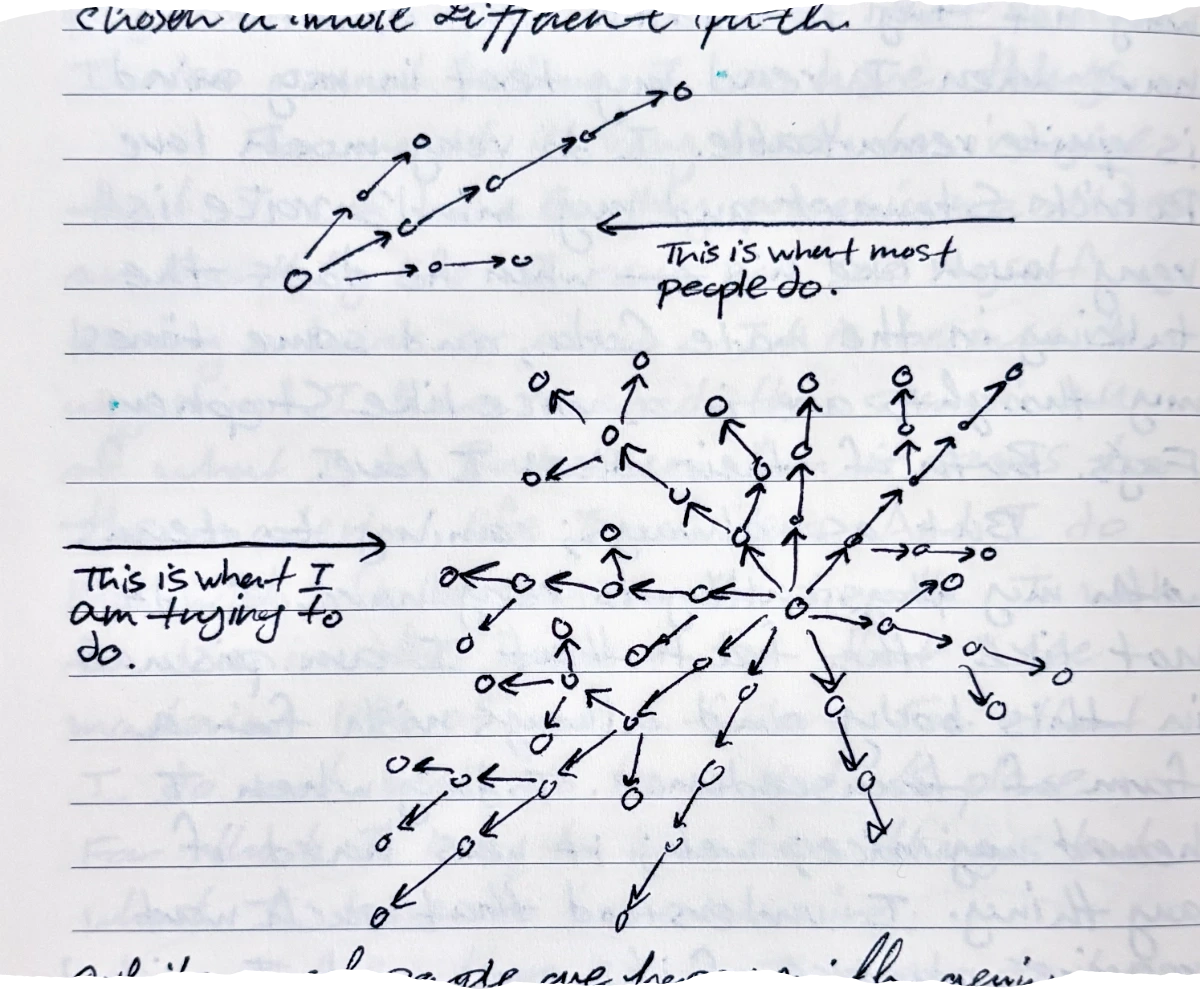
While most people are happy with going forwards on a predefined path, I wist to explore all of them and where I feel other paths could have existed, branch and move in their ways. That is of course where when we must
Latterly, my expedition towards the mind graph had me write about programming general computation ( Programming People For Massive Generational Computations ) and the curious ways in which culture shapes the course of its members ( Media As A Reinforcement Guiding Force ). It was also during the nascent stages of the 1285 initiative that I endeavoured to prepare a Classical Analogy Diagram. My intent was to lay bare before the assembled minds how our project seeks to liberate education from the narrow confines of any single school of thought. It was only later, with the benefit of hindsight, that I perceived how much of the theory destined for development had already divulged itself, quite openly, before my very eyes, though I failed, at the time, to apprehend its subtle signs. I must confess, even to myself, the impulse behind the fabrication of these diagrams remained somewhat obscure, and when, days later, I presented them to Mr. Ashkan , a certain diffidence still lingered within me.
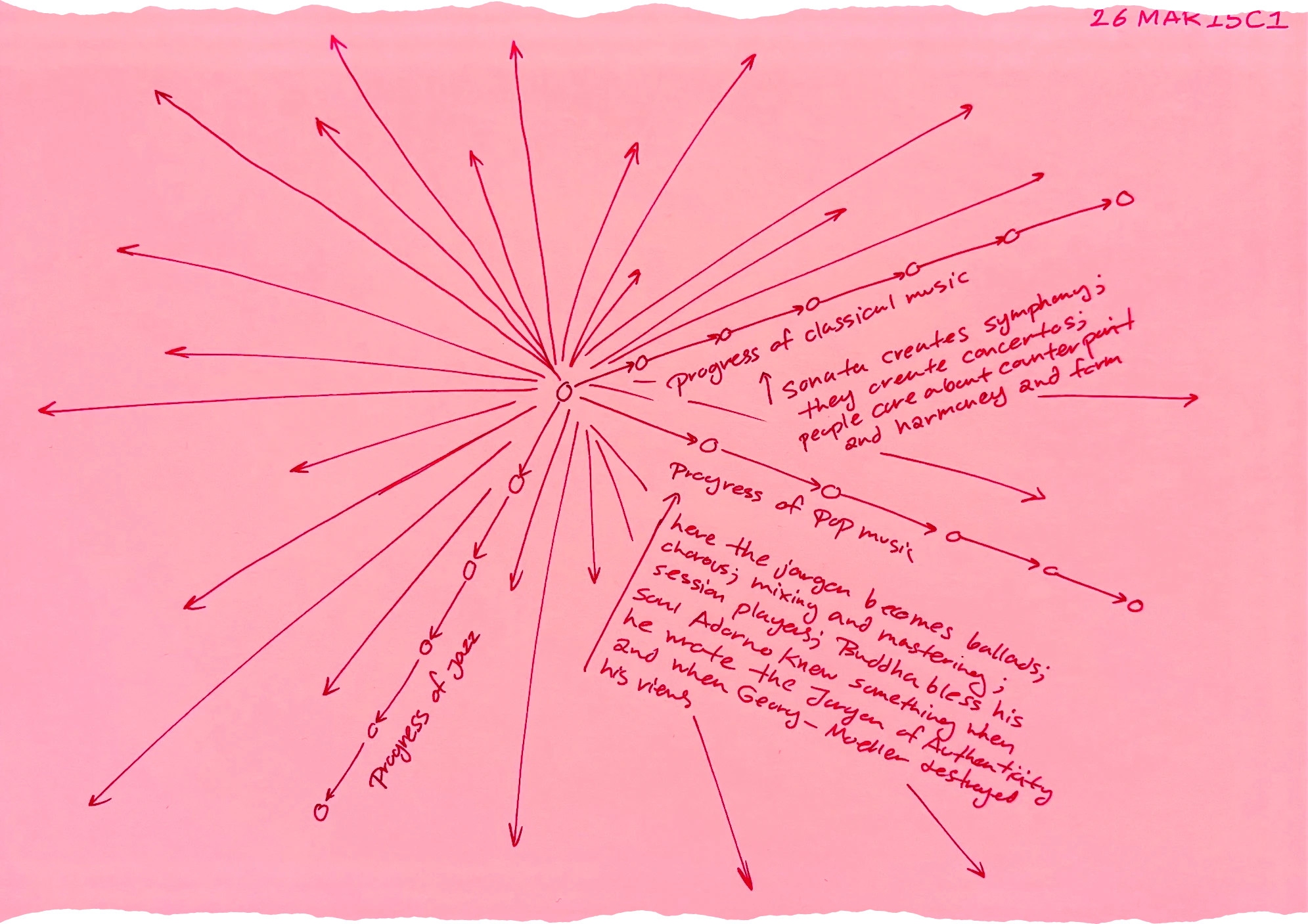
The initial presentation consisted of a dyad of slides, designed to unfold the historical trajectory of classical music. We traced its lineage from the very genesis of musical notation, progressing through the ages to culminate in the monumental achievement of Beethoven’s Eroica. The first slide was conceived as a segment of a larger circle, illustrating the measured advance of musical form over the centuries, reaching what might be termed its apogee.
What was then unveiled through the second slide, however, was a deliberate stratagem to impart a certain intellectual shock to the 1285 audience—a revelation intended to underscore a critical insight. While the development of classical music is, without question, astounding in its progression, it represented but one singular vector of potential growth. Once the formidable Beethoven liberated the musical world from the established directives of the classical era, the collective unconscious, was prompted to inquire: “What alternatives might exist?” From this profound questioning, diverse streams of innovation emerged, disseminating a message of music unbound, expansive, and without fences. New genres began to blossom, and the less heralded, the more subtle, made their appearance upon the world’s stage.
This burgeoning of diverse expression, much like a fundamental societal transformation, represented a revolution—one profound and far-reaching, unfolding in ways utterly unimaginable to the established order and the affluent. What had once belonged exclusively to the rarefied domains of royal families and the elite was now in open circulation, a shared inheritance for all to ponder and enjoy. If, in eras past, great cathedrals had dictated the principles of musical harmony and defined the very notions of consonance and dissonance, these new revolutionaries were prepared to cast off such constraints. They dared to challenge established norms, risking the full measure of critique and ridicule to reveal the boundless and unexplored territories of musical potential.
Yet, it is only through my more recent enterprises that I truly perceive the prescient nature of that initial diagram, particularly in its resonance with the conceptual frameworks of the Toolbox Theory , Mind Graph , and the Sub-Graph Transfer . For the one who has walked past the Media As A Reinforcement Guiding Force , concealed comeliness of the diagram shall set forth.
We advance by proceeding the vectorial of what our ancestors and lineage happened to have overtaken. We concede and submit to the jargon, and ways in which they took their steps. We walk the same pavement, recurrently, just for the sake of it being repeatable for the others and generations.
That is like the ways in which classical music blinded the composers of all heterogeneity music deserved to have. And much the same as what grounds the phrase, “beginner’s luck”, to occur in the first place. This fascinating term has taken much pondering at my end. Why do we anticipate the win of a beginner before a seasoned professional? Luck is what I surmised to be banal, for what
[
[
[
[