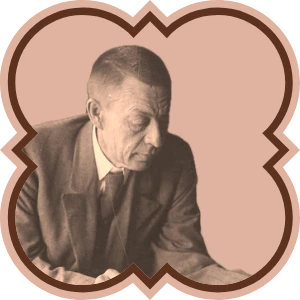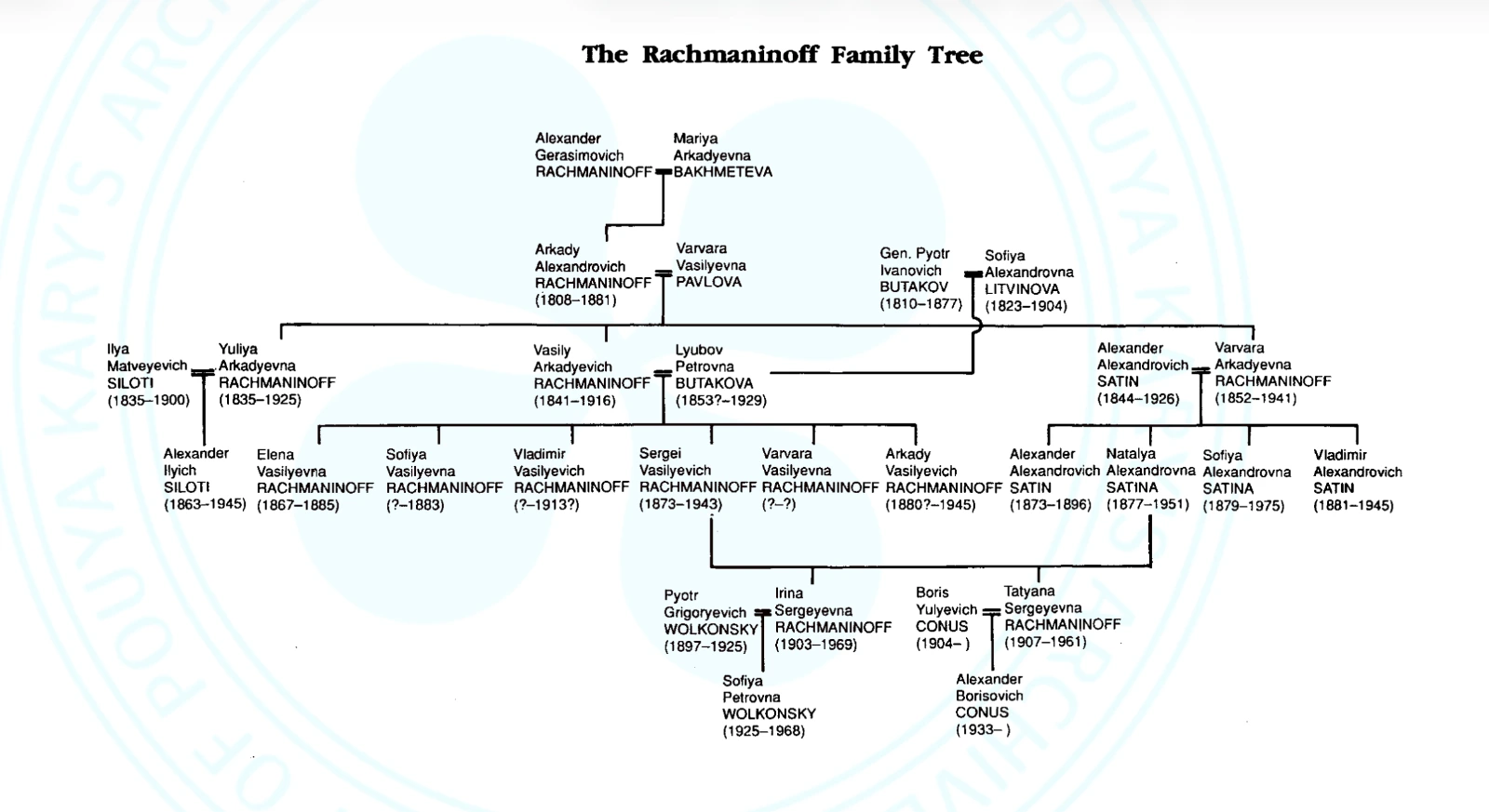
Finally found the family tree of Maestro Rachmaninoff from this amazing new book.
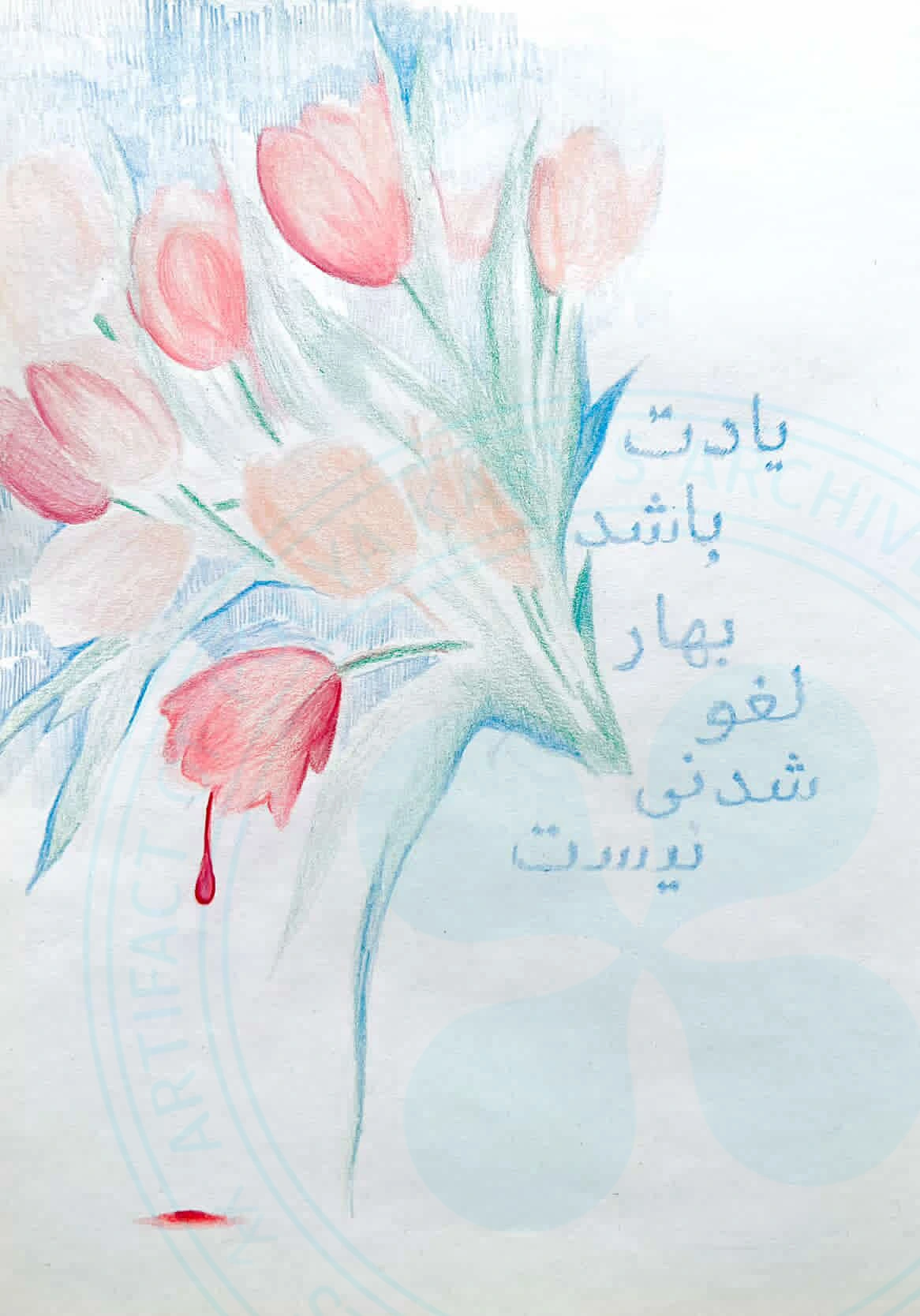
“Bear in mind: Spring Can Never Be Revoked”, a painting by my friend Tarlan Bitaraf.
What I am writing here is not the first time I am writing this essay. I ended up understanding my thoughts in the middle of my previous writing. Through this one; I am ironically attempting to set forth; exactly why such things deprive perfection, and utopias from their meanings. Long story short; it is because of Graphs, Dependencies; and Irreducible Complexities. So lets begin!
I imagine the recent TV series that Apple is making: “Ted Lasso” and “Shrinking”: in them you are presented with these worlds where all people are nice people; they are extremely nice; can handle all situations with ease and perfection. Well, this vision for the world. Do you think the whole world can live like that? No. Why?
That is due to the way capitalism works. 🬍🬖🬱🬴🬤🬻 is rich and beautiful because of outsourcing and also stealing from their allies and rest of the world. They are living a good life because the things that are not good about their lives happen elsewhere.
[A diagram showing the flow of resources: At the top left is a box labeled “The 🬍🬖🬱🬴🬤🬻 Paradise” showing stick figures under a sun. An arrow points to this box from a drawing of an oil rig labeled “The Oil From 🬺🬛🬕🬵🬤🬩 + Arab Countries”. Another arrow points away from the 🬍🬖🬱🬴🬤🬻 box down toward a box labeled “The Factories In China, India, Indonesia”, which depicts a factory with smoking chimneys.]
Instead of white 🬨🬳🬆🬙🬎🬫 going to Africa, and stealing people for slaves; they are now united with the heritage of those slaves into enslaving the rest of the world.
They keep certain countries poor to ensure an American pocket can buy all of those things. After all, if an Indian makes as much as an American; how can they afford all these goods and services?
We go out and eat these beautiful meals. We take pride in seeing ourselves as very nice and kind and civilized people. Some of us we even help animals. And these places are nice and clean. But then if it is perfection; where is the dirtiness of killing animals we just ate? Or the farms they grew up in; or even the restaurant kitchens? “Perfection” is a locality in something bigger and more complex that is inherently dirty.
Years ago we had this national conversation about what does it mean to be self made? And the answer was we are all made by our parents therefore none of us are self-made. If I could contribute to that; I would have said; not only it was not the parents; but many many different people. A fact that makes me wonder how much of my work is mine really in the first place.
Carl Sagan was famous in he said “To actually make an apple pie from the scratch; you must invent the universe”. And that is the complicated nature of this world. Everything is a graph, All is connected; and no incident of perfection is alone. It is only separated from the mess that made it. Just like how if this idea itself be “perfected” someday it won’t be separate from these drafts that made it.
Yesterday; we were discussing the certain probable outcomes of this war and I was fantasizing a world without 🬍🬖🬱🬴🬤🬻 as its superpower.
Dad — receiving my opinions — told me oh no! Their culture will survive. It’ll not be a world without Jazz and hollywood.
So I realized something. There are steps in the development of countries:
- Normal Country
- Empire
- Cultural Monument: England, France, Turkey, 🬺🬛🬕🬵🬤🬩
The case of Maestro Rachmaninoff helps to confirm the opinion of those who assert the importance of inheritance in the possession of musical gifts, for three generations of Rachmaninoffs on the composer’s father’s side were musically talented to an unusual degree. Rachmaninoff’s great-grandfather Alexander Gerasimovich and his wife Mariya Arkadyevna, to whom the minor composer and Intendant of the Imperial Chapel Nikolay Bakhmetev (1807-1891) was related and who is said to have studied music ‘with the best teachers of that time’, instituted a choir and orchestra on their Znamenskoye estate. Alexander Gerasimovich died young and Mariya Arkadyevna remarried, but the children of both marriages seem to have shared her musical talent. Her son, Arkady Alexandrovich Rachmaninoff, the composer’s grandfather, was a devoted amateur musician, whose wealth deprived him of the necessity of turning his hobby into a profession. A pupil of John Field and a prolific composer of light piano pieces and songs, he played the piano every day of his life and often took part in charity concerts. Rachmaninoff dimly recalled once playing duets with him when he was four years old. The composer’s father, Vasily Arkadyevich Rachmaninoff, was another enthusiastic pianist who may also have composed or at least improvised. One of his sisters wrote: ‘He used to play the piano for hours, not familiar pieces but God knows what’, and Rachmaninoff himself carried away the mistaken impression that the polka by Franz Behr he had heard him play, and of which many years later he made a concert arrangement, the Polka de W.R., was his father’s own work. No-one, then, should have been altogether surprised when Rachmaninoff, like his sister Elena before him, showed a precocious talent in the family tradition.
Maestro Rachmaninoff ’s first music teacher was his mother. Despite being better placed than anyone to recognize her son’s preternatural gift, she seems to have failed to do so, but when it was brought to her attention by the children’s governess, she engaged a friend of hers who happened also to be a student of St Petersburg Conservatoire, Anna Ornatskaya, to give formal piano lessons.
The earliest surviving piano piece of Maestro Rachmaninoff is probably the so-called ‘Song Without Words’ in D minor, reproduced from memory by the composer in 1931 for Riesemann’s biography and described there as one of ten written as an exercise for Arensky’s harmony class at the end of the academic year 1886-87, though the examination at the end of the course, at which Rachmaninoff played these pieces for Tchaikovsky, did not take place until a year later, in May 1888. Unlike the orchestral Scherzo, whose key it shares, far from having the Mendelssohnian overtones its title implies, the piece is imbued with Russian melancholy to a degree perhaps unnatural in a boy so young, though in retrospect this can be seen as a portent of the kind of emotional world the mature composer was to make so much his own.
A composer who may just possibly be a distant influence on all these early pieces [