People like Maestro Da Vinci and—risking the contemptuousness of it—me, have become polymathy in starting from a problem, and then exploring the dependency graph of “what is required to solve it.” He studied light and shadows and painted better pictures. he studied the way the eyes work, and painted even better pictures. The pattern becomes evident you see?
Extracting quotes and excerpts is the art of extracting a node from a graph with enough leafs that it can flourish in another graph. You have to be careful both in how much you cut, and how much you keep.
Second Ocean needs a drums with increasing temp on the snares and the hi-hat just before the end of the third part, for it to have an exciting introduction to the second iteration.
Dark of the Sea is sadly more superior to the Concerto No. 1.
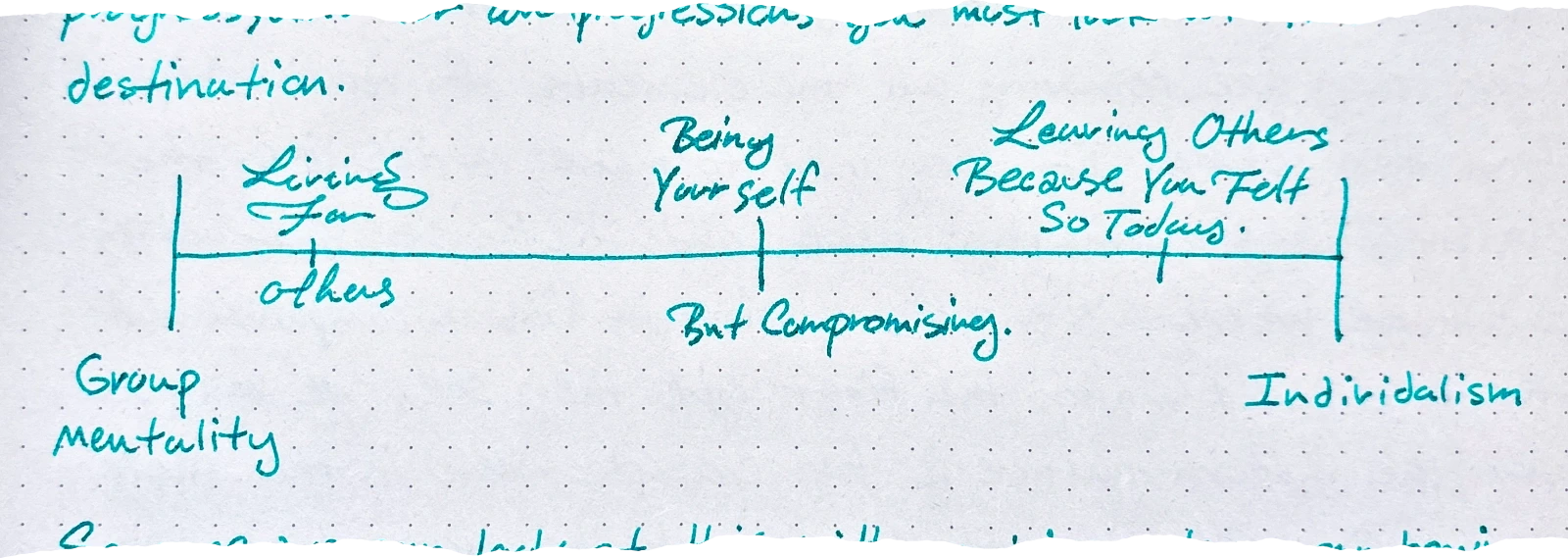
Individuality is one of the most fascinating things in modern culture. As much as it is interesting, it also is dangerous and problem-posing. The identity technology of Authenticity is about Individualism and once someone focuses on making their own life’s better, or focusing on themselves, it becomes the other way as the sincerity. Individualism—if fully realized—is the opposite of thinking about groups.
This first paragraph might as well look banal to you. I understand. But let me explain what I mean by it. Say there is an old Hunter and Gatherer hurd somewhere out there. To these people nothing is personal. They used to pass their weapons to each other to remove the trace of who hunted what and not became proud of what they did. The same goes for their relationship: As far as we know there was none. All adults would have sex with all other adults and none of the children had any parents; their parents were all of the adults. This is very interesting in that it proves there can be an extreme form of living without Identity technologies. On the other hand we have modern notions of Individuality where even the family is a burden. Take the recently produced films from ███████ where this identity technology is being formed. Year after year; they are removing all the elements of relationships from their stories. If they used to make movies like the classic Disney animations: Beauty and the Beast, Snow White, and others where all a girl would imagine was a companion and the boys would marry the first girls they see, we may see how the modern culture is for example where in the Apple Formula One film the cool thing about the main character is his “not belonging”. He wins and as soon as he finds the group he belongs to he leaves [SPOILERS] and in a part he is shown to fall in love with this person who took him all the movie to make the bound; he has sex with her wakes up, and leaves. The very interesting part of the movie is how he is not seen as doing bad; but everyone is happy and smiling. I think this can be seen as the nature of individualism: Once you optimize everything for one person that is you; the living with others becomes hard. Some are of the opinion that such things are not individualism; but then they are not seeing the whole picture, or they are naive. The truth is that it is a progress; and for all progressions you must look at the destination.
So once we can look at this with no judgment; we can begin to see their inner patterns. One of the things I like to look here is the group graphs. If you take the group graph of the Hunters and Gatherers what do you see? I think they would be living inside a very coherent graph. This is time before the identity technology and so they have little of their own to contribute. I would see the very different personal level mind graphs but not many different cultural graphs . And so when you have basically one coherent cultural graph and your population is dedicated to be loyal to the group and practice selflessness; you end up with a world in which:
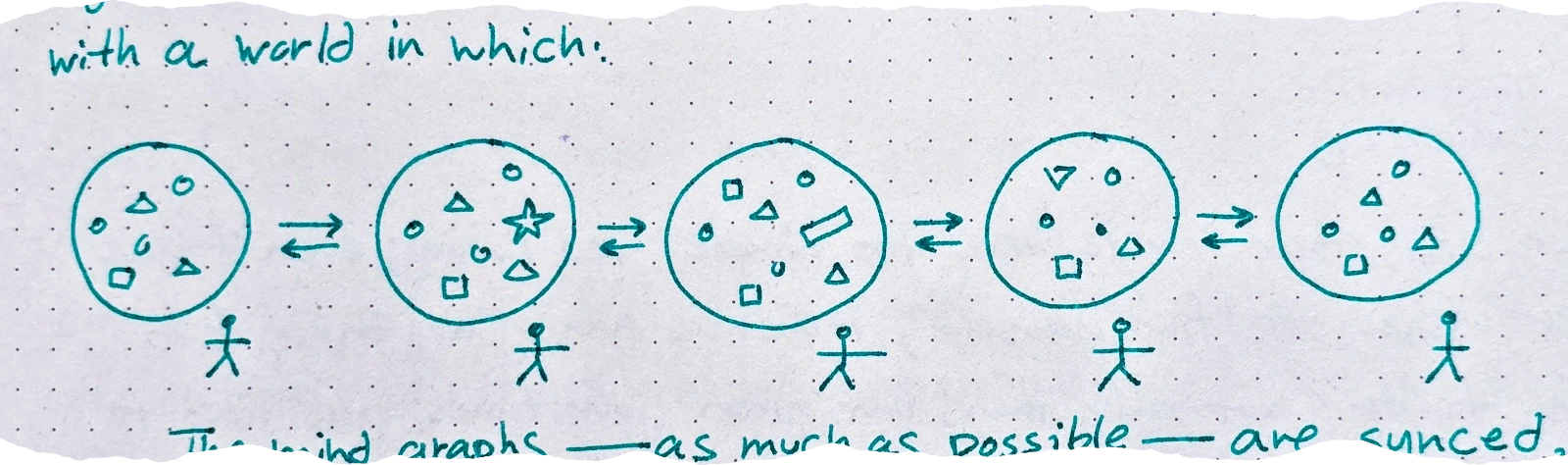
The mind graphs—as much as possible—are synced, and therefore the overall cultural graph will be very much the same. I think—and everything within this writing is just me thinking—that the age of sincerity was the continuation of the Hunters and Gatherer age with some basic Identity technology. There was—and perhaps still is—some understanding of self; because of the invention of stories. (Writing in the absence of the internet has made it really hard for me to research my thoughts. I hope I don’t have to throw all of this to trash once I get some access to the Internet.). Also as their societies had developed they now had units of society; families were formed, somethings had started to be privatized.
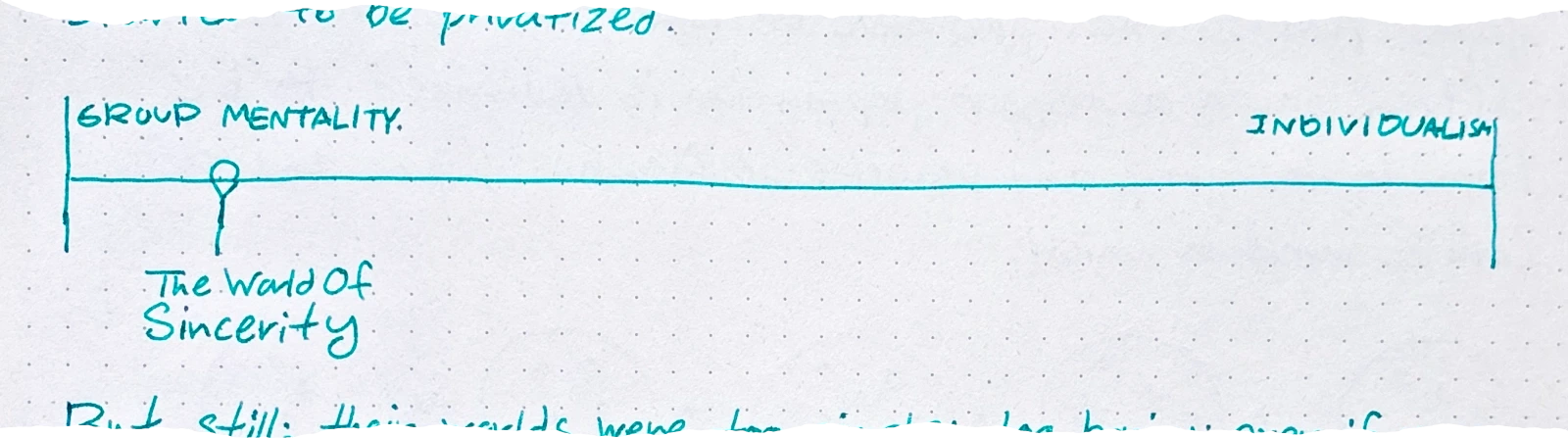
But still; their worlds were too simple; too boring; even if you ever wished to “find yourself”, there was hardly anything for you to do (not only that; but given your times; you had to be your role in the society.) And this had made the same previous effect on the cultural graph : mostly static because people couldn’t modify it even if they wished.
But then the world of Authenticity comes. And something very very interesting is when it comes. At the point in which the world starts growing; connecting; and a boost in the exploration of Arts; Geography; Science; … Philosophy… Emerges. Suddenly we have the age of “Enlightenment” and some great things including the romantic person and the “Authenticity”; emerge as well. This is quite interesting that once exploration becomes much; people began to form the “Authentic” character.
Again; let’s go back to looking at things from the graph side of the things. If previously you had “King, Soldier, Farmer; Mother; Merchant” roles. (maybe 10 times this, but anyways). You now had new ones that no role had previously thought of. What wanted you do with the Isaac Newton inventing the scientific era? How would you define the modern content creator role for those people. And so you see as the entropy of the system increases; we end up with more and more roles to a point where people must be celebrated for their individuality and not their roles. Here we end up with Authenticity and in Authenticity you have much many more personal graphs. You have at one side a person of arts; the other way around is the person of politics. How much do you think is shared between the two? I am not sure much. And well; here Individuality begins to reveal itself and be the source of modern culture. [ as you can see I am trying to think and write; and I’m failing here ]
What happened at the age of authenticity was the birthplace of the idea of “Subcultures”. In terms of graphs; the sub-cultures are another graph beside the dominant Cultural Graph shared between all the members of the graphs:
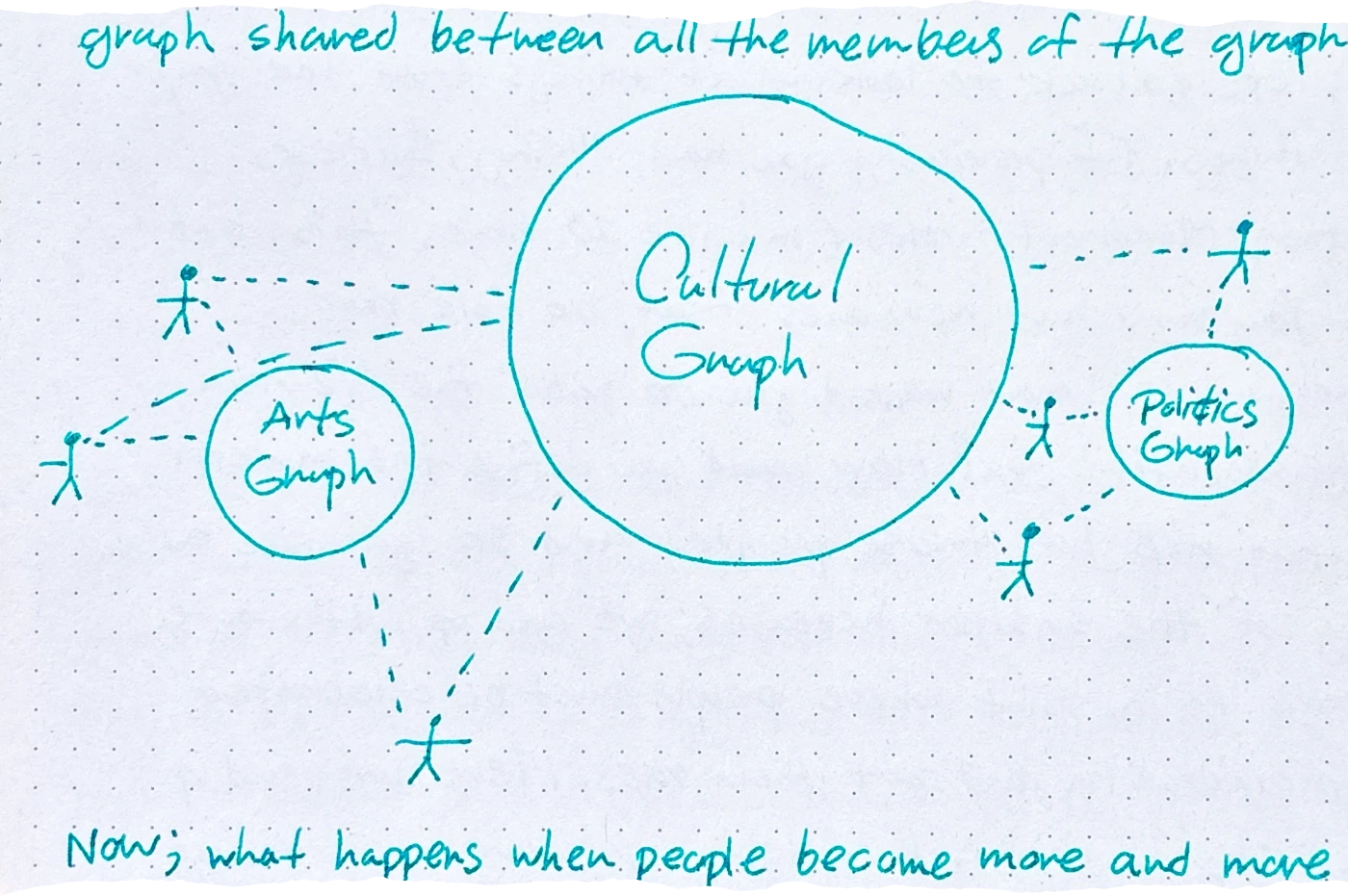 Cultural Graph ' connected by dashed lines to stick figures, which are also connected to smaller circles labeled 'Arts Graph' and 'Politics Graph'" style="max-width: 35em;" />
Now; what happens when people became more and more individualistic. In conditions like this people become more and more involved in choosing what is best for them. For example; take a look at the stationary shops. There is almost an infinite amount of options to choose from. Each person can customize the pens and papers they use. I personally use a TWSBI Eco Cyan Fine nib fountain pen; with Herbin’s Bleu Calanque ink on a 21x21 cm blue dotted Mossallas notebook for all of my Lab Notebooks. This is a very specific me-based configuration. I also use Copy Max Pink papers in A5/A4/A3 sizes with Kaweco’s Ruby Red ink. My Archive ’s essay themes are designed to match these so that the web feels like an extension of my papers. This is individualism.
When you begin to develop this many preferences; agreeing upon things becomes really hard. I have investigated much of what I could have bought in the stationary stores here and therefore I no longer get surprised of things in the shops. And I don’t want to change any of my preferences. The same goes about any other thing that I have in my life and it is the same. We have customized things at home; but then there is so many things for myself that it has become hard to use other people’s stuff. I have my own compilers and I like them better than the ones I find in the market. I have my own theme and I love it more than any other look on any editor. All the keybindings on my editor is customized; I have my own coding standards; I have my own design patterns and libraries and almost everything. For me it is perfection. I feel that everything works the way I intend and I understand just how everything works. But just this had made working with others hard. I find every tool they have to be less superior; why? because I can tune every tool I have just for me. I must be one of the most individual individuals of history and as you can imagine—and must know—I am very isolated and alone. Recently [ my beautiful TWSBI I have been writing about died so Ironically ].
I—as an informed reader should know—have a very close (and incredible) relationship with Zea . That is the only thing I can say. Others don’t have this bound with me. Now why do I have this? because we spend hours talking to each other every single day and we do our best to sync. There is little to nothing that is separated between us. we have a strong shared graph . But with others; I can always relate to them given my shared sub-cultures (which I am a subscriber of far too many) but the other things are harder. Accepting to work on Google Docs? No thanks. I just can’t accept that And so it brings me to my main point: (Or perhaps case study.) Think about the Cafes in ██████. Something I have seen for a good amount of my life. [ I hate writing with another pen BTW… ]. Something interesting when it comes to the Cafes here is the speed with which they came and go in our city. When I was a kid; Coffee Shops were rare things and people found them to be places for the “Intellects” (If you require an introduction to see their far different graphs). But then; with the passage of time, very slowly newer and newer Cafes emerged. These were nice places you could go and work or hang out. At first it was customary to be dark; have wooden walls; and some pictures of famous actors (!) but as time passed more interesting Cafes emerged. At some point franchises began to develop and they perfected the art of branding in ████. Here people moved to new graphs from that old boring Dark Wooden Cafes. And what happened was, in fact, a transition from graphs. those who thought that Cafes are these sad places found possibilities and a wave of synthesis happened in ████. People began to experiment with what can be a better cafe? And what happened was interesting:
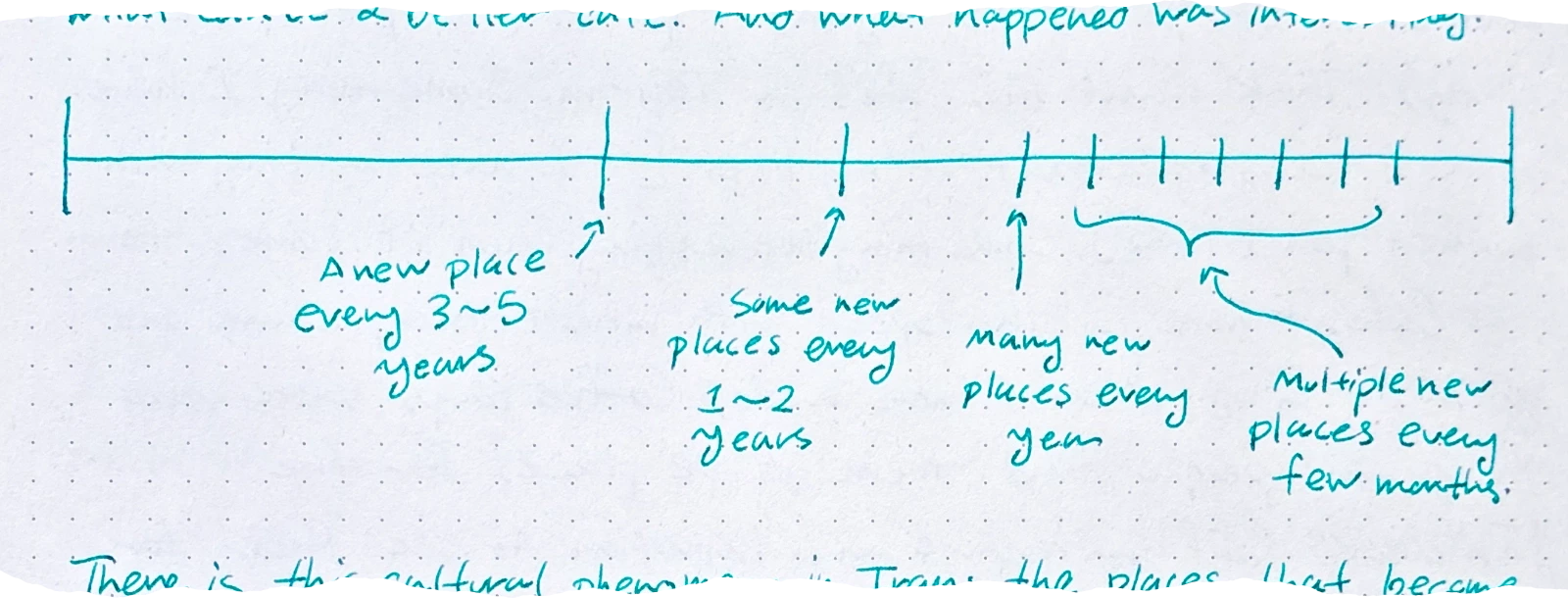
There is this cultural phenomena in ████; the places that become hubs for experimentations. The first was a place called ASP. It is the space between three towers of the ASP residential complex and there used to be a few shops there: A suits shop; a wood making shop; realtors who sold property on the towers, a groceries, and finally one Coffee Shop.
ASP wasn’t a famous place and not many people would go there. I remember in my whole 20-something first years of my life I had visited the place twice. Once to see someone; once for a birthday at that Cafe. Then someone built—perhaps—the first modern Cafe/Restaurant in ██████ which was called Babylon. This place had all the strange things ████ didn’t have. The decor was strange; A drums kit; hanging from the ceiling; upside down as the chandelier. A lamp—a very giant lamp—of a lighthouse; and much more… And these very strange foods and menu. It really was a strange place.
While for years, little to no one; knew about the place; it had attracted enough attention that people started to learn from it. One or two years later; two new places was opened: The Address Hall and the Food Fly. They had exact same designs to a point people had suspected their owners are the same; and shortly after another place with the name of “Downtown”. The blueprint of exciting places with strange new foods began to explode like the exponential chain of an Atomic Reactor. Very soon after newer and newer waves started to happen to a point of new ones each season. Now this can be attributed to innovation and experimentation alone. But no. It was much more. I think—and have little means for proving it—that the whole idea of these things happening is due to the.
fact that at some point too many graphs of the same origins appeared. At some point people liked industrial places; then they wished for them to be industrial but cozy; then soft and bright and then feeling like distant islands; then concept places with radical ideas. And that was somewhat because it was hard to have one thing and stick to it for the lifetime when you now could customize anything.
So by each new place; there was this question: “Now what if”. Or a newcomer with a complete different graph and so newer and newer places popped out. ASP began to have new places and more new places; and now days; each season you will have a hard time remembering how it looked like last year.
I think I hugely failed to explain my idea as I had too much distraction tonight and it became too long.
I have previously talked about the concept of Mind Kernel and the graph effects and the human cores and Cultural Graphs and mind graphs and mind sub-graph transfers and the threshold of the reverse viewpoint .
These are in fact all playing their roles in matters of ████ and its problems. For starters let’s see what is the problem here in ████, by checking out some thresholds of reverse viewpoint.
My life in ████ began in a very ███████ state. It was filled with poor, uneducated ███████ people. After some time, these people became educated — as they died and their children took their places — and they also got rich. Instead of wanting herds and sheep, they now wanted to get into space and build airplanes and rockets. Things had changed. And so people converted from Mohammad’s original version of █████ to DUNE level █████. It became more and more increasingly normal to see high-tech █████ here and there. But then in their hearts, things were still the same. These people had shopping malls and factories; and companies underground in tunnels in the mountains building █████████ missiles. (missiles… or however it is written). They had won over a country and their wish was to — and still is, in fact — transform it into a hub for the “███████ Empire”:
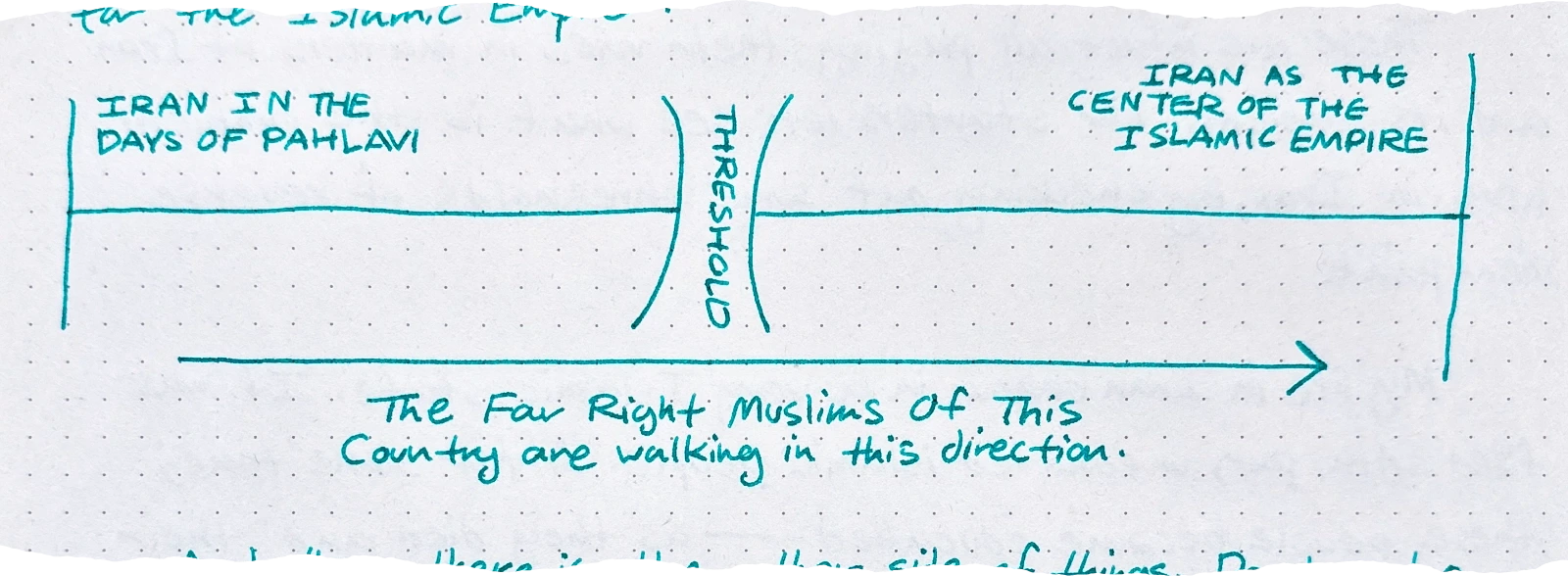
And then; there is the other side of things. People who mostly are the normal citizens want the normal life of people in the happy European; and American countries:
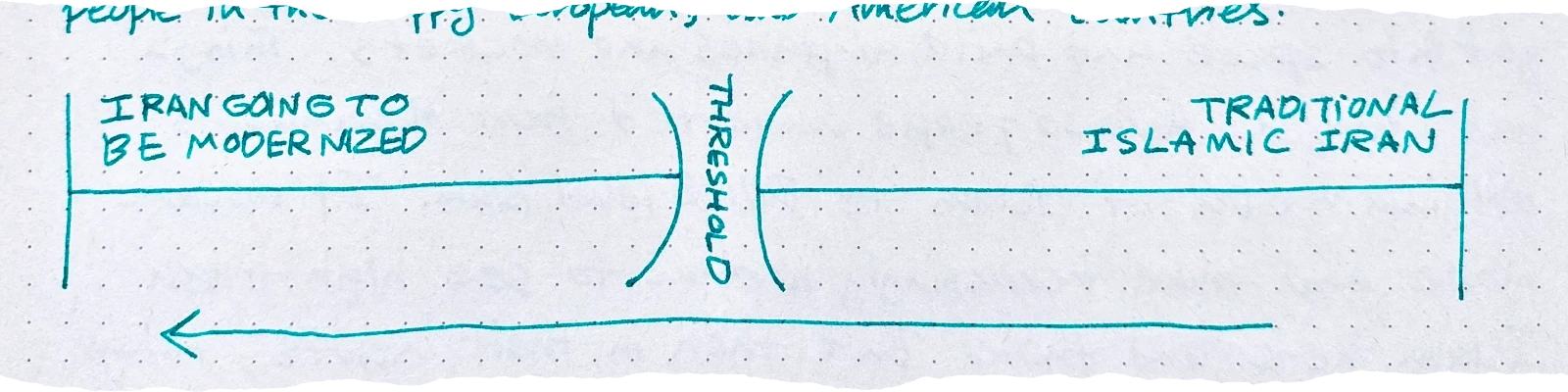
When you see the two thresholds they become very interesting at somewhat being opposites of each other.
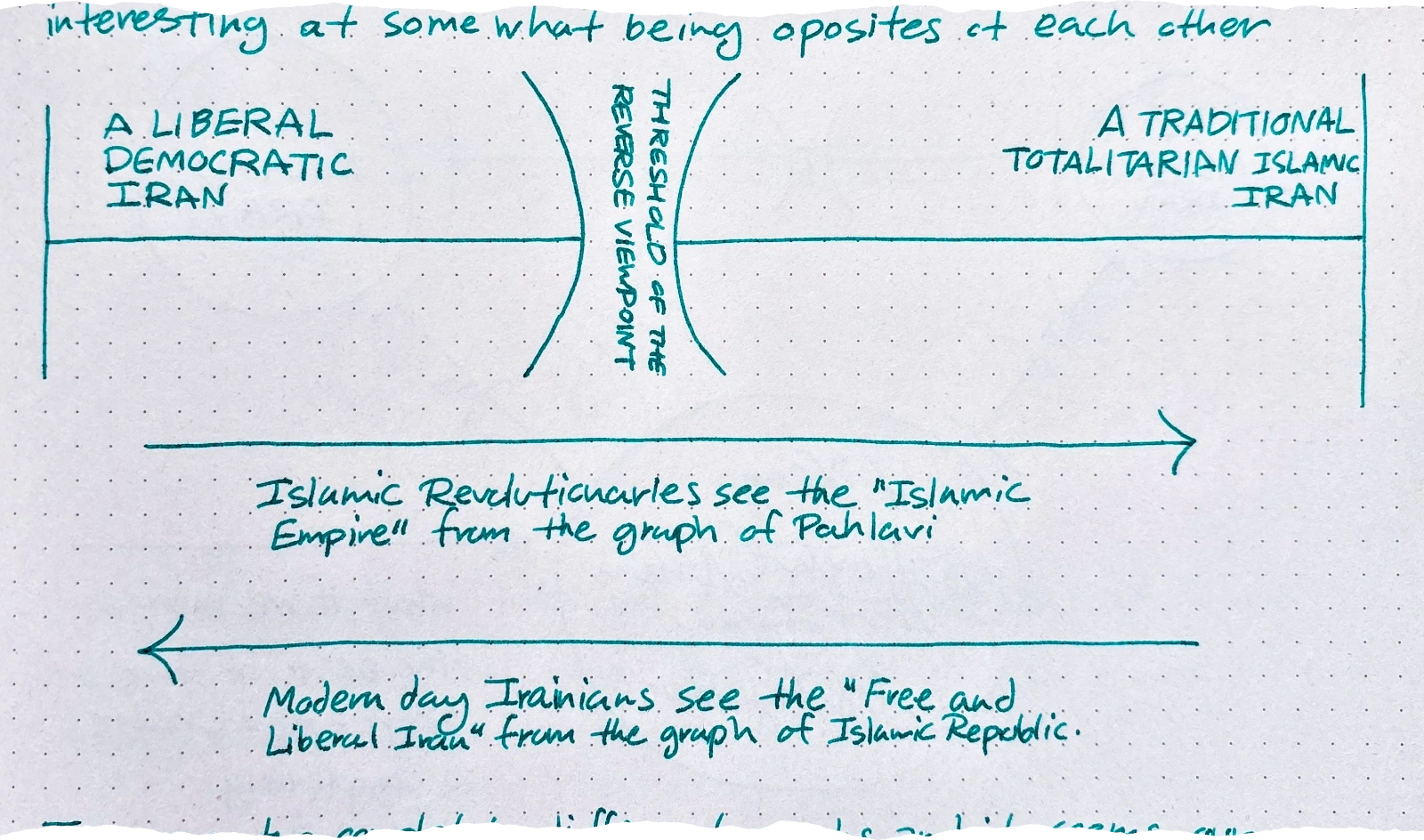
There are two completely different graphs and it seems our people are standing just in the threshold between them; while pushing the country to pass through it in the opposite directions. And that is why war happens: Very different graphs and directions. Now this might be evident; but compromise is the only way people know not to kill each other. But what if there be a more interesting solution?
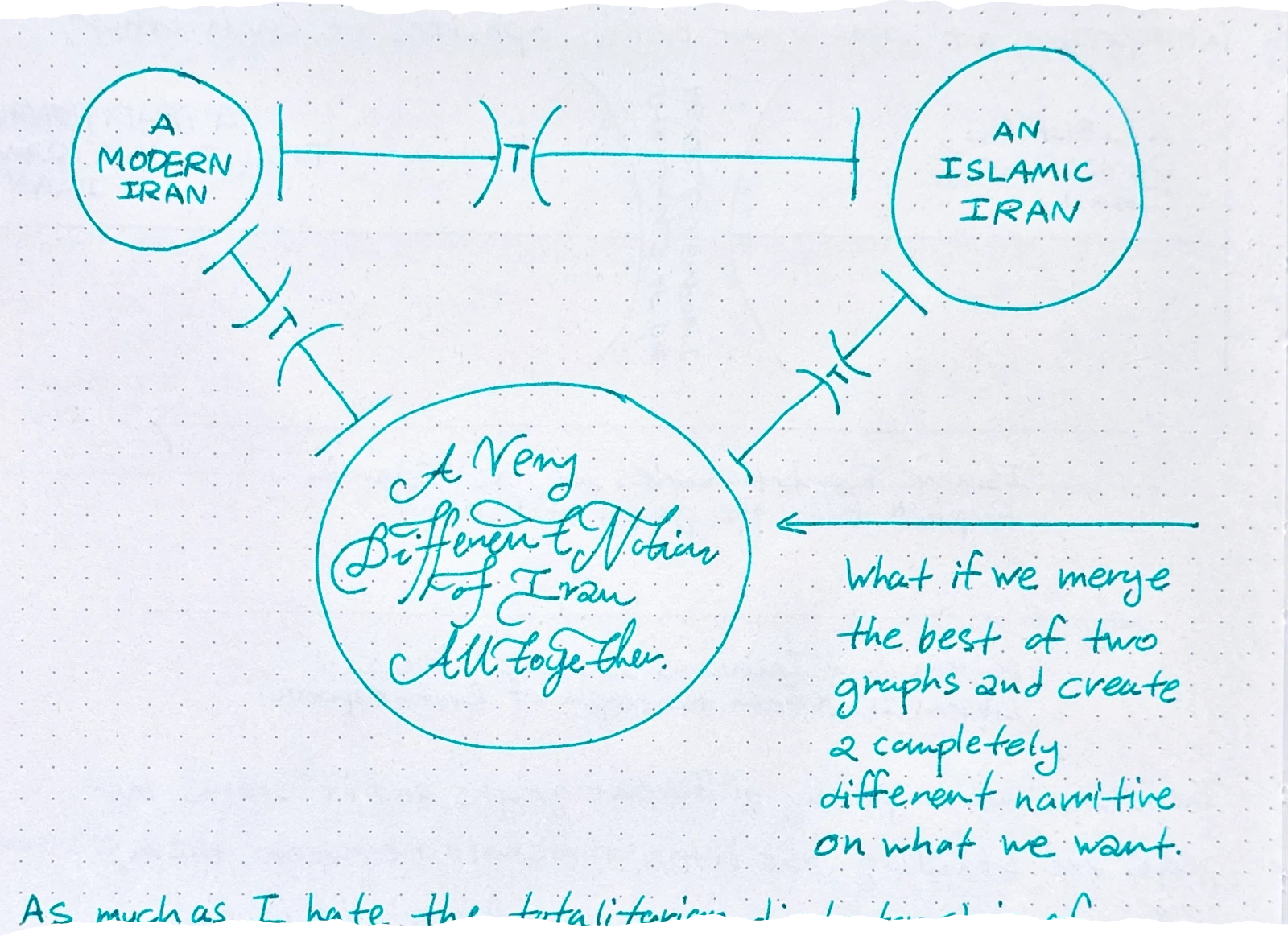
As much as I hate the totalitarian dictatorship of Adorno and Horkheimer’s “Dialectics of Enlightenment”; I must confess that I see a potential of peace here.
What if the two graphs could be merged and that merger could follow a logical rule so logical no one objected?
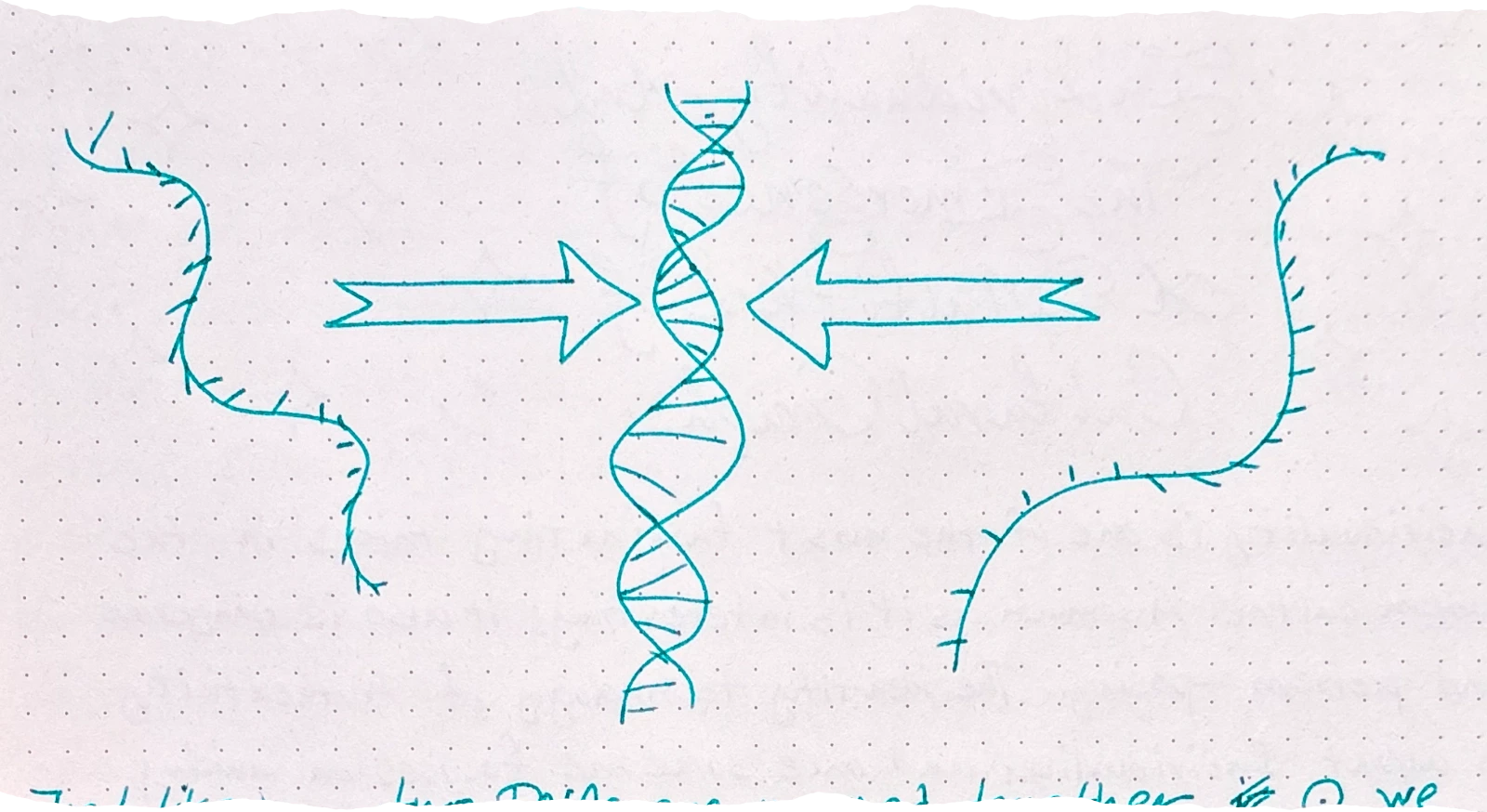
Just like how two DNAs are merged together we could find a way to find the winner of nodes and have them as the winner in the merged graph :
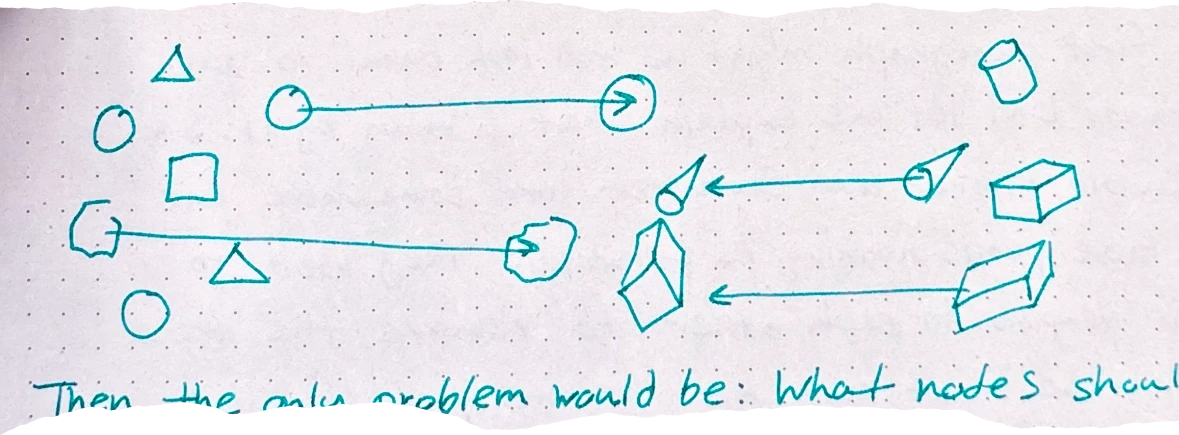
Then the only problem would be: What nodes should compete; what omitted; what included regardless.
Around the time that he reached the unnerving milestone of turning thirty, Leonardo da Vinci wrote a letter to the ruler of Milan listing the reasons he should be given a job. He had been moderately successful as a painter in Florence, but he had trouble finishing his commissions and was searching for new horizons. In the first ten paragraphs, he touted his engineering skills, including his ability to design bridges, waterways, cannons, armored vehicles, and public buildings. Only in the eleventh paragraph, at the end, did he add that he was also an artist.
He had a reverence for the wholeness of nature and a feel for the harmony of its patterns, which he saw replicated in phenomena large and small. In his notebooks he would record curls of hair, eddies of water, and whirls of air, along with some stabs at the math that might underlie such spirals.
I asked […] Martin Clayton, whether he thought [
I embarked on this book because [
In fact, [
At first I thought that [
[
My favorite gems in [
That followed [