I wish that someday I can call myself a maestro as well.
Zea looks so beautiful. I don’t deserve her at all.
Anything that exists proves other forces have not succeeded in destroying it yet.
Some of the ideas that I have known in life and the recent studies combine together in such a fascinating way. First we have to study the evolution of ecosystems and their dependency graphs. My favorite example these days is the creation of a Coffee Shop in 🬕🬪🬘🬲🬲🬜. This used to be really hard. People must have purchased everything from the outside of the country and well; the taste of those who imported the elements required for making the place was not anything close to acceptable. If you also include sanctions; then it becomes understandable that the creations allowed by the graph of possibilities was limited. More and more people understood the things they wish to make require certain things as the elemental blocks and they must make them. For example all windows in 🬺🬛🬕🬵🬤🬩 were equally ugly and they destroyed the look of everything you built. So; people began making factories and companies that produced these beautiful windows. Or now you had to import nice furniture; people built those companies as well; table lights? them too…
These days Iranian people produce all sorts of things required for making a Coffee Shop and that has made creating a place much much more possible. We have amazing places today.
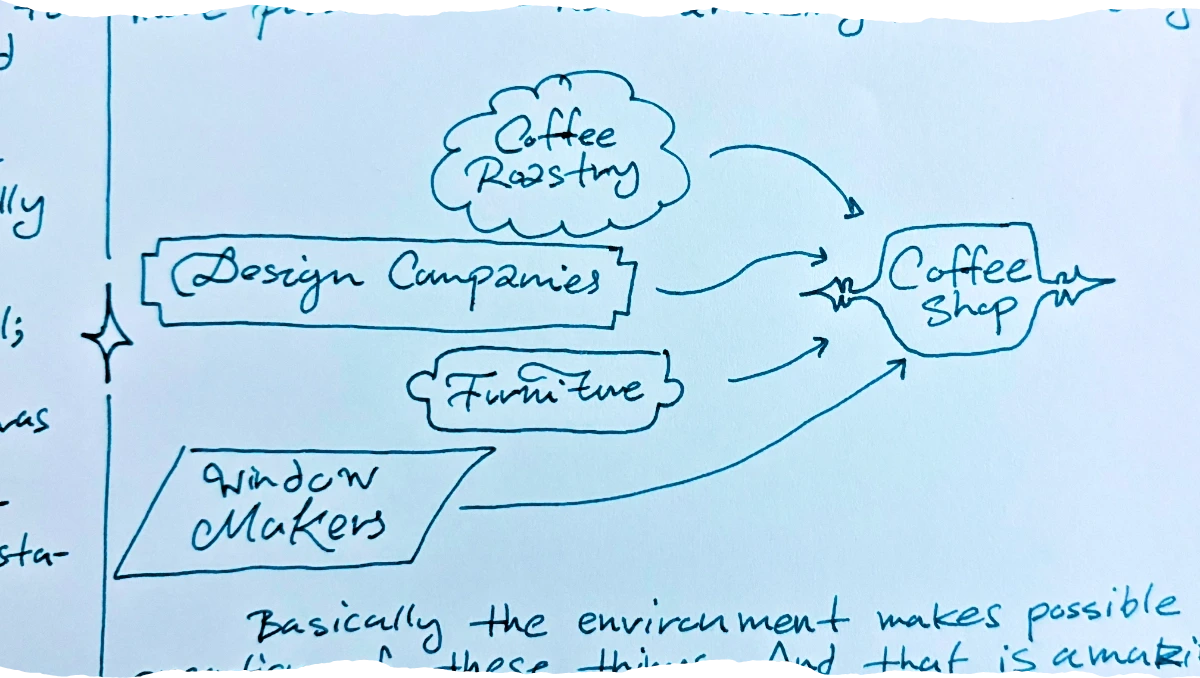
Basically the environment makes possible the creation of these things. And that is amazing.
Look at it all now; through the Toolbox Theory : More Tools require more creation possibilities. I guess this then can be seen as the new definition for the Zone of Proximal Development: How much can you build with your current tools. And how many tools should you acquire for a new task. For example: You are a professional composer in the classical music and you wish to compose for a philharmonic orchestra. If you know all the instruments and just need a new simple one for your composition; say the “Celesta”, you can simply learn the instrument in an afternoon so this is within the island of where you are.
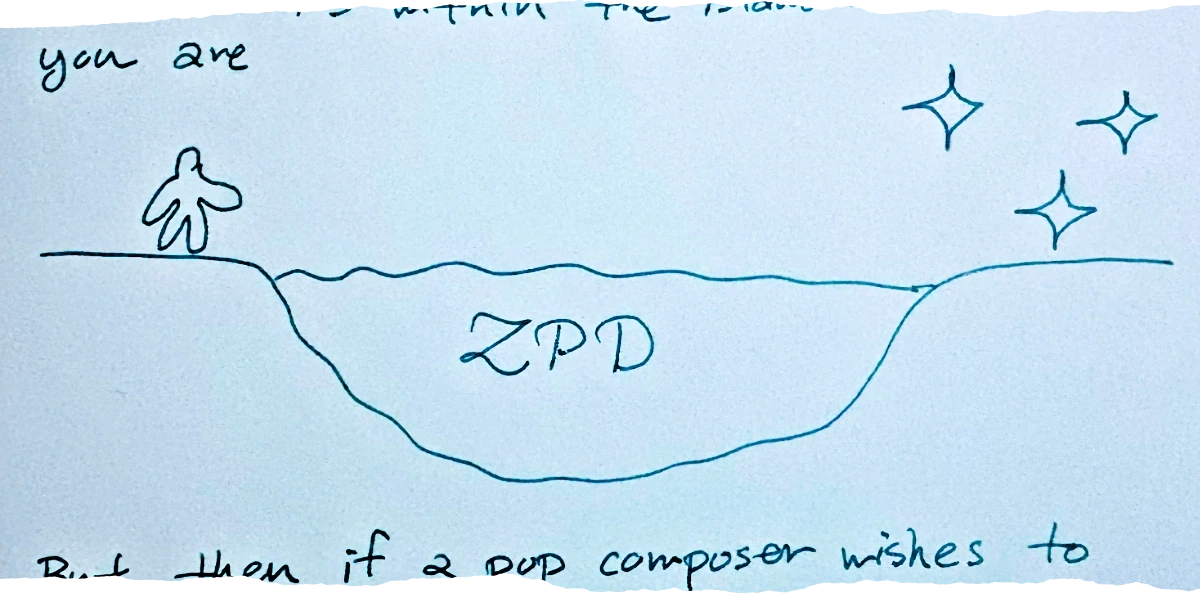
But then if a pop composer wishes to compose for the orchestra they have to learn the strings; woodwinds; brass;…
They will need to understand the function of the timpani, or where a bassoon is used; they must learn how to write for the clarinet so it works effectively with the rest of the orchestra, and understand the positions of the strings and the chords they can play. It took Rimsky-Korsakov thirty years to gather his understanding of the orchestra on paper; it is, therefore, incredibly hard for a total beginner to write a symphony. There is so much to learn and so much to practice. A whole new set of tools is required here. So… you must learn it.
By each new thing that I write; I realize a combination of my previous writings can be combined for a new one. It is like the Ecosystem example: More tools you have; more things you can make: The Toolbox Theory .
And they also reflect the structure of the graph of the Mind Graph . The toolbox in the Toolbox Theory is basically what you have in your Mind Graph . It shows the state of your graph and what you can create with that graph.
The age of coffee shops in the age before 🬺🬛🬕🬵🬤🬩 having people who made the tools is like seeing another graph in which you must copy its content. This connects to my previous writing at 30⟡83, the “Understanding As An Act of Ecosystem Transfer and Synthesis”.