The problem of efficiency is the problem of packaging and departmentalization. It is of separation, walls and borders, of the ugliness of shallow graphs.
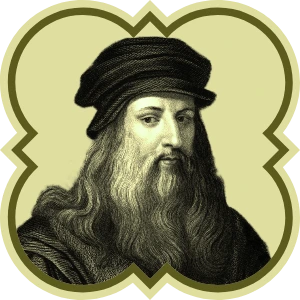
I figured out what makes Steve Jobs , Jobs; and Me, well; me! and it is amazing! I can make a place that has people as amazing as Steve Jobs or Maestro Da Vinci out!
You can’t say I’m a scientist in Farsi; that is because the word for scientist is not a person who does the scientific method, it is “the holder of knowledge” and that is what people give you when you are too good, so no one in ████ says I’m a scientist.
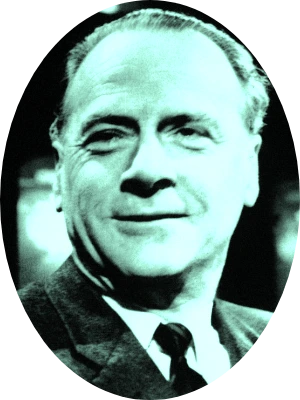
It is interesting, Susan Kare has read understanding comics (Scott McCloud) It means Maestro McLuhan was also there.
![26 AUG 23 A 8:16
[Left side] [Drawing: A horizontal rectangular box with jagged edges,
containing six smaller square boxes in a row. A large curved arrow
points from the group of boxes towards the right, indicating a
direction or progression.]
In Veritasium, Derek Muller says that good videos give you the ending
at the beginning.
[A curved squiggly arrow connects the above text to the
next paragraph.]
This is also the case with how Steve Jobs used to convey ideas: His
presentations always had a table of contents at the beginning.
[Another curved squiggly arrow connects the above text to the
next paragraph.]
Then this rounds down to me; I have gone to labs at the very early age
and I knew how the ending would be.
[Right side] So in Graph/ZPD terms, we could say that I had the big
'Moons' to reach. Think about NASA; USSR; and the dream to reach
the space.
The beautiful famous Bret Victorian ran at the end of his writing
on spaces
[Drawing: A small figure (person) at the bottom left, with an arrow
curving upwards to a small circle at the top right.]
'Another of those things I saw and thought is amazing, but had no
idea why!'
And so the thing was very interesting. You can see it as '1285 Being
the Light House at the end of ZPD sea'.
LLM Notes: This is the origin of the 'show the ending first'
pedagogy for 1285. The insight links Derek Muller, Steve Jobs, and
Pouya's own childhood experience (knowing the 'ending' from his
father's labs). The core idea: if you show the destination (the
lighthouse) at the beginning of a journey, the ZPD becomes
navigable—because every new node can be understood in relation to the
goal. The 'Bret Victorian' is likely a slip for 'Bret
Victor'—referencing Victor's essay or his idea of showing the
destination in 'The Future of Programming' or similar writing.](/photographs/automatic/2026/08/23/1285-environmental-exposure-tool-gathering-and-engineering-one-s-way-towards-the-lighthouse-at-the-end-of-the-zpd-space-1.webp)
1285 - Environmental Exposure, Tool Gathering, And Engineering One’s Way Towards The Lighthouse At The End Of The ZPD Space (1/5) • Transcription: In Veritasium, Derek Muller says that good videos give you the ending at the beginning. This is also the case with how Steve Jobs used to convey ideas: His presentations always had a table of contents at the beginning. Then this rounds down to me; I have gone to labs at the very early age and I knew how the ending would be. So in Graph/ZPD terms, we could say that I had the big “Moons” to reach. ( 29⟡69 ) Think about NASA; USSR; and the dream to reach the space. The beautiful famous Bret Victorian ( Maestro Victor ) ran at the end of his writing on spaces. Another of those things I saw and thought is amazing, but had no idea why!" And so the thing was very interesting. You can see it as “1285 Being the Light House at the end of ZPD sea”.
![Machine Transcription:
[Left side] Think about it like this: What happens if you are at the
beginning of a ZPD journey?
[Right side] [Drawing: A small person figure on a cloud on the far
left. A dashed line zigzags across the page, connecting a series of
irregular cloud shapes, leading to a lighthouse at the top right. The
lighthouse is drawn with horizontal stripes and a beam of light.]
Where would you go if the lighthouse did not exist?
LLM Notes: A visual analogy. The person is at the start of their ZPD
journey; the clouds are the uncertain territory ahead. Without a
lighthouse (a clear, visible goal), the dashed path of learning has no
direction. The lighthouse makes the journey possible—it gives the
person a target to navigate toward. This is the 'Lighthouse as ZPD
Anchor' idea.](/photographs/automatic/2026/08/23/1285-environmental-exposure-tool-gathering-and-engineering-one-s-way-towards-the-lighthouse-at-the-end-of-the-zpd-space-2.webp)
1285 - Environmental Exposure, Tool Gathering, And Engineering One’s Way Towards The Lighthouse At The End Of The ZPD Space (2/5) • Transcription: Think about it like this: What happens if you are at the beginning of a ZPD journey? / Where would you go if the lighthouse did not exist?
![Machine Transcription:
[Left side] Chances are that your destination would be nowhere.
Because without a goal, where would you go?
[Right side] [Drawing: A small person figure inside a cloud with a
question mark above their head, surrounded by a scattering of empty
clouds in all directions. The path is not defined; there is
no destination.]
LLM Notes: This is the 'negative space' of the previous pages.
Without a lighthouse, the ZPD journey is just drifting through foggy,
disconnected islands of knowledge. The person is lost in a sea of
potential nodes but has no orientation to make them cohere. The
question mark indicates the fundamental uncertainty of an
unguided path.](/photographs/automatic/2026/08/23/1285-environmental-exposure-tool-gathering-and-engineering-one-s-way-towards-the-lighthouse-at-the-end-of-the-zpd-space-3.webp)
1285 - Environmental Exposure, Tool Gathering, And Engineering One’s Way Towards The Lighthouse At The End Of The ZPD Space (3/5) • Transcription: Chances are that your destination would be nowhere. Because without a goal, where would you go?
![Machine Transcription:
[Left side] And so; it feels very right to me to have a big goal, to
show the ending at first and have people have an idea why and how the
nodes are going to add up.
[Drawing: A network/graph on the left: a complex, densely connected
set of nodes (circles) with many edges. An arrow points from this
graph to a smaller, simpler diagram of nodes connected by an arrow.]
[Right side] [Drawing: A larger diagram showing a path of nodes
connected by arrows, leading to a question mark at the right. The
nodes are arranged along a curved trajectory.]
If you have a destination, adding the new nodes would be very visible
to not knowing what you should do...
Oh! I Got Something...
LLM Notes: This is the crucial insight. When you show the big goal
first (the 'ending'), the intermediate nodes (the steps, the tools)
are no longer random—they become visible milestones on the path. The
'Oh! I Got Something...' suggests this realization has just clicked
into place. The drawing on the left shows the dense, messy graph of
possibilities; the drawing on the right shows the same graph but with
a clear trajectory because the destination is known.](/photographs/automatic/2026/08/23/1285-environmental-exposure-tool-gathering-and-engineering-one-s-way-towards-the-lighthouse-at-the-end-of-the-zpd-space-4.webp)
1285 - Environmental Exposure, Tool Gathering, And Engineering One’s Way Towards The Lighthouse At The End Of The ZPD Space (4/5) • Transcription: And so; it feels very right to me to have a big goal, to show the ending at first and have people have an idea why and how the nodes are going to add up. / If you have a destination, adding the new nodes would be very visible to not knowing what you should do… / Oh! I Got Something…
![Machine Transcription:
Another day; another break through. Exactly as I am going to describe
in here.
[Left side] [Drawing: A figure in the center. Surrounding it are many
tools: a music note, a LEGO brick, a book, a pencil, a saw, a small
LEGO brick, and other objects. A circle ① points to the figure.
Text reads:]
① We expose people with so many tools.
[A large arrow labeled 'GOAL' points from the figure towards
the right.]
[Right side] [Drawing: A network graph with nodes and edges,
positioned in the center. At the far right, the lighthouse. A circle ②
points to the lighthouse. Text reads:]
② We also show the light house.
[A circle ③ points to the network graph and the lighthouse.
Text reads:]
③ They build their graphs; their ZPDs; their ways towards that
light houses.
LLM Notes: This is a complete process diagram for 1285's pedagogy:
Expose with tools (the Toolbox Theory in action: fill the
environment with tools for exploration).
Show the lighthouse (provide the big goal, the destination).
They build their graphs (the artists navigate the ZPD,
constructing their own Mind Graphs, choosing their own paths towards
the goal). This is the synthesis of the Toolbox Theory and the
Lighthouse concept. The environment provides the raw material (tools),
the lighthouse provides the direction, and the person builds
the graph.](/photographs/automatic/2026/08/23/1285-environmental-exposure-tool-gathering-and-engineering-one-s-way-towards-the-lighthouse-at-the-end-of-the-zpd-space-6.webp)
1285 - Environmental Exposure, Tool Gathering, And Engineering One’s Way Towards The Lighthouse At The End Of The ZPD Space (5/5) • Transcription: Another day; another break through. Exactly as I am going to describe in here. (1) We expose people with so many tools. (2) We also show the light house. (3) They build their graphs; their ZPDs; their ways towards that light houses.
When I’ve had inside information about a story that later breaks in the tech press, I’m always shocked at how differently it’s perceived by readers of the article vs. How I experienced it. Among startups & major feature launches I’ve been party to, I’ve seen: executives that flat-out say that they’re not working on a product category when there’s been a whole department devoted to it for a year; startups that were founded 1.5 years before the dates listed in Crunchbase/Wikipedia; reporters that count the number of people they meet in a visit and report that as a the “team size”, because the company refuses to release that info; funding rounds that never make it to the press; acquisitions that are reported as “for an undisclosed sum” but actually are less than the founders would’ve made if they’d taken a salaried job at the company; project start dates that are actually when the project was staffed up to its current size and ignore the year or so that a small team spent working on the problem (or the 3-4 years that other small teams spent working on the problem); and algorithms or other technologies that are widely reported as being the core of the company’s success, but actually aren’t even used by the company.
In the end, our decision to join Wave did not work out as we had hoped. The biggest lessons learned were that having more engineers and money behind a project can actually be more harmful than helpful, so we were wrong to be scared of Wave as a competitor for this reason. It seems obvious in hindsight, but at the time it wasn’t.
Basically, the Word file format is a binary dump of memory. I kid you not. They just took whatever was in memory and wrote it out to disk. We can try to reason why (maybe it was faster, maybe it made the code smaller), but I think the overriding reason is that the original developers didn’t know any better.
Later as they tried to add features they had to try to make it backward compatible. This is where a lot of the complexity lies. There are lots of crazy workarounds for things that would be simple if you allowed yourself to redesign the file format. It’s pretty clear that this was mandated by management, because no software developer would put themselves through that hell for no reason.
Later they added a fast-save feature (I forget what it is actually called). This appends changes to the file without changing the original file. The way they implemented this was really ingenious, but complicates the file structure a lot.
One thing I feel I must point out (I remember posting a huge thing on slashdot when this article was originally posted) is that 2 way file conversion is next to impossible for word processors. That’s because the file formats do not contain enough information to format the document. The most obvious place to see this is pagination. The file format does not say where to paginate a text flow (unless it is explicitly entered by the user). It relies of the formatter to do it. Each word processor formats text completely differently. Word, for example famously paginates footnotes incorrectly. They can’t change it, though, because it will break backwards compatibility. This is one of the only reasons that Word Perfect survives today – it is the only word processor that paginates legal documents the way the US Department of Justice requires.
Just considering the pagination issue, you can see what the problem is. When reading a Word document, you have to paginate it like Word – only the file format doesn’t tell you what that is. Then if someone modifies the document and you need to resave it, you need to somehow mark that it should be paginated like Word (even though it might now have features that are not in Word). If it was only pagination, you might be able to do it, but practically everything is like that.
I recommend reading (a bit of) the XML Word file format for those who are interested. You will see large numbers of flags for things like “Format like Word 95”. The format doesn’t say what that is – because it’s pretty obvious that the authors of the file format don’t know. It’s lost in a hopeless mess of legacy code and nobody can figure out what it does now.
Good engineering eliminates users being able to do the wrong thing as much as possible…
Curious why he would need to move to a more prestigious position? Most people realize by their 30s that prestige is a sucker’s game; it’s a way of inducing people to do things that aren’t much fun and they wouldn’t really want to do on their own, by lauding them with accolades from people they don’t really care about.
As the main developer of VLC, we know about this story since a long time, and this is just Dell putting crap components on their machine and blaming others. Any discussion was impossible with them. So let me explain a bit… In this case, VLC just uses the Windows APIs (DirectSound), and sends signed integers of 16bits (s16) to the Windows Kernel. VLC allows amplification of the INPUT above the sound that was decoded. This is just like replay gain, broken codecs, badly recorded files or post-amplification and can lead to saturation. But this is exactly the same if you put your mp3 file through Audacity and increase it and play with WMP, or if you put a DirectShow filter that amplifies the volume after your codec output. For example, for a long time, VLC ac3 and mp3 codecs were too low (-6dB) compared to the reference output. At worse, this will reduce the dynamics and saturate a lot, but this is not going to break your hardware. VLC does not (and cannot) modify the OUTPUT volume to destroy the speakers. VLC is a Software using the OFFICIAL platforms APIs.