I did a horrible screw-up and now we have to return 150,000,000 tomans to people. Ashkan did not even blame me for anything. That is having the best boss in the world. I sure love this man with all my heart.
Maestro Victor has the exact same problem I have with titles. Trying to define himself and his role he write “Bret Victor: Humane Being”. Maybe others don’t get it, I do; with every breath I take.
Keane is one amazing band. I just never understand how they make such incredibly rich music.
I did every screw-up imaginable in First Island , but guess what? I did it! We did it! I made it!
I have created so much new stuff that I’m not sure how to communicate them back
Sometimes I think Archive is a joke, but then I see it can do things no other human is capable of. I sure hope my findings are as awesome to others as I see them.
Well if not, who cares? I am more powerful than them.
This few days I also realized, bootstrapping enough, First Island was also the workspace I wanted my whole life; and you see; it was not a workspace, it was 1285 space
One important thing we did in the First Island was finding what truly mattered to our artists and got a sense of them. I’m not sure what exactly went into the mind of the team but I’m sure it was a good call on their side to see what matters; to them and to them, specifically.
This was amazing in that it — without them knowing — was extraction of their Jacobian Space.
I’m using this term in the sense that perhaps is not what the authors actually mean; I guess this change in the meaning is actually something remarkable. Take it like this;
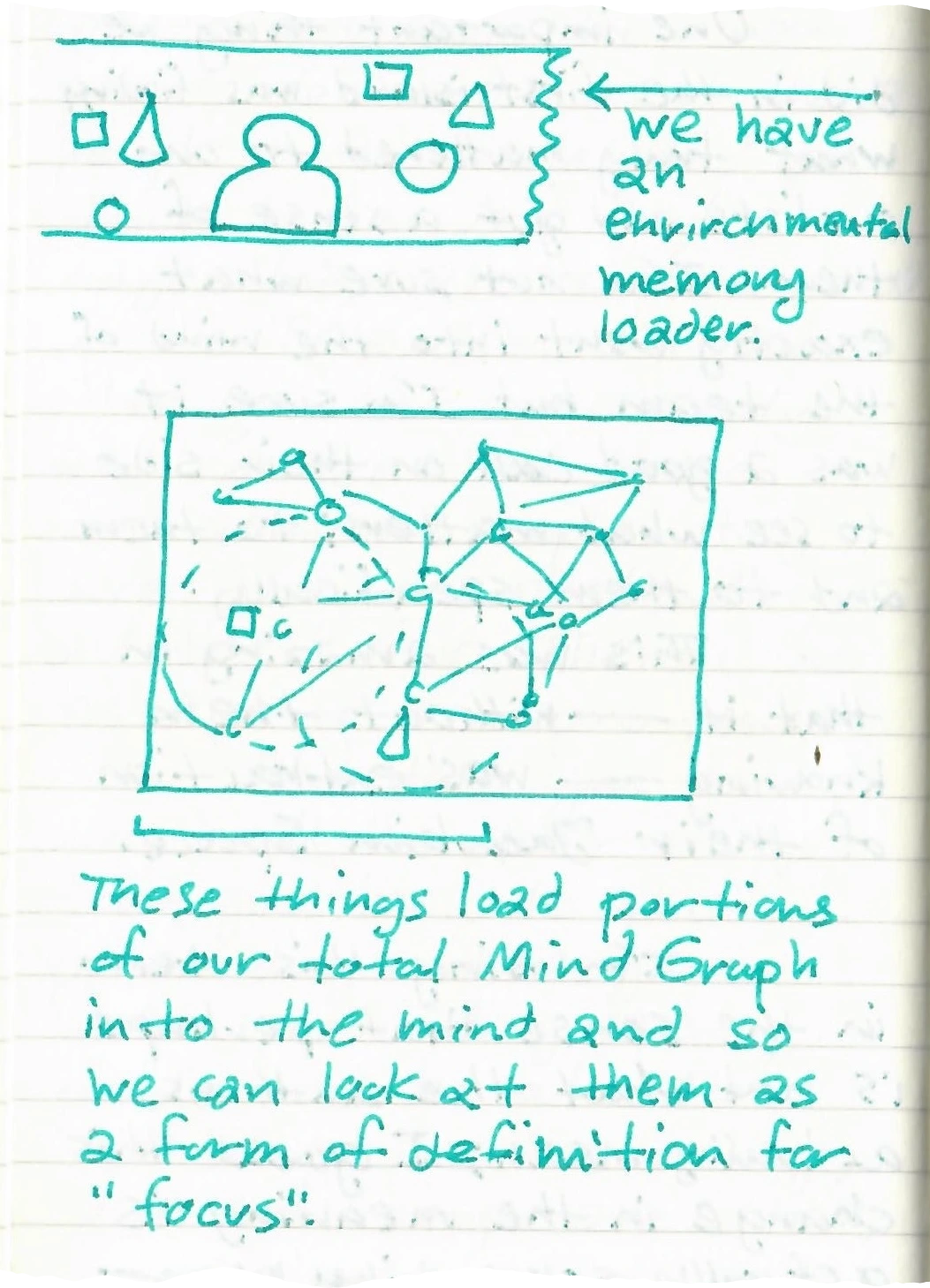
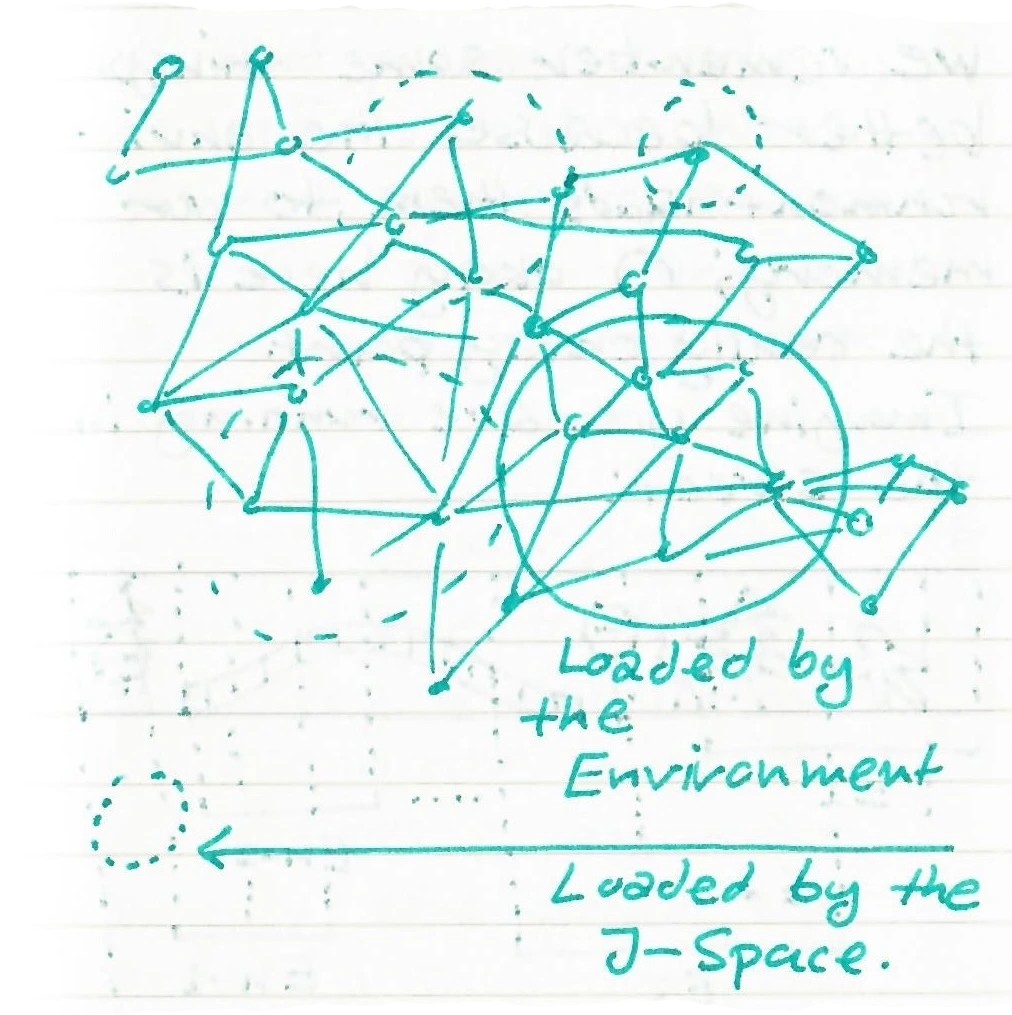
So I can actually define what I mean better by now: We have a notion of the J-space, and we also have the environmental memory. We remember things by seeing them and we remember some things better because the environment loads them to our memory, okay here is the really crazy part. Imagine you are running in the street:
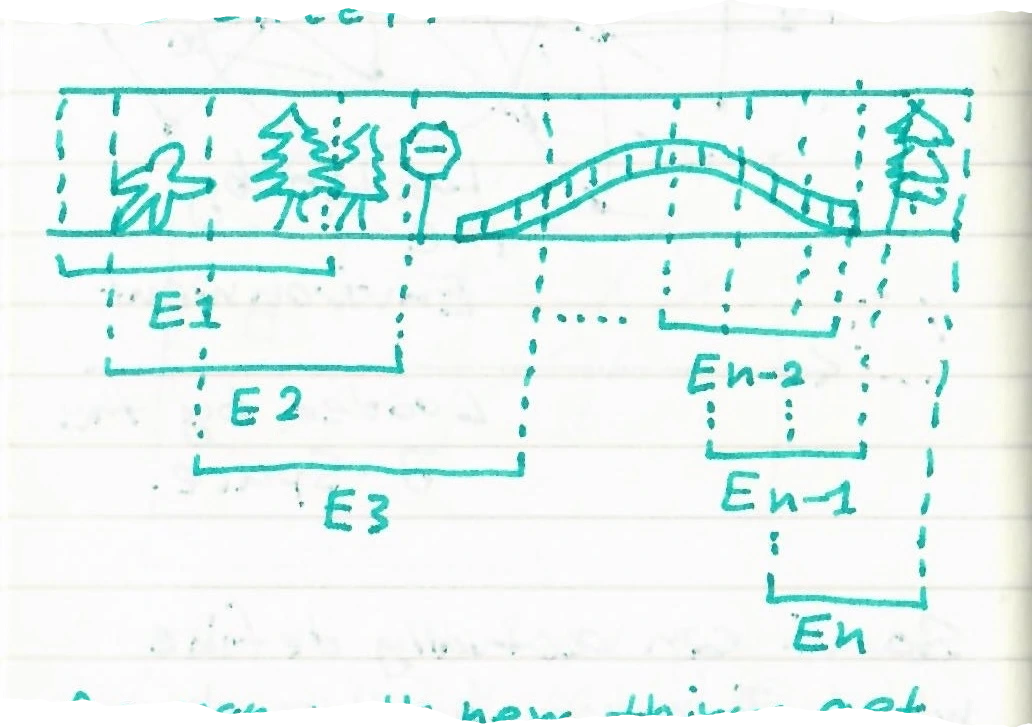
As you walk new things get added to your environmental memory, and some things get pushed out of that memory. The walking is basically simulating the passage of time and that passage gradually sees different and more different context, environment. So if we think about this so many things happen in our mind:
I would argue that environment keeps a persistent J-space in the mind. And that shapes a region or many of the graph by constantly enriching the parts in a re-enforcement loop: That shapes focus.
We have the illusion of self as constant because we live in the same apartments; with the same people and the things we bought as souvenirs and got them as memories and gifts that keep our memories intact. Even if you change your people and apartment; there still are the whole city and media and population that keeps you, you. And we never really see this because the change is so gradual.
If this idea is true; it explains how memory can happen in us as well as an always running LLM. It would be a simple Last-In First-Out data structure. You have some new memory added while you lose some other.
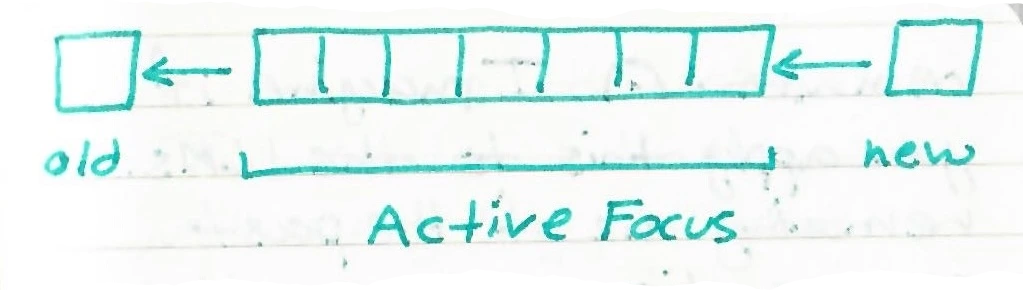
And so if you live inside of the same place the chances are; you have this:
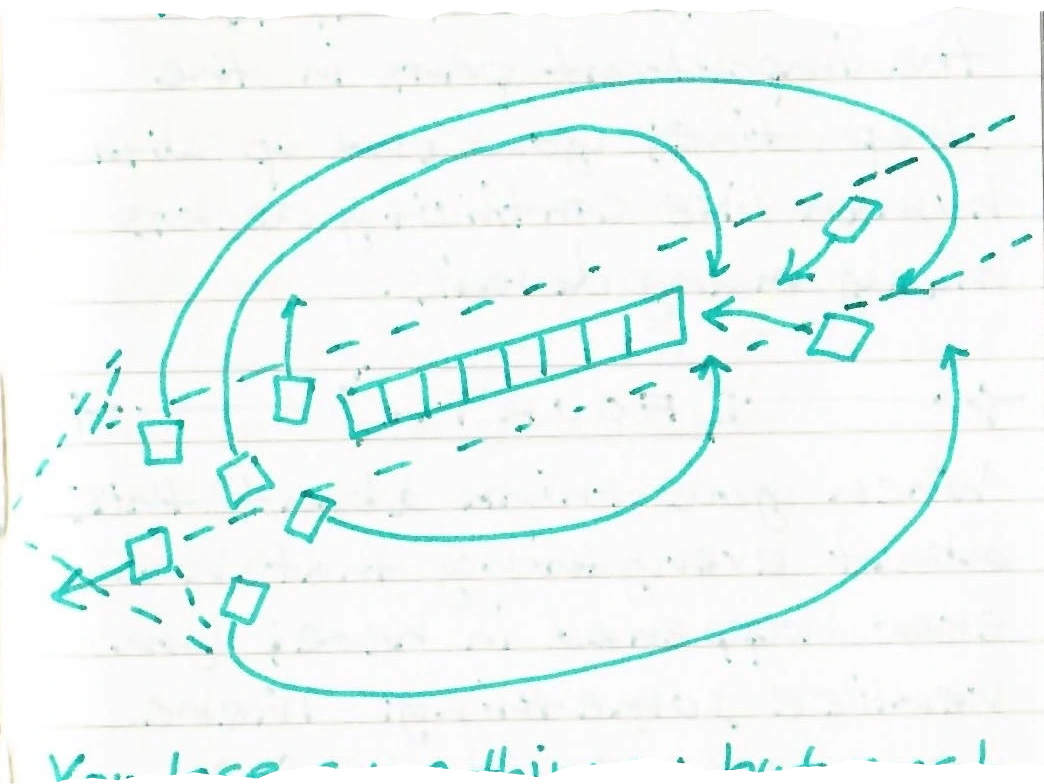
You lose some things; but most of them come back to your memory. And the sense of self slowly appears and (smiley face) remains. (smiley face) I imagine if you apply this to the LLMs. removing one of the past conversations as you add a new prompt; and have it work across infinite sessions. And then if you have a system that learns the important parts in the sleep time; you end up with human like continuity across many many details.
When you think about this; about everything that has ever happened in here; you realize something: There never was an idea of a second brain; it has always been one. We are integrated with our surroundings way more than we think about it. The scale of the graph is just way bigger and way deeper than I had ever suspected. For some; it has been (smiley face) the idea of progress as a group effort; for some it is the idea of something universal that connects us all. (smiley face) for some it is science; (smiley face) for me it is the lived experience of so many environmental changes. (smiley face) I have lived in totally different realities and felt just how different life becomes. One thing that I know for sure is that [this was never continued.]
[
Amidst arguments on Twitter and Reddit about whose favorite games are more valid, while we worry about the perfect distribution of bodies in our sci-fi fantasy, the big machines of global systems hulk down the roads and the waterways, indifferent. It is an extravagance to worry only about representation of our individual selves while more obvious forces threaten them with oblivion—commercialism run amok; climate change; wealth inequality; extortionate healthcare; unfunded schools; decaying infrastructure; automation and servitude. And yet, we persist, whether out of moralism or foolishness or youth, lining up for our proverbial enslavement. We’ll sign away anything, it would seem, so long as we’re still able to “express ourselves” with the makeshift tools we are rationed by the billionaires savvy enough to play the game of systems rather than the game of identities. …
Only a fool would fail to realize that we are the Sims now meandering aimlessly in the streets of the power brokers’ real-world cities. Not people with feelings and identities at all, but just user interface elements that indicate the state of the system, recast in euphemisms like the Sharing Economy, such that its operators might adjust their strategy accordingly.
[
The natural reaction, when someone is having trouble understanding what you are explaining, is to break up the explanation into smaller pieces and explain the pieces one by one. This tends not to work, so you back up even further and fill in even more details.
But human minds do not work like computers: it is harder, not easier, to understand something broken down into all the precise little rules than to grasp it as a whole. It is very hard for a person to read a computer assembly language program and figure out what it is about…
Studying mathematics one rule at a time is like studying a language by first memorizing the vocabulary and the detailed linguistic rules, then building phrases and sentences, and only afterwards learning to read, write, and converse. Native speakers of a language are not aware of the linguistic rules: they assimilate the language by focusing on a higher level, and absorbing the rules and patterns subconsciously. The rules and patterns are much harder for people to learn explicitly than is the language itself.
[
But we have no similarly useful metaphor to help us understand intellectual or cultural or educational development. The nearest processes are biological… Piaget’s is perhaps the best known elaboration of a biology-based metaphor of development, and John Dewey elaborated a conception of education drawing on “growth”.
I have tried to adhere to a nonbiological and rather vague use of “development”. These kinds of understanding are only “somewhat” distinctive in that they are not wholly different forms of thought, mutually incomprehensible; they are not so much like different computer programs as like modules of a well-integrated program, focusing on different tasks but each able to comprehend the others. Well, that’s not a great metaphor either; tempting though computer metaphors are for mental operations, they always seem to confuse as much as they clarify.
[