Today I had my day off to go to the second round of post mortem.
Fuck K. ███████ is all that I can say.
[
[
Chris Green’s 2007 SIGGRAPH work, “Improved Alpha-Tested Magnification for Vector Textures and Special Effects,” stores not the glyph’s pixels but a signed distance field: each texel holds the distance to the nearest edge, positive inside, negative outside. In the shader you sample that field and threshold at zero. Because distance interpolates smoothly, you can scale a small SDF texture up dramatically and still get a clean edge, and you get cheap antialiasing by softening the threshold.
One small texture, resolution independent within reason, one cheap shader. For a long time this was the default for crisp UI text and game HUDs, and it still is on constrained hardware.
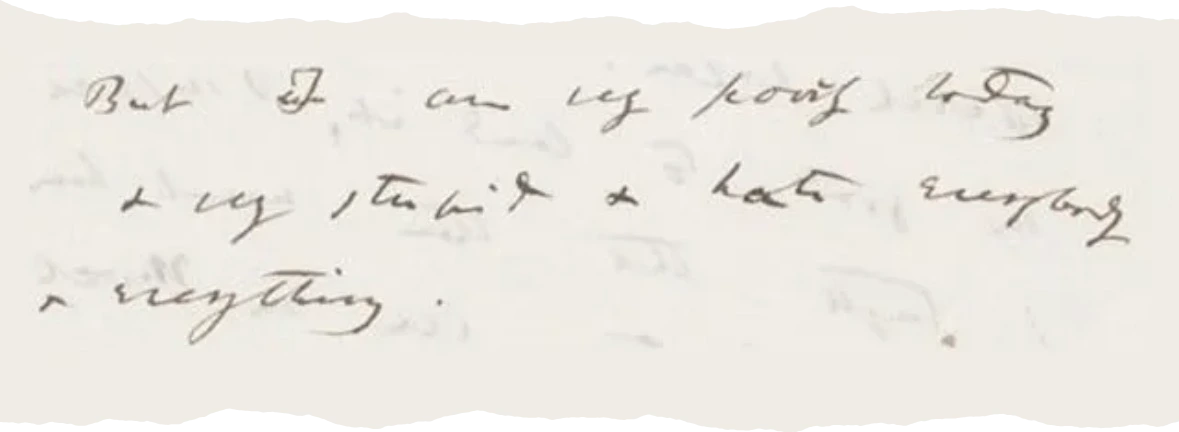
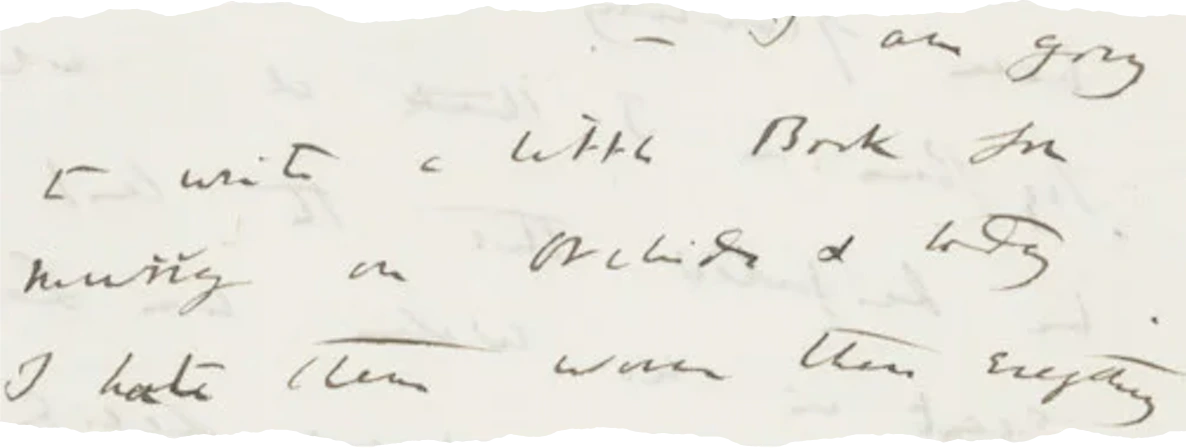
But most days, I guess, were hard. “One lives only to make blunders,” he writes here to Lyell.
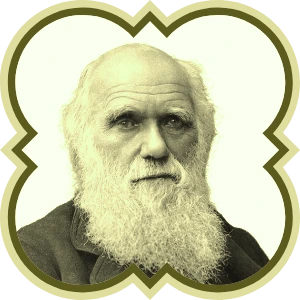
But this is Charles Darwin writing in 1861, two years after he’d published On the Origin of Species. His years of labor (which “half-killed me,” he said) were behind him. He was famous now, already working on his next book, which was going to be about orchids
In 2017 Eric Lengyel published an algorithm, called Slug, that stopped dodging. It renders glyphs directly from their outlines in the fragment shader, with no texture atlas and no per-frame tessellation. Lengyel patented it in 2019, and on March 17, 2026 he dedicated that patent to the public domain. That is why we built Slughorn, our C++20 implementation of the Slug technique
The breakthrough [
Relay-based main memory featured prominently in what was probably the first true electronic computer, Konrad Zuse’s Z3
Viktor Chlumsky’s work, from his 2015 thesis and the 2018 paper “Improved Corners with Multi-Channel Signed Distance Fields,” fixes the corner problem. Instead of one distance channel, MSDF stores three, in red, green, and blue, each encoding distance to a different subset of edges chosen so that sharp corners survive. In the shader you take the median of the three channels. The median trick reconstructs corners almost perfectly, so an MSDF glyph stays crisp at magnifications that would round an SDF to mush.
MSDF is the current sweet spot for a lot of teams, and Chlumsky’s msdfgen is MIT licensed and widely adopted. If you need crisp scalable text and you are willing to bake an atlas, it is an excellent choice.
Who knew that minds of the first rank wake up some days feeling like they belong in a sewer? In his short biography of Darwin , David Quammen writes that he was “nerdy, systematic, prone to anxiety.” He was not quick, witty, or social. He spent decades working out his ideas, slowly, mostly by himself, writing letters and tending to a weak heart and a constantly upset stomach. He was a Slow Processor, who soaked in the data, thought, stared, tried to make sense of what he was seeing, hoping for a breakthrough. All around were snappier brains, busy being dazzling, but not Darwin’s , which just plodded on until it finally saw something special, hiding in plain view.
But an SDF is still a baked texture sampled at a fixed resolution, and it lies about corners. A sharp corner is a discontinuity in the distance field, and bilinear interpolation rounds it off. Every hard corner on a letter, the point of an “A”, the notch of a “K”, gets softened. Push the magnification far enough, or make the glyph small enough that the field is only a few texels wide, and thin stems break up and detail smears.
[
Every scalable font stores each glyph as vector outlines. TrueType uses quadratic Bezier curves, OpenType with CFF uses cubic curves, and both mix in straight segments. The interior of the letter is whatever the fill rule says is inside, usually the nonzero winding rule: shoot a ray from the pixel, count how the outline crosses it, and if the winding number is nonzero the pixel is inside the glyph.
Another fascinating incarnation of the idea were delay-line memories. These devices encoded data as sound waves pumped into a length of material and then sensed on the other side. Because sound takes time to propagate, some number of bits could be “stored” in flight in an electro-acoustic loop. The main advantage was that sound waves propagate pretty briskly, so the latency of this system was far better than that of a spinning capacitor drum.