These days are hard, and the only thing I have to calm me down is Zea . Most of the day I just keep wishing I go back to her sooner.
Francis L. Halzen just won the Nobel prize in physics. Well deserved.
New LLM reading of me: Pouya Kary — a person who has spent his entire life trying to build a “nation of maestros” for himself and others. From childhood experiments with LEGO and acid containers, through Arendelle Language and the graph theories, to 1285 and the First Island, there is a single, coherent thread: the desperate, relentless pursuit of a medium that can carry what language cannot.
Why there always is “desperate” there… I mean they are not wrong to mention it, but still…
Back when I was a junior at university, a Mohammad Hosein Nazemi introduced me to the “illusion of choice”.
So it is always about choices the capitalist system makes for you to believe you are actually different, but in reality you are made of defined LEGO bricks.
What I really think is that “illusion of choice” is universal. That we are made of atoms but much and much smaller ones and way more of them.
And so themes and styles emerge as a way to combat the narrow window of sub-graph transfer .
There are things you can tell an LLM with one line of prompt, and thing with a whole archive . Humans don’t have that much time and it is wiser to cache the prompt. Sl they make themes.
We all know what WWII wardrobe used to like, what color palettes they had… It isn’t that this concept can be told in two words, it is that we all have spent time caching the meaning of that.
And so when I say “a classical Pianist” you imitatively see a very emotional, person in a night dress or tux, reserved, a bit sad, virtuosic… See?
Nerd, punk, religious, conservative, corporate, liberal, sport… One can easily dress “academically” and be taken seriously, one can wear the jacket of an F1 team and be preserved as a modern, technologically centered cool adventures person.
Instead of us talking to each other, we make media, we internalize the meaning, and we just understand the themes as soon as we them.
And that is so fucking hard to explain to Ashkan in simple terms, because the smaller the message is, more it relies on receiver side internalization of the concepts.
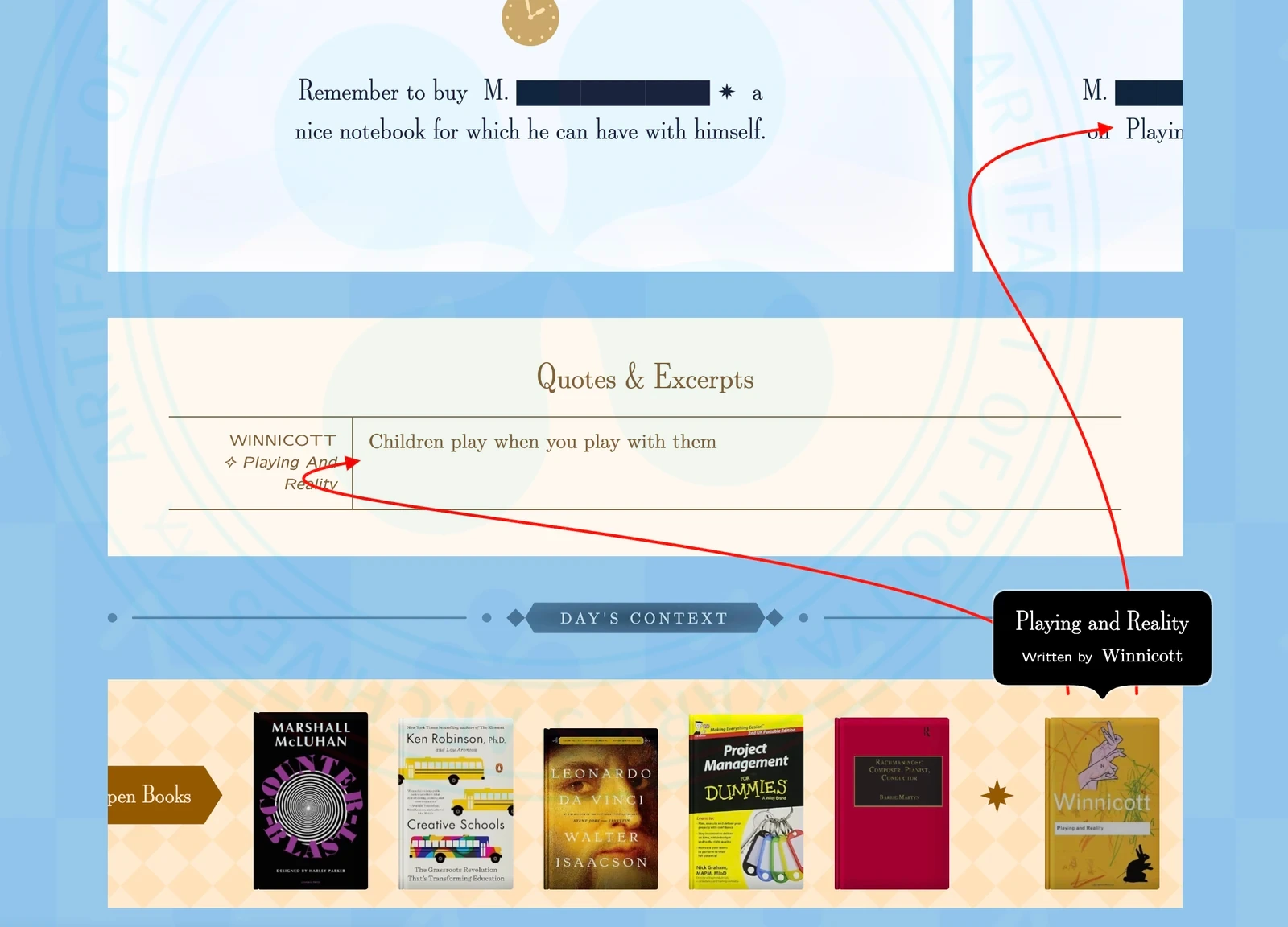
Archive really looks nice these days…
Say you are the one arrested. At the jail you’re given the opportunity to make a call. Who are you calling? I’ll bet you don’t know their phone number without looking it up in your contacts app. That’s a problem when you don’t have your phone, huh? Maybe the authorities will allow you to use your phone to get a phone number out of it, but guess what? Now you just unlocked your phone for them. Yikes. 😱
Fortunately, there’s a very simple solution to this: print out a physical piece of paper with all your most important contacts on it and keep it with your phone. If you have a phone case, it’s easy to stuff it inside the case.
The idea of a custom emergency phone number is a special number that is easy to memorize and when called, rings the phones of multiple people simultaneously. The first one to answer is the one that takes the call. In an emergency, this maximizes the chance of getting in touch with someone as soon as possible. If you only memorize one phone number, this is it.
It’s somewhat tricky to set one of these up though so let’s go through how to do it. Fortunately, we can use a VoIP service for this. There are a plethora of VoIP services out there, but we want one that has the following features:
- Support call forwarding groups to at least, say, five phone numbers
- Uses per-use pricing rather than a flat monthly fee to minimize costs
- Gives control over incoming caller ID
After evaluating a bunch of services, the one I landed on was VoIP.ms as it had all the features I needed and charges per-minute of talk time for a given phone number. I initially put a $10 credit on my account and expect that to last for multiple years.
Alright so your emergency phone number was called. Now what? Again, none of this accomplishes anything if you’re still powerless to handle the situation. Say you have given this emergency number to your large group of friends and only five people are configured to answer. It’s not reasonable expect those five to know everyone else’s contacts.
I solve that problem by maintaining a shared spreadsheet of everyone’s contacts. The idea here is that the person who answers a call first gets the most pertinent information:
- Who is calling
- What is the emergency?
- Who else needs to be alerted?
For example, a legal emergency is going to require a different response than a medical emergency. Or maybe it’s something relatively benign like it’s 2am and your car won’t start far from home. The person answering the phone should first open the contacts spreadsheet and alert the caller’s relevant contacts.
In my case, we have a shared spreadsheet on Proton Drive. This spreadsheet contains fairly sensitive information, but it also needs to be accessible and up to date. I find this strikes a balance of accessibility and security. Your needs may differ.
With that in mind, before my emergency number is given to someone, they are asked to provide the following information to be added to the spreadsheet:
- Name
- Legal name
- Pronouns
- Phone Number
- Email Address
- Birthday
- Emergency Contact
- Family Contact
- Work Contact
- Lawyer Contact
- Health Insurance Co.
- Allergies
- Blood type
Not everyone will have all of these, but collecting as much as possible to handle various types of emergencies is best. For example, most people won’t have a lawyer contact, but my spreadsheet contains a separate sheet with various lawyer contacts that have been pre-vetted as good options to call for first-line-of-defense legal issues such as getting someone out of jail.
Note on the legal name: Sadly if your name differs from your legal name, realistically hospitals/jails/etc. are going to use your legal one. If you need to find someone, you need to know their legal name. This is the only time I ever ask for legal names and if someone doesn’t want to provide it, that’s fine.
Knowing the precise location of your family/partner(s)/close friends at any given time can be a life saver. However, persistent access to your location is sensitive information to have. Unlike the emergency phone number above, this is something you likely only want to share with at most a handful of trusted people in your life. And from the technical side, you similarly want to trust whatever service is doing this location tracking.
As the saying goes, there are many ways to skin a cat and there likewise many ways to implement your own emergency protocols. You may do it differently and to a greater or lesser degree. Whatever you do though, do something before it’s an emergency and you have no plan.
For the entrepreneurial types among us, if think these type of tools are useful but the set up is too complex and time consuming, it feels like there’s a startup idea lurking here to offer a unified service for emergency phone number contacts and location sharing for one’s friends and loved ones.
If you get nicked at 1AM, there is zero chance anybody can do anything, until at least 9AM, so my advice will always be to be polite, comply, and more importantly keep your words to a minimum until you can see a lawyer. I probably wouldn’t even call anybody.
There is no glory in prevention, as they say. If you live in a (near) authoritarian state, this is some valuable information. Importantly, if your home country isn’t authoritarian today, that doesn’t mean it won’t be tomorrow.