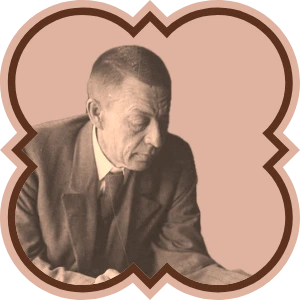
Just ported the Bret Victor screen saver to swift and fixed all of its problems. It now render crystal sharp and is amazing.
I’m listening to music in a YouTube channel called “Hal Leonard Concert Band” and it is one amazing place to be. Their music is mostly Brass with some wood wind and a bit of supporting instruments like a Timpani or Celesta. This gives me so much joy. For much of my life I have heard string-first orchestras and then these kinds of bands pop up to my eye.
The beauty of their channel is in the fact that they have really amazing arrangements of songs and they are generous enough to share their full sheet musics. I have a whole masterclass of writing for the brass here and I’m so grateful for them.
In all of this however; is a very interesting thing worth being talked about and that is the frame of reference that you see in noticing these pieces. If we look at the way music works; we see a source code that is usually the original piece or the sheet music; and people usually drive adaptations of that for a specific use; say their band configuration; play; or the movie soundtracks.
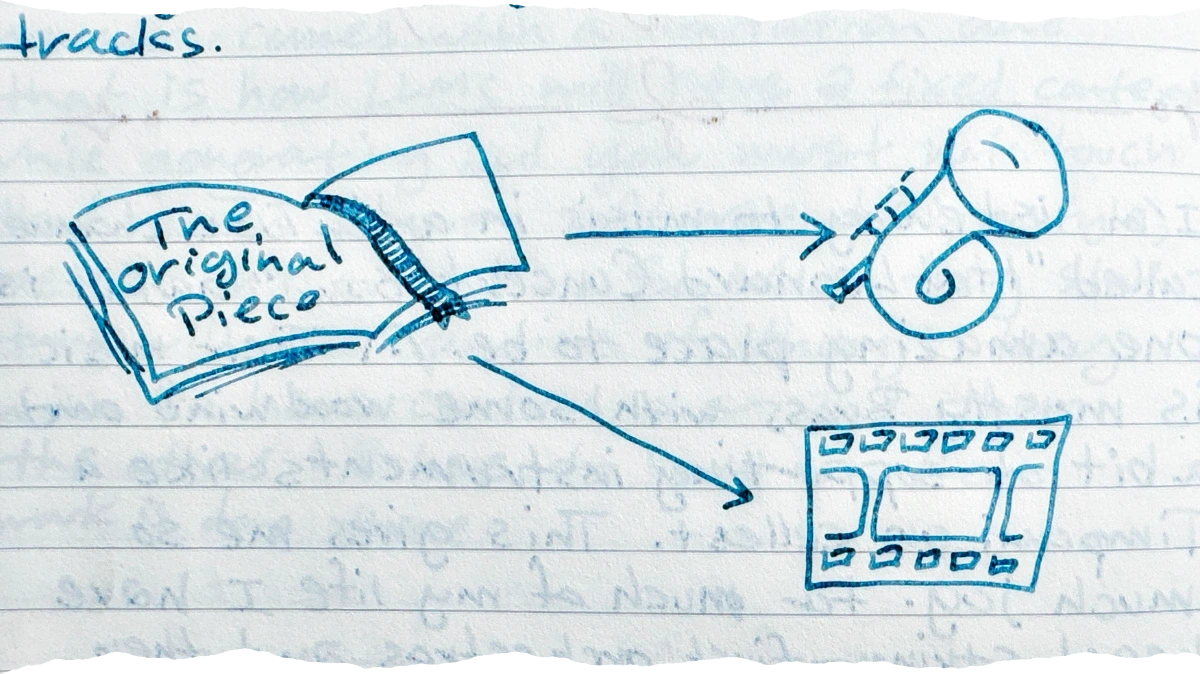
What is really important here is that most people don’t really notice or care about the adaptations; they say see the original thing and for them variations are just variations. I guess this is really because the original becomes a hub (as I said; just an educated guess) and for that some things are only seen through the parent — or gravitational nodes — like nodes.
But the really interesting part is that we completely lose the matter of computational irreducibility and more importantly; the emergence.
I think all my life I valued things like looking at matters from really different angles. And that is something worth mentioning in here because maybe they are the same [something very random is that thick notebooks are tiring my hands; and I’m becoming distracted now].
Any ways; since my childhood there was this matter of finding things that all people saw from one angle but I or my parents saw from another angle. I guess my mom’s shopping for the strange and my father’s ways of engineering and fixation on jazz standards had a very huge role to play in here. [Now the band is playing a piece called the Flight of The Thunderbird and it brings such strong emotions from my childhood. These are materials to show what my work means. But I have no way to move them to this word based abstract language]. So you see what happens? there are things that can not be seen as variations—I’m writing this very badly—I had too much distractions very sorry. Okay think about it like this: Maestro Rachmaninoff ’s variations on the Paganini theme (specially no. 18) are not anything like the original theme and they really are each treated like a very special thing. But look at the fact that they have changed so much
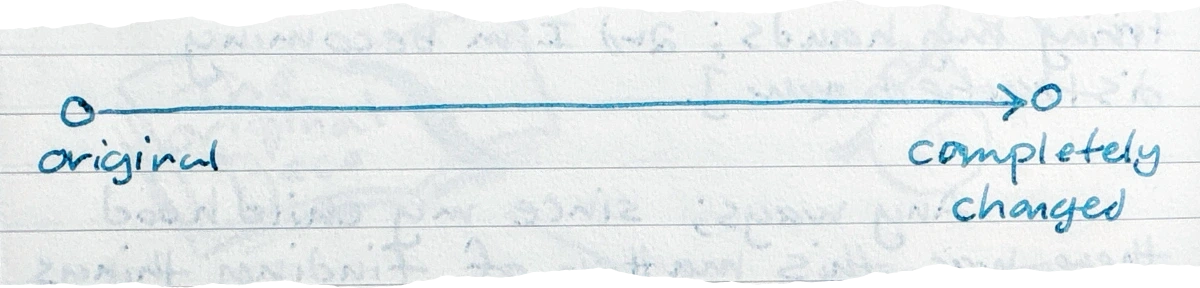
This whole thing is a spectrum and when you are dealing with some thing like this; it is easily overlooked. Bill Evans has this piece beloved by my father (to the point that he always puts it as his ringtone) called “Spartacus Love Theme”. It is to be a “variation” of the theme from the film. But to be honest; I have heard the original and it is at best something good; Bill Evans’ derivation is by all means a whole different piece of music entirely and it is a masterpiece of the first order; not to be mistaken for the normal things.
So we see these as separate things — obviously — but then do we consider’s Avril Lavigne’s cover of the track “Scientist”. a derivation deserving its own place? What about classical performances? Do you distinguish between a performance by Evgeny Kissin or Lang Lang? I think all of these are very easily distinguished and what I’m going to talk about is none of them indeed.— I’m talking about a whole different category of things (and it is hard to fully put into language, as you can see)
What is the difference between a band that shares their sheet music and ones that don’t. If you look from the perspective of a listener; that would be nothing. But from the perspective of a junior musician like me; that would be everything. I get to study the sheets and see how they are made. My ears are developed; but still not that much that I can decode the entire —th orchestra. And so the change is absolutely massive.
And then; when I listen to these covers; or arrangements; they each have some magnificent properties that makes each of them uniquely invaluable. Take the Concerto de Aranjuez from the film “Brassed Off!”. I think it was an arrangement made for a scene of a film; but then the way brass vibrates; its unique sound and texture; the mix with the drums kit; these all rendered it—for me—something better than the original. Now why is it? If you take the normal reference of this only being the piece played with brass; yes this is not that important I agree.
But if you look at the thing as melodies that put the brass to their best uses you realize the point of view. Writing music; I have understood chords and notes mean nothing in themselves. What I see as value is intervals between them. Now there are things that shine. For example specific portamento on the violin; specific things on the brass; special progressions inside the Timpani. You should adapt the melody and arrangement for these intervals to happen.
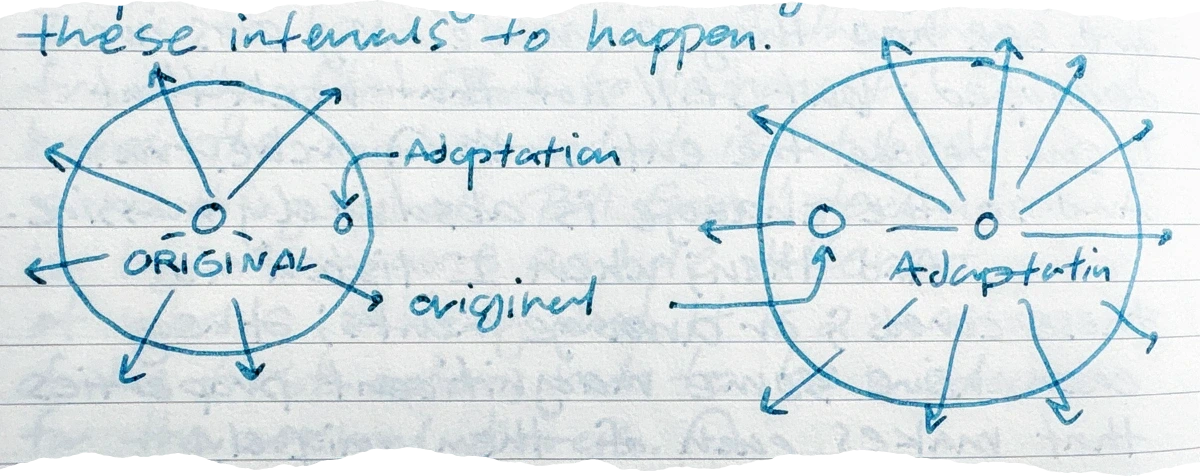
This is all about where you stand and see the world.
There is this app called “Scriptable” on the iOS by Simon Støvring. And there are some others like Pythonista by Ole Zorn. To some these forms of software meant having tools you use on the Go. And I really them because of how different an iPhone means with and without them. For people outside of this country; they maybe toys or toys or conveniences at their best. For me they mean that I can develop some things for my phone because I can not have an Apple Developer Account. So do you see what I mean by having really different frame of reference?
To a person something is an arrangement of the same melody; for me it is the condition for the Brass to shine for example. I’m listening to a version of Frozen’s soundtrack’s on brass and while it was Brass heavy this version is even better. When you change the graph of reference and let it make new things; you eventually arrive at the mix of some new elements that shape new emergent things. (compound feelings and gestalts as well) and so if you stand in this new point of view something to be overlooked becomes incredibly important. I remember liking C# but thought it is trapped in Visual Studio; Windows; WPF… And then I found Mono Project—and everyday was Christmas :tm: ever after. There C# could be light; be used in an IDE that had GTK; Pango; … Suddenly the language was the center of a universe I loved (thanks to the kindest; Miguel de Icaza ).
I’m not sure what I’m trying to say here. this is like finding a new pattern I still have not named. I can only give examples; this is like LavaScroll ; the Art Deco Elevator Scroll; my IKEA Klotpil ( 30⟡117 ) bag as the everyday arrive; tailored to me; it is like finding something unnoticed in something else and making it the Queen/King of the new world. It is like Browser Company saying a browser has to be beautiful.
Looking from a different perspective just does it no good.
Given the request from Ashkan to fully define the space and scope of this project; I’m thinking about what would be a good implementation of that space. In order for this to be resolved lets first try to define the most basic version of this project. We must have the functionality to specify quotes and gather them. This is also true if one is going to take notes and compose them. But given the amounts of engineering required to make the composing possible; I believe we must first go with the gathering and consumption tools like a web browser and the PDF reader.
Something that confuses me a lot is the fact that this system can become very chaotic; very fast and in order for it not to get there we must put the utmost care and attention into it.
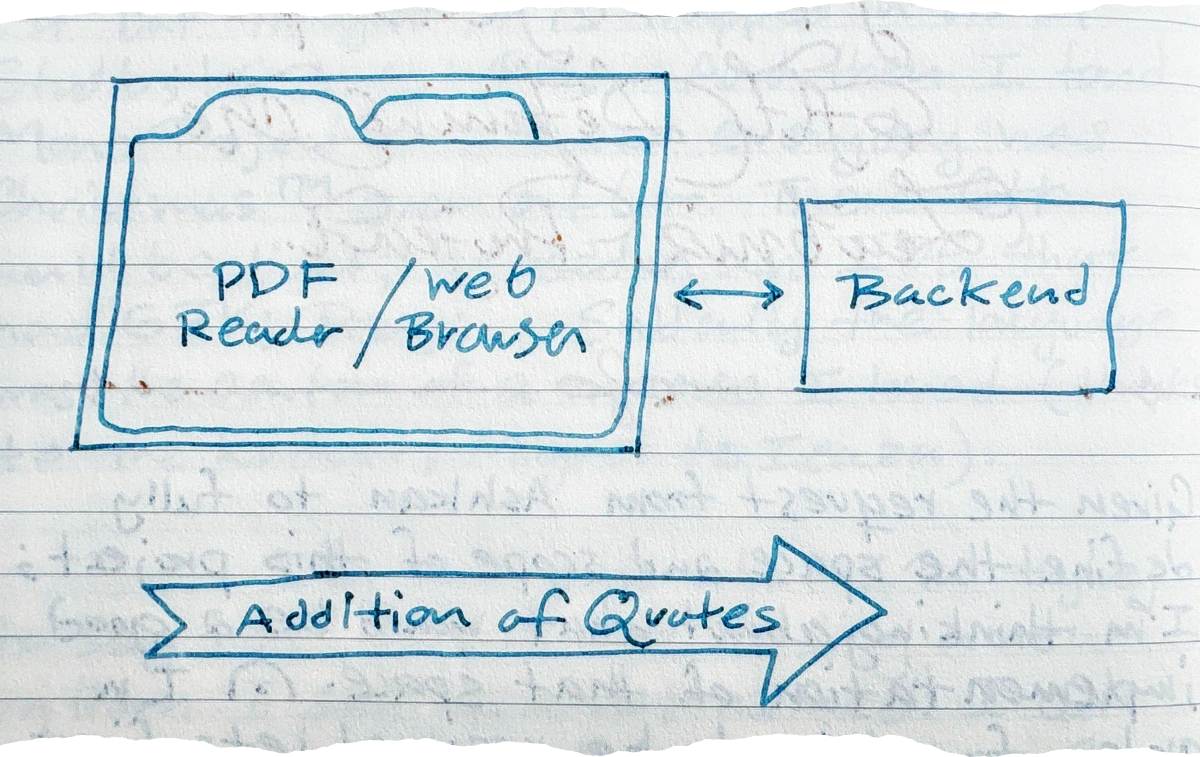
When the person using the system is going to use it; they should be able to quote things. In the Archive I have solved the problem with simply stating who is the author and what is the source title. Then it gets stored and each time one highlights something that is added to the repository with that same mechanism. But in this very parts; I think users will have a hard time doing this. So if it could be deduced by the LLMs for them that would be amazing.
So lets count that as the first thing that needs to be handled by the LLMs.
Next there would be the problem of its interface design. I think I must have a baseline design that is not that complicated and opinionated and not that much Pouya-ish. This is going to be a little hard to resolve.
I also have to find out how something like the graph engine has to be implemented. One of my wishes is to be able to have environmental memory as well as the graph relations and its zooming within the memory system.
One hugely important part of my concern is that almost no other person has the amounts of data that I have. Even if they have them; those are mostly sheets and docs for their work. These documents are not like my writings. Much of their content is buried inside of the minds of one person or a collective and therefore it is going to be either hard or impossible to reach any good results based on it. What I write in my Archive is to fill the gaps. That is not present in any other form of writing that I know of. Take the accumulation of docs and corporate writings and… They all are separate things. But the Archive is additive. Each thing adds to the whole.
one who writes for the Archive writes very differently to one who writes for a normal medium.
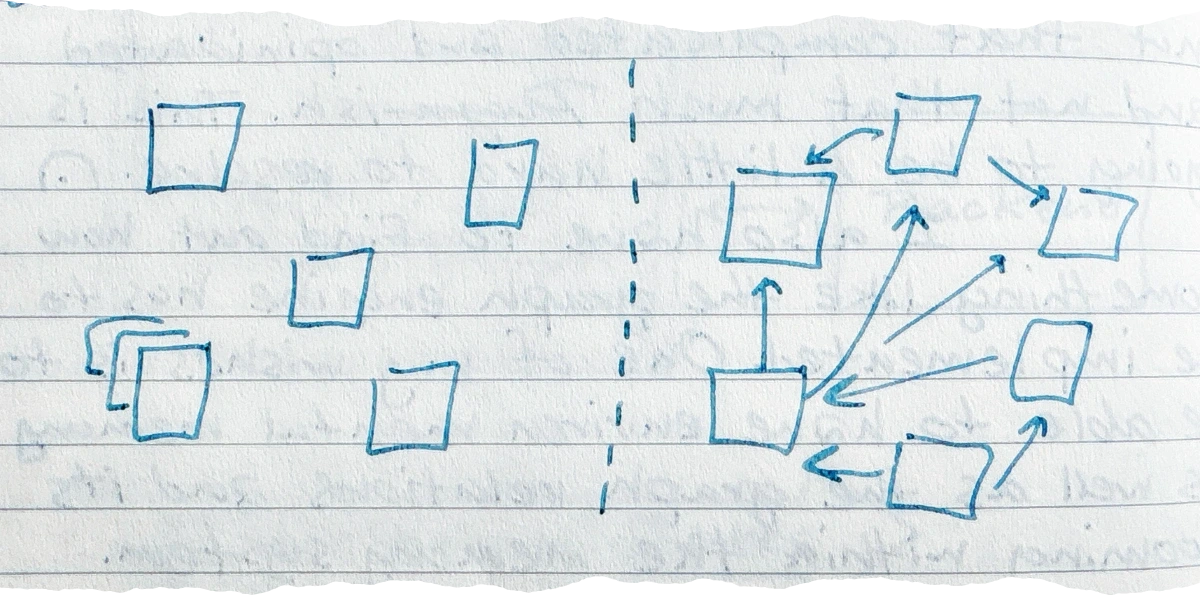
So this is going to be a very huge thing to ask from the people using our work. To change their behaviours and trust this much to us is too much. And this requires them to practice guardrails and dropping Minddropss which too are hard.
Two very big challenges also follow. One is not having enough computation required for working with the amounts of data that are happening in here. Then there is the problem of how to build trust. We live in one of the very worse places in the world in terms of privacy and safety and having a tool this powerful is the most dangerous thing in the possible realm of imagination.