Things can be other things.
We used to have this talk with Zea where she would tell me people can have relationships that look intimate but are not. I kept insisting the otherwise.
And I remember P. ██████ texting me at 2 in the morning after many years, and me taking that as an invitation to re-initiation of our relationship. While actually it was not.
Well the more that I think about it, it was the absence of words and so it suffered from falling into the space of other words.
In the morning I was thinking that we must have words for everything. Absolutely every pattern we find.
Functional design is a horrible thing. In Tehran good air is scarce and do you know what is happening?
They find the places with the best of the air and make hospitals there. (And well of course I’m thankful for having hospitals)
But then now every place with good air is a depressing hospital. And so if you want to have some good air you better be sick as fuck.
There is much to think about the mental state and its ties to the environment. To all of the things that relate to mental well-being; there exists this belief that if you rely too much on the outside and the environment; you are not going to have a good life. There are all of these sayings about how being strong within and relying on the things within the border of your body is the key to happiness. I agree; it is good to be strong inside; but that is not everything.
Why is it that we believe the environment has such a little effect on our minds? People who travel to nordic countries and experience months of full daylight or whole darkness experience so many mental things. Those who are put into solitary confinements become badly damaged. Those who live in London report the constant rain being a huge bump in their sadness. People travel to space or the sea and get sick. And yet some see furniture; people; cultures; languages… as merely decorative changes.
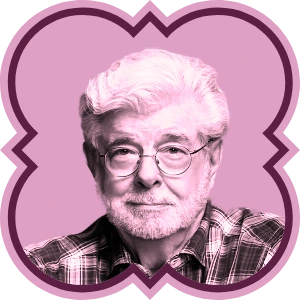
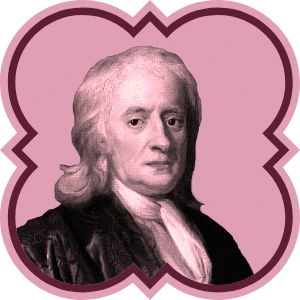
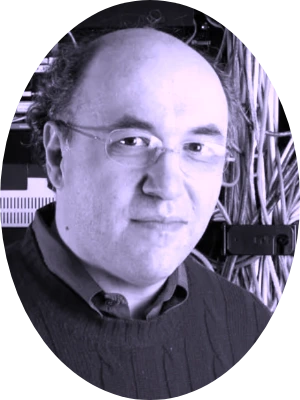
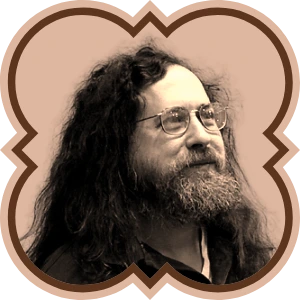
The thing I’m trying to explain here is fairly different from what most people try to say when they talk about happiness and strength from within. For what I’m going to talk about we need to know about a concept I’m going to call “ Environmental Totality ”; and it is one of the good things that help see what we are talking about. This concept somehow reminds me of LEGO; Maestro Lucas ; Apple; Maestro Newton ; Maestro Wolfram ; and people alike.
What is this and how does it work? Well think about it like this; how much of something do you control? And that concept of “stack” applies to Graphs from the first order. Take GNU as the best example that there is. When Maestro Stallman started the Free Software Movement in 1983; he wanted two things: First; to have freedom of software as a human right (he never says it; but I think all who have known him can come to the same conclusion as well). and the other was the GNU operating system. He started the project and as much as he could built the pieces together and made others come and join him. What some know as the GNU vs Linux wars and laugh at it from time to time; was actually the point of this portion of the writing. [Distracted by the amazing middle epic of Maestro Rachmaninoff Symphony 2 Adagio].
To Stallman ; they were making GNU and the kernel could not be completed. so as they saw it; someone from Finland had the toy kernel they could use to debug their own kernel and so they did. Only problem was that to the person from university of Helsinki; his work was not a toy to be used for GNU; but a whole operating system that you could install GNU software upon (the basic Graph Of Reference / point of view)
And so many years of war happened on the naming of the system. Linux grew from being the kernel to being the main thing and GNU’s name was pushed aside; or at best kept as GNU/Linux (one thing Stallman never worked on was his branding; choices of names and so much of them eventually failed).
GNU -> GNU/Linux -> Linux?
And so what happened eventually was that the world of GNU grew. Firefox; VLC; Inkscape… So much got added to the GNU that was not GNU; and so the share of GNU’s main packages got less and less; to a point where it was only 8% in the totality of the system. And then Rust came and now people have started to write even the GNU parts from the scratch in it; somehow; very soon; we will end up with a fully Linux system with no trace of Stallman’s original wish what so ever.
Now add that to rest of the world in which the number of elements you control in a system determines the share of you in them; and you get to the idea. Take LEGO; due to the substantial obsession and perfectionism of the Christiansen bloodline; they created a whole world where all elements were LEGO designed bricks; or the world of Star Wars by Maestro Lucas and the vertical stack of Apple. To some they are being obsessive over details of something; and business strategies or whole-world building and playing god; all of which are absolutely fine; but then; they also are something: Environmental Totality . Imagine the Apple around Mac OS X. It was a company that played with others; the interface engine of Aqua was based on Adobe’s PostScript/PDF technologies. Their XNU kernel was a UNIX brand; they had official Java support and Internet Explorer was there. If you wanted to code; you would have used Objective-C; with GNU’s GCC; if you wished for graphics; there was OpenGL. Apple was a team player of some sort.
But then things changed. Aqua moved to more and more Apple tech; they hired Chris Lattner and made Clang and their fully LLVM based compiler and then went to make Swift; OpenGL was pushed to the trash with Metal coming; Java and Internet Explorer both died and Safari came out; and by the end not only it was no longer running on any thing but Apple Silicon; XNU was no longer even UNIX certified.
Apple never stopped here; they went to create their own HQ; with designing every single detail; they began their own TV studio; music place…
and so as you see; they now own every—
The EGM framework is a metaphor for a powerful way to develop AI-assisted software quickly and safely with humans intentionally in the loop.
The “Elephant” is a context-rich, long-horizon AI session that holds the end-to-end architectural vision and project memory. No code is written here; it is purely dedicated to design, intent, and capturing micro-decisions. The Elephant session is where the AI interviews you and you debate the merits of your choices.
Conversely, “Goldfish” are stateless, zero-context sessions used strictly to validate specifications. Because they share no “blind spots” with the designer, they act as objective critics, probing for gaps and edge cases.