I’m so stressed, I’m dying of stress. I need anti stress medicine.
Yesterday was nice. I learned to play Rein Me In after many years of not having touched the guitar. Felt powerful.
You increasingly hear in these educational circles, a phrase; I think it’s the “400 word wall” which seems to be that 400 words is often the limit that students struggle to get past. That’s apparently how long it takes to read for 90 seconds. You get through about 400 words and that seems to be the point at which people begin to feel fidgety or need distraction or need to look at something else.
People begin to talk about—are in the 1950s and '60s and '70s—with the arrival of television. Television just swallows up human free time. There’s a remarkable statistic quoted by, uh, Robert Putnam in his book [
Literary scholar Walter Ong, who wrote, uh, a book—really—that impacted me enormously when I was an undergraduate about the difference between oral and literate cultures, which is to say cultures that run on the spoken word and cultures which turn on, um, literacy. Um, I wondered—can—can you talk—can you tell us a little bit more about the difference between oral and literate cultures and how—how that can help us make sense of what’s happening today? Yes, totally. That book, [
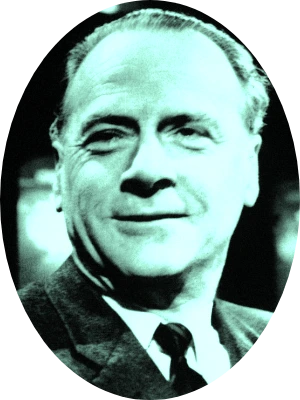
When you put a new medium into a play in a in a given population, all their sensory life shifts a bit. Sometimes shifts a lot. This changes their outlook, their attitudes, changes their feelings about studies, about school, about politics.
If you live in a pre-literate world, every single piece of information and your whole experience of the world is mediated through other people. It’s face to face. It’s emotional. Uh, you’re talking in—you’re grabbing each other by the shoulder. Every—every—every piece of information is mediated via a human being, and that makes communication more emotional—perhaps more angry, more raucous, more warm. It has this very warm, emotional atmosphere. A world in which all information is mediated via print and text, I think, feels emotionally desaturated and would feel weirdly cold and alien to those people. McLuhan argues: when all your political information comes not from your friend or your chief telling you what’s going on in your world, but via a newspaper, on a—on a blank page covered in text, it’s a much less emotional experience. You know, I can hear this sort of—I can hear this seeping back into me, to my great irritation, on the train down here to come to this studio—the raucousness of a TikTok feed. You’re back in this emotional world where all information is mediated via a human being, but it has refilled our world with feelings and passions and anger and rage and—sort of—I think also one of the roots of this more tribal feeling that our world has now. And I think although that literate world was in many ways kind of weird in its emotional desaturation, that emotional desaturation was very useful for democratic politics, which relies on people being able to have not perfectly rational arguments, but arguments that are informed more by logic and reason and evidenced argument than by the kinds of forms of emotional persuasion that come—that come more naturally. When you can persuade someone not with your—not with evidence or with an argument, but by charming them round to your point of view, or crying at them, or—or shouting at them—all these kinds of irrational modes of persuasion that were very common in pre-literate political cultures were sort of banished by print, because you can’t—you can’t shout at someone through print. You can’t charm someone through print. And this stuff, I think, is rushing back into our world. These passions that were banished by print are returning to us.
Literacy as we—as we know it today and as we experienced it in the late 19th and early 20th centuries—and it’s not, you know, the very beginning, the story of Gutenberg—but there does seem to have been an acceleration of literacy and book reading in the middle of the 18th century. A few—a few factors combined. You had the printing press. You had the increasing production of cheaper books, circulating libraries. The important pressure of Protestant—the important—the important, um, pressure of Protestantism, a version of Christianity very strongly based on reading texts, was an important force in driving literacy beyond social elites.
And there was this point in the middle and the end of the 18th century when journalists and authors begin to look around at the world around them and say, ‘Oh my god, it looks like everybody is reading.’ And allowing for journalistic exaggeration, which has always existed in history, the accounts are very attractive. A gentleman saying, you know, ‘I wondered where my serving girl was and I went to the kitchen and she was in there reading the newspaper rather than paying attention to me.’ People saying that they’re walking down the street and, you know, a guy will be walking past them reading a novel. This strikes them as deeply weird, because literacy has been for pretty much all of human history up until this point a minority habit of social and clerical elites and not spread through the population. The appearance of the written word in ordinary life causes a flurry of comments and excitement and curiosity. And it’s this phenomenon in hindsight we call the reading revolution.
And I think, you know, to—to sort of be very broad-brush about it, I—I think there are a number of—from the perspective of the modernity I cherish—beneficial results from this. I think the spread of literacy is inextricably tied up with enlightenment—as knowledge proliferates, as more people get access not only to the information that’s stored in books but to the critical, analytic, and abstract forms of thinking that we know associated with literacy—and you get this swell of natural philosophy, people questioning the world and how it works in the natural world.
And, you know, it would be too simplistic to say that, you know, press the—press the mass press—the literacy button, get the enlightenment, but I think these—these phenomena are very connected. And this, I think, creates this culture of more complex and more, um, cumulative thought—people can, as people can correspond more in print, they can talk to each other more, they can build on each other’s ideas. And I think, you know, it’s not just me arguing this; it’s the argument famously made by the economist Joel Mokyr, who won a Nobel Prize for his work on this, that the republic of letters and the exchange of information through this network of journals and letters in Europe in the 18th century was the major cause behind the scientific revolution, the industrial revolution, and the beginnings of—I mean, really, the whole of modernity as we know it.
Twitter bots posting similar messages five days after the 2016 United States elections The dead Internet theory is a concept that asserts that the Internet consists primarily of bot activity and automated content manipulated by algorithmic curation. Originally conceived as a conspiracy theory that the phenomenon is a coordinated effort to control the population and reduce genuine human interaction, the concept is also employed colloquially to describe the impacts of generative AI and emphasize only the core observations without speculating on the driving forces.