I miss Kamwa so very fucking much. So so so fucking much.
I just can’t believe I might fully restore the Finder. It is so half backed but already I feel back.
Maestro Jones is amazing. You listen to Sunrise for example, there is a guitar and base starting and all of a sudden the most heavenly and beautiful piano chords of all the time comes to the play. I mean how can anyone be so amazing.
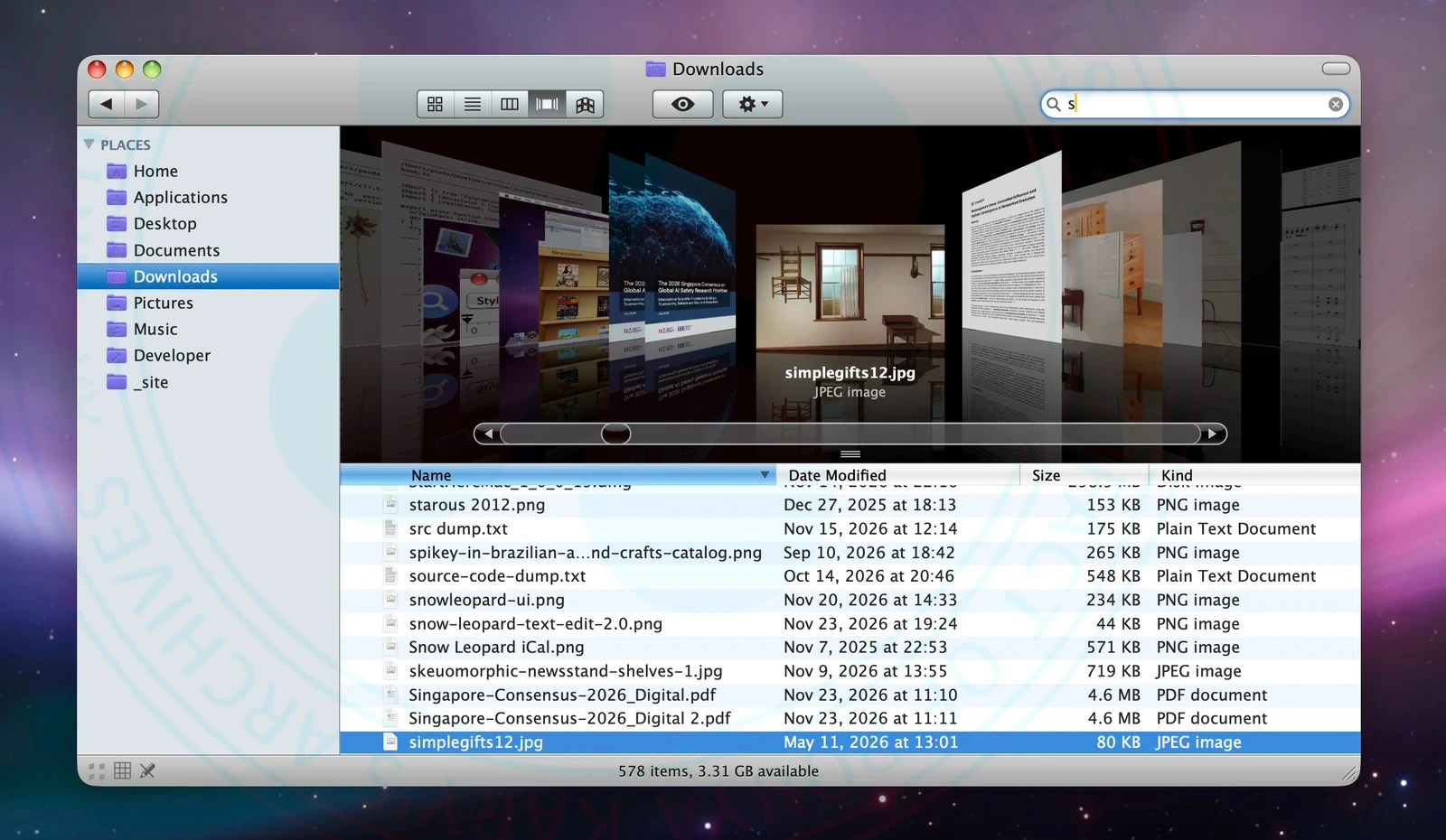
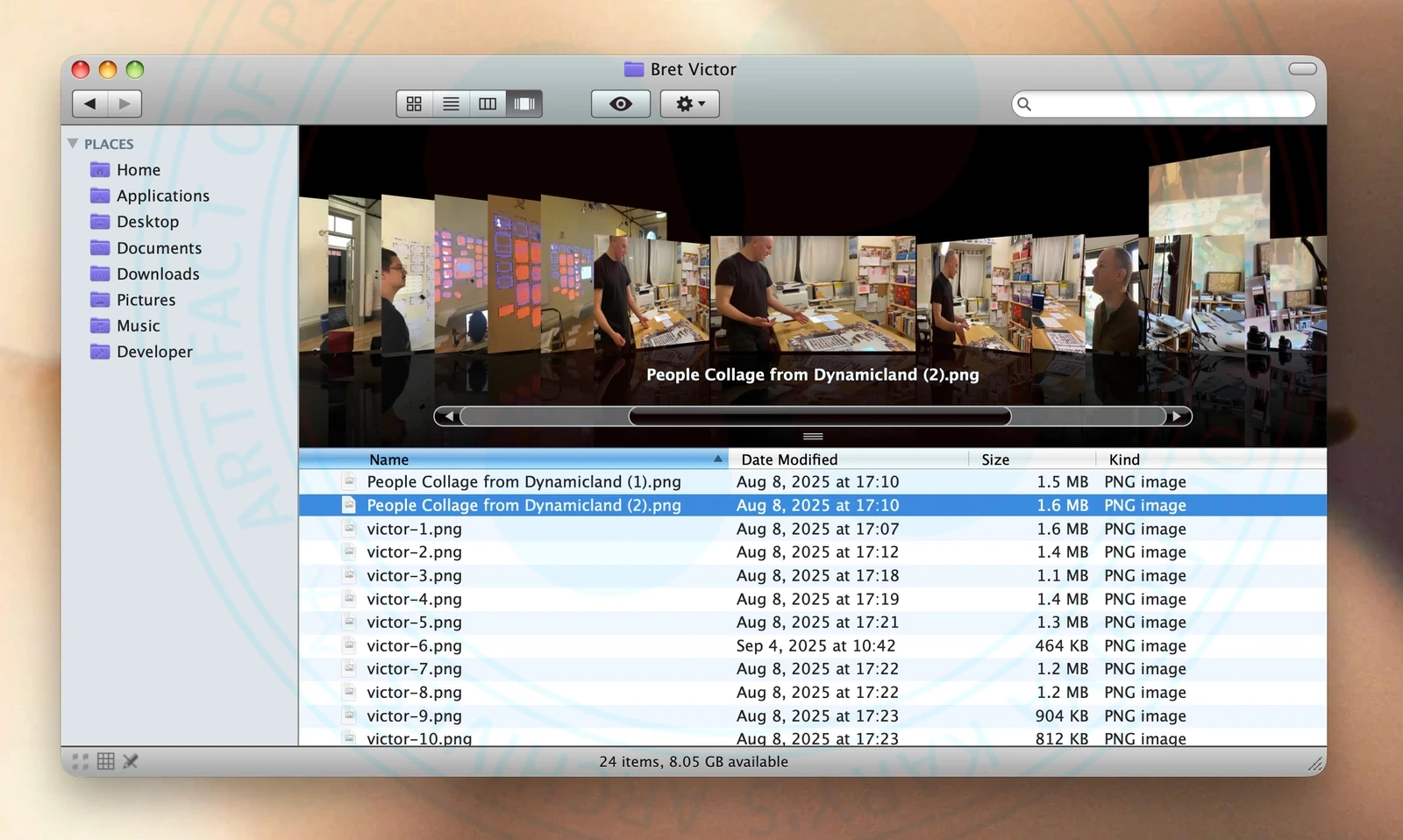
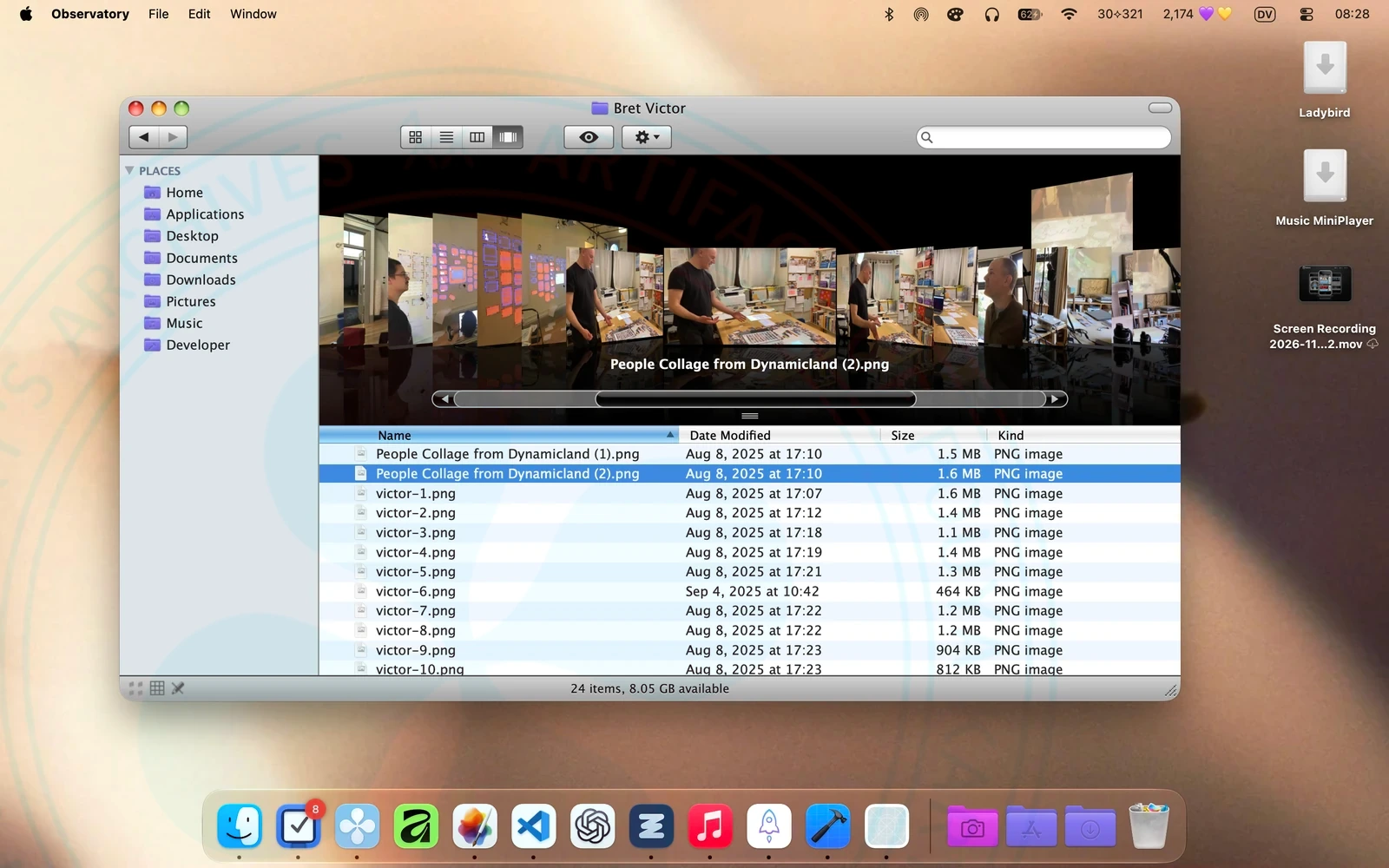
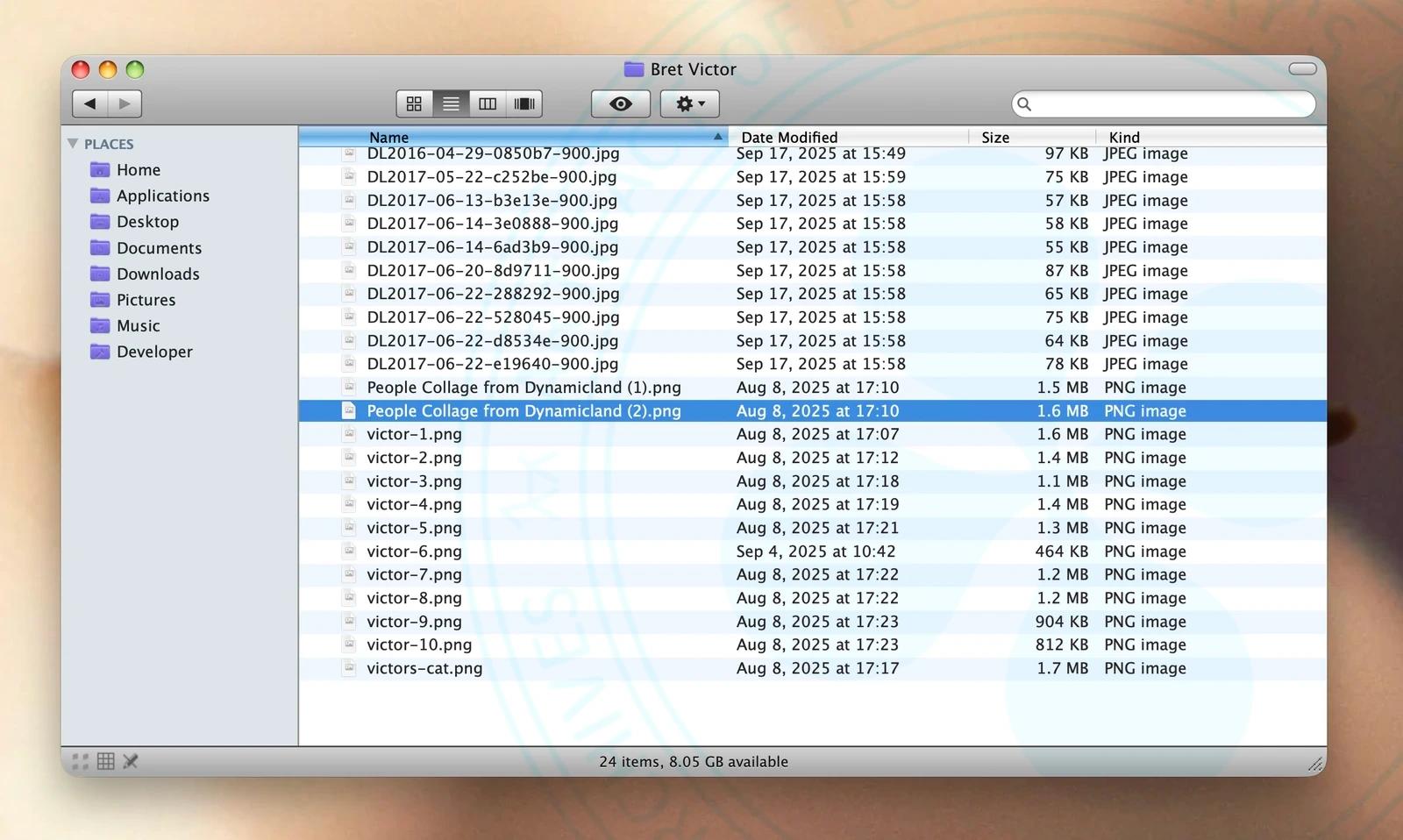
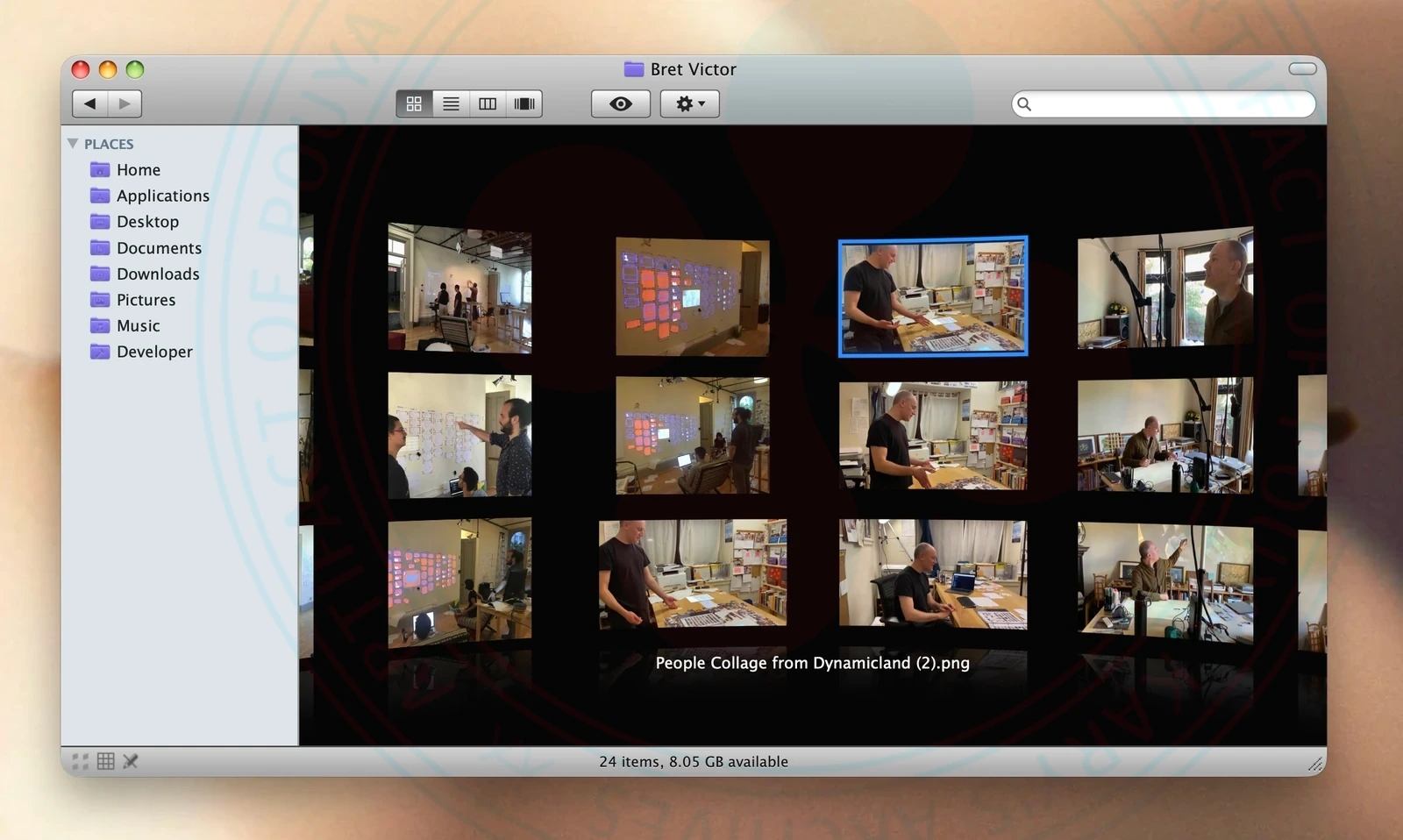
One of the coolest things that we got right was the coverflow search. When you search things, or change the table sortings, the currently highlighted item remains in the center. And so you see all around it get changed, while it is the same. So cool! Look at all the following images and you’ll see.
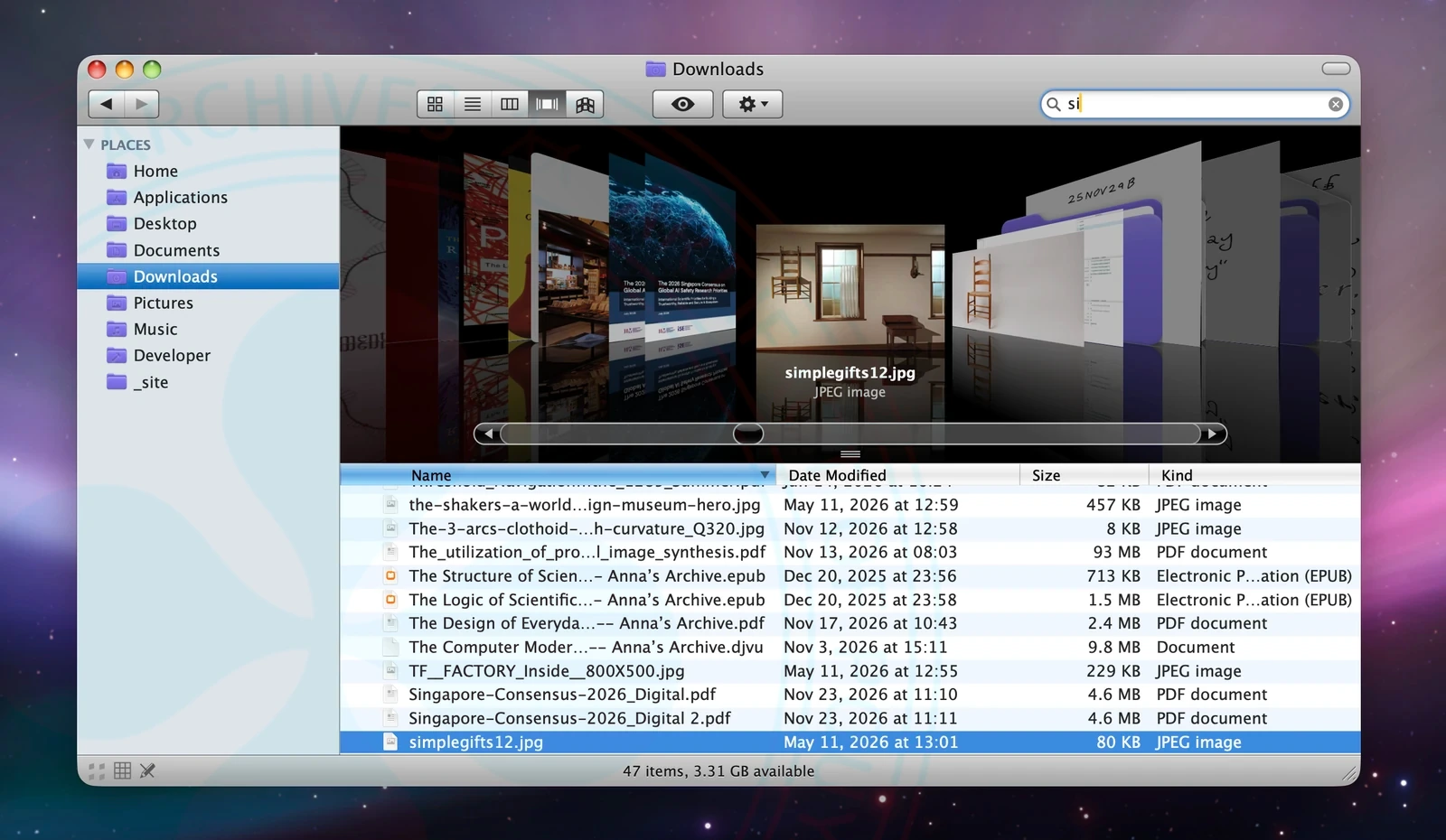
Coverflow Search in Ferret (2/3)
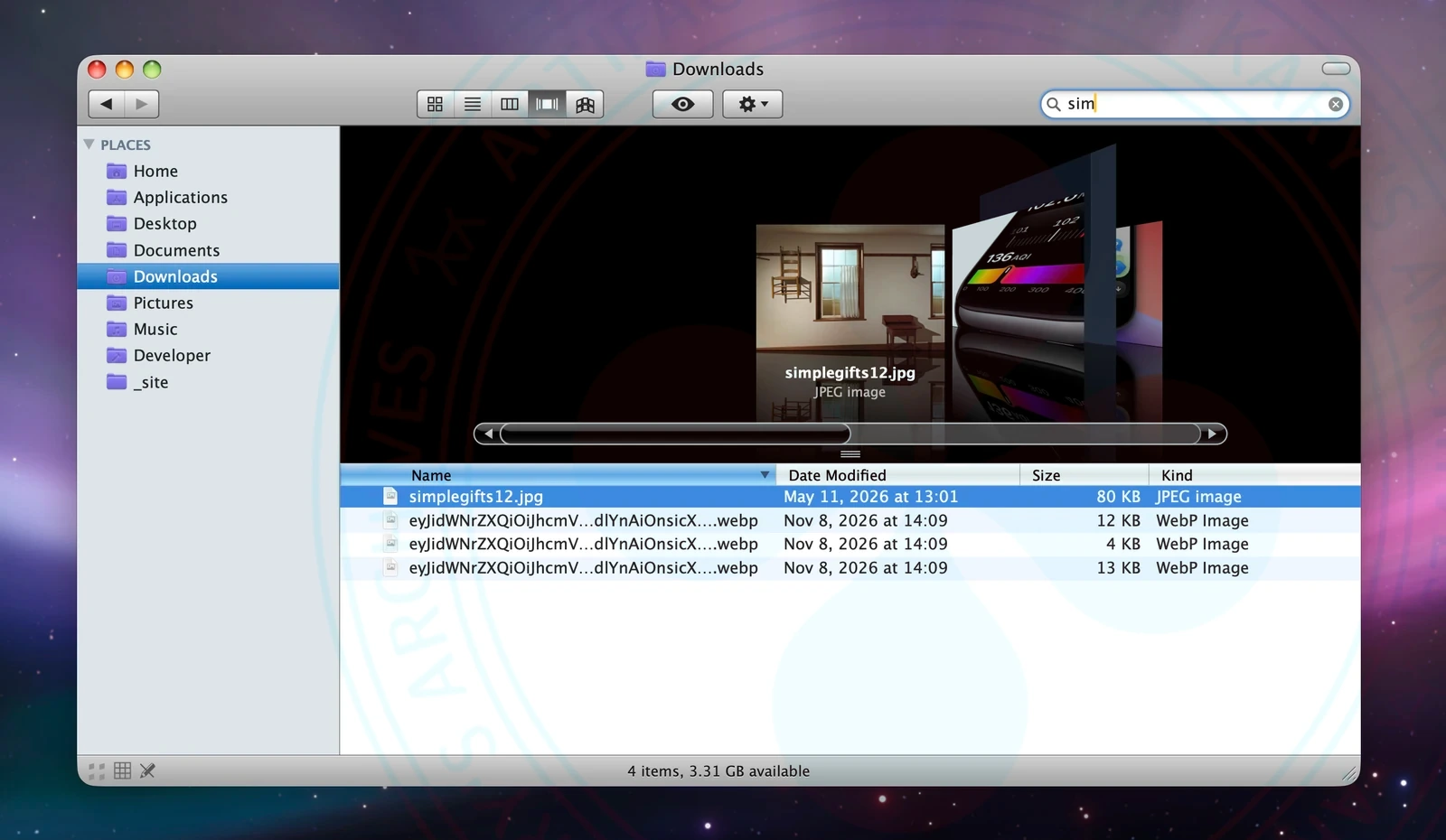
Coverflow Search in Ferret (3/3)
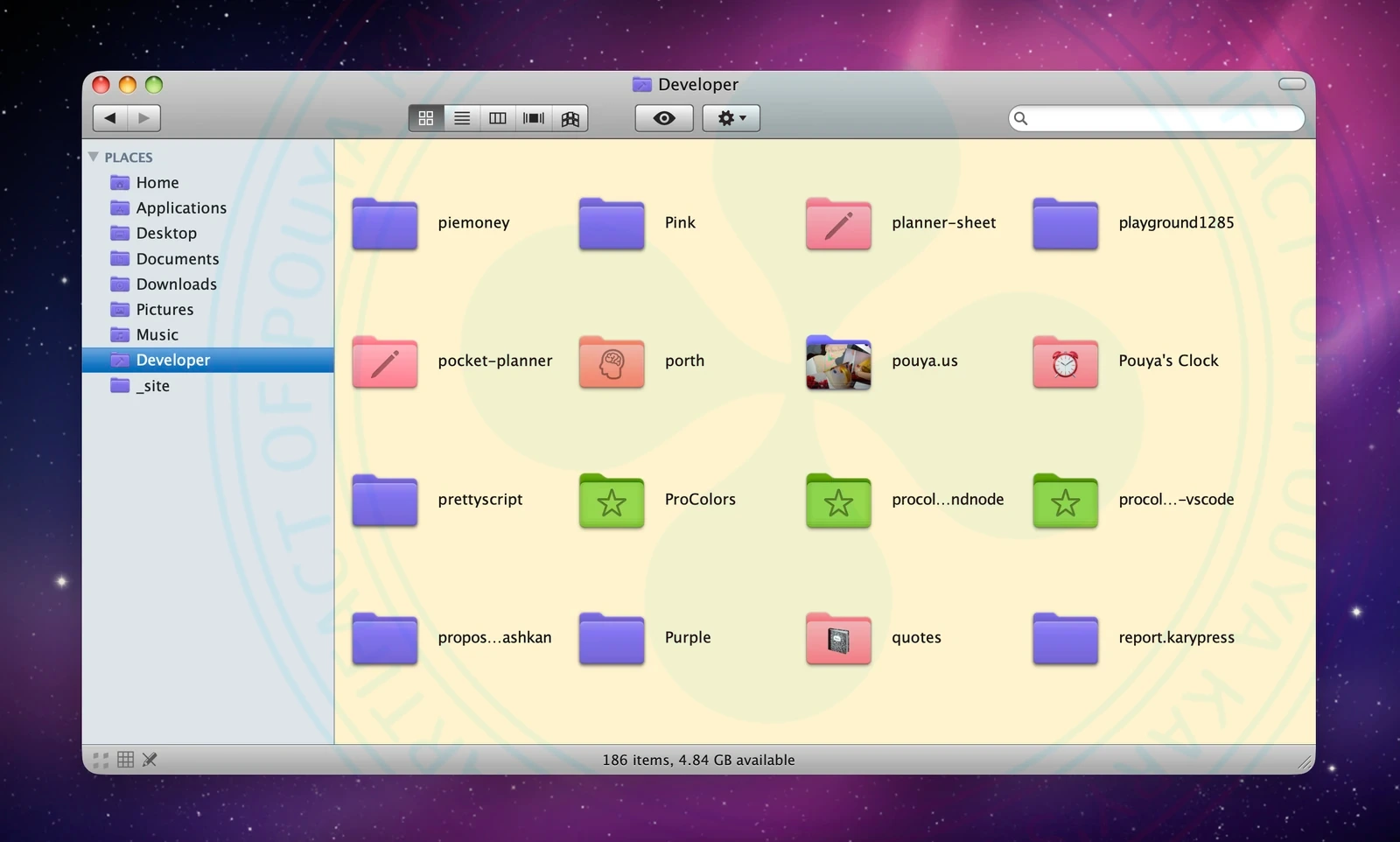
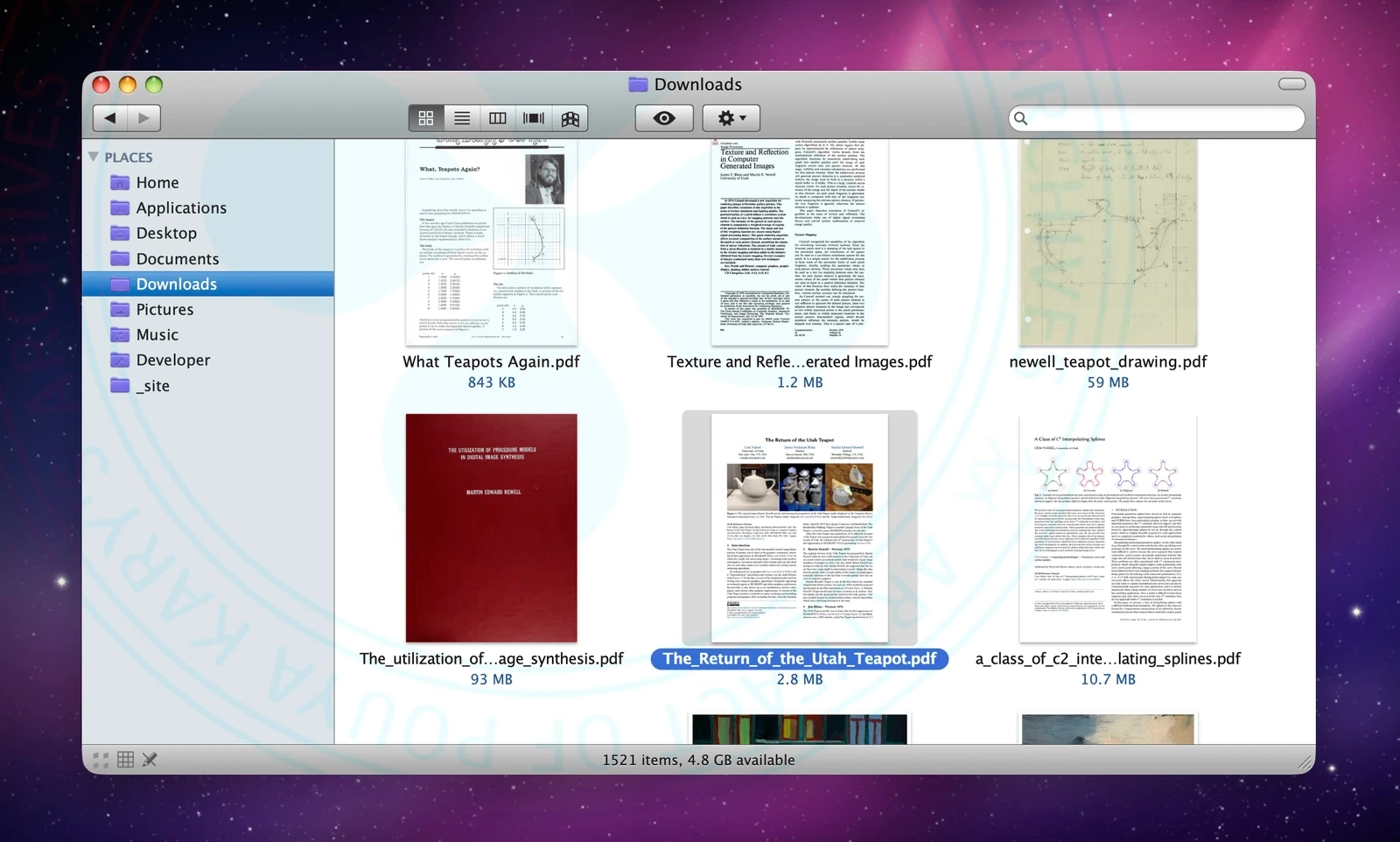
Custom View Options of Finder, in Ferret (2/2)
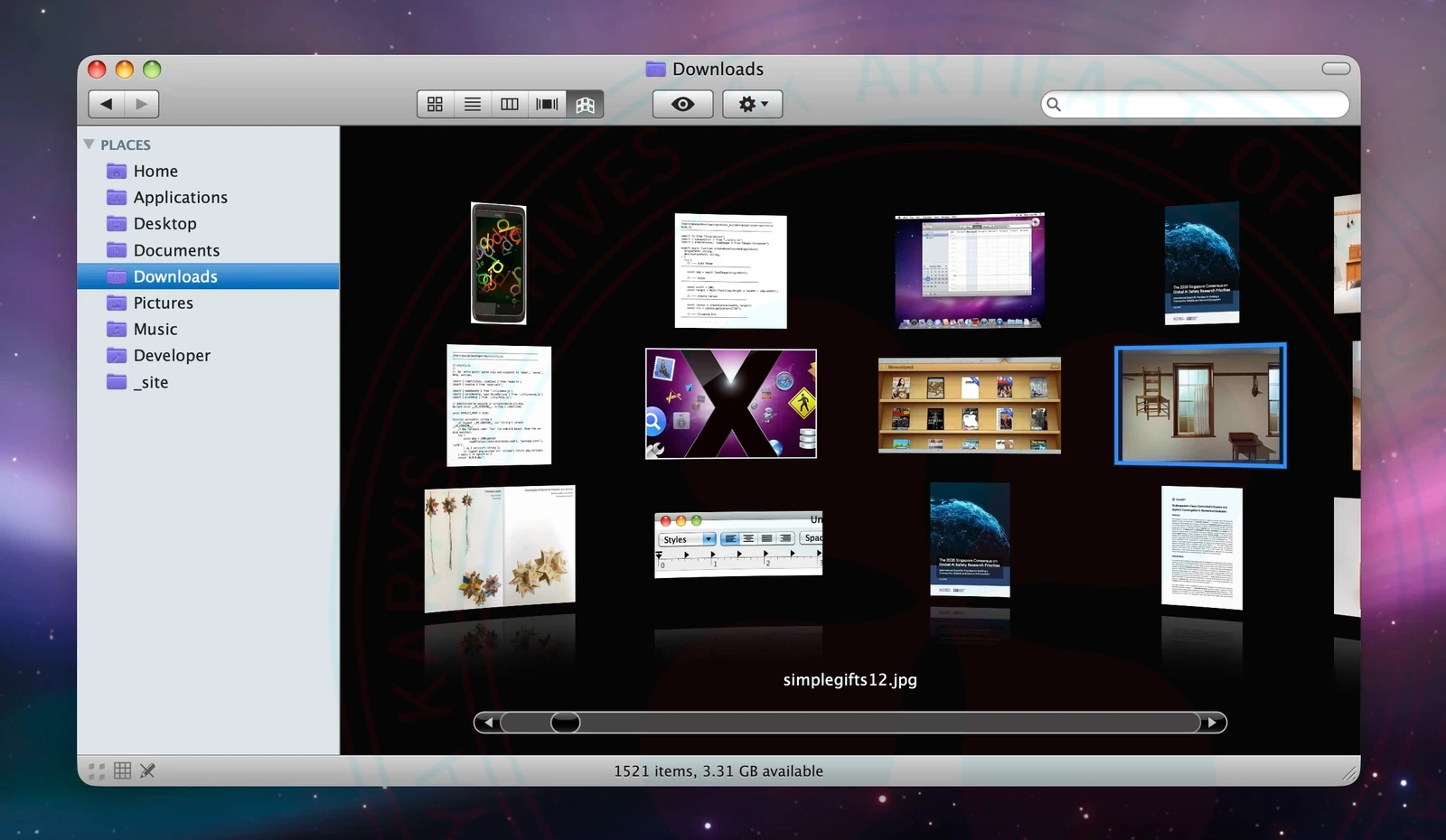
One of the other things was to make Eagle Eye View more at home by giving it the scrollbar of the Coverflow in the Ferret .
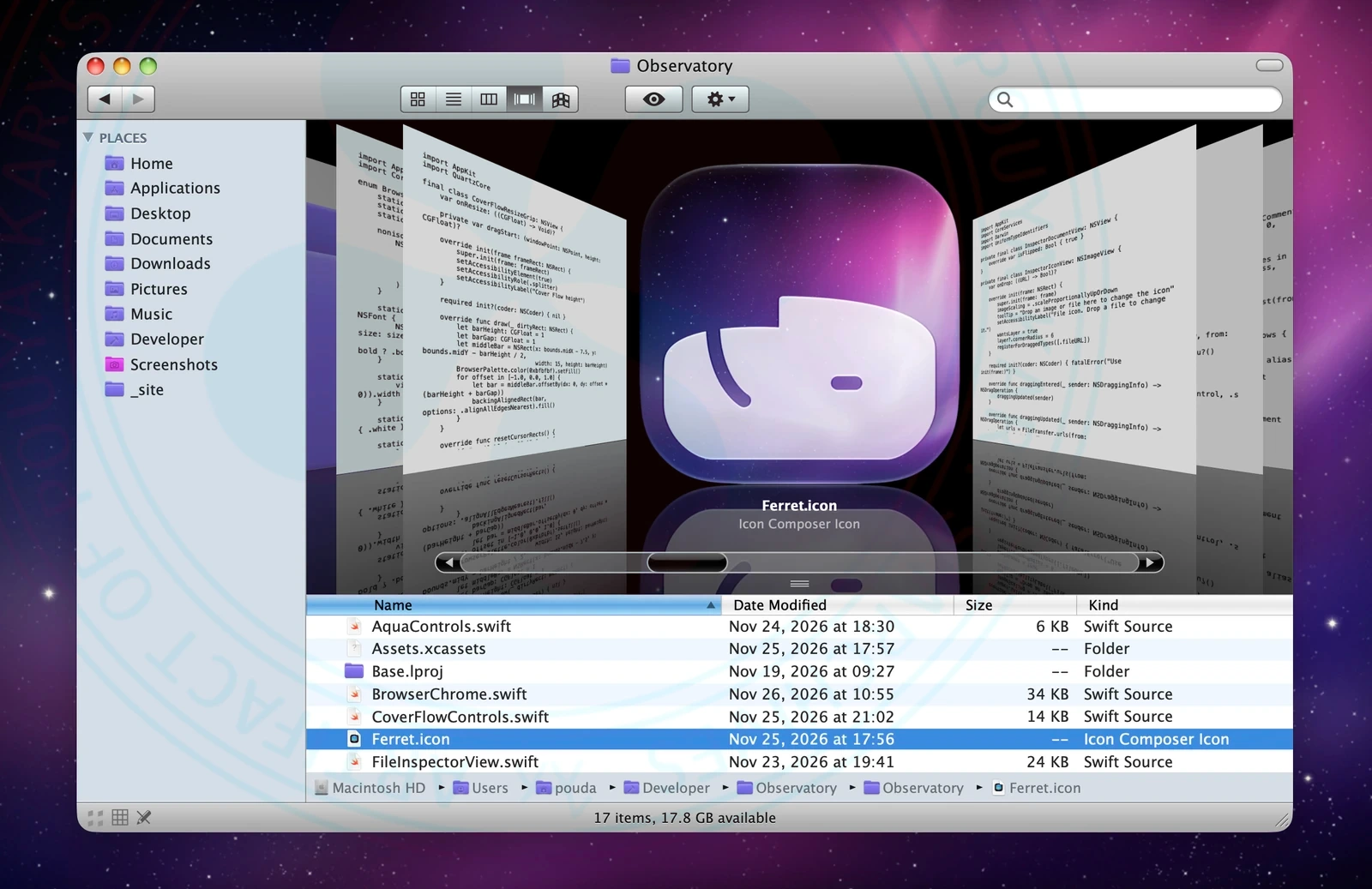
First Idea For Ferret ’s Icon - The happy human of the finder, looking at the beautiful sky of the Snow Leopard.
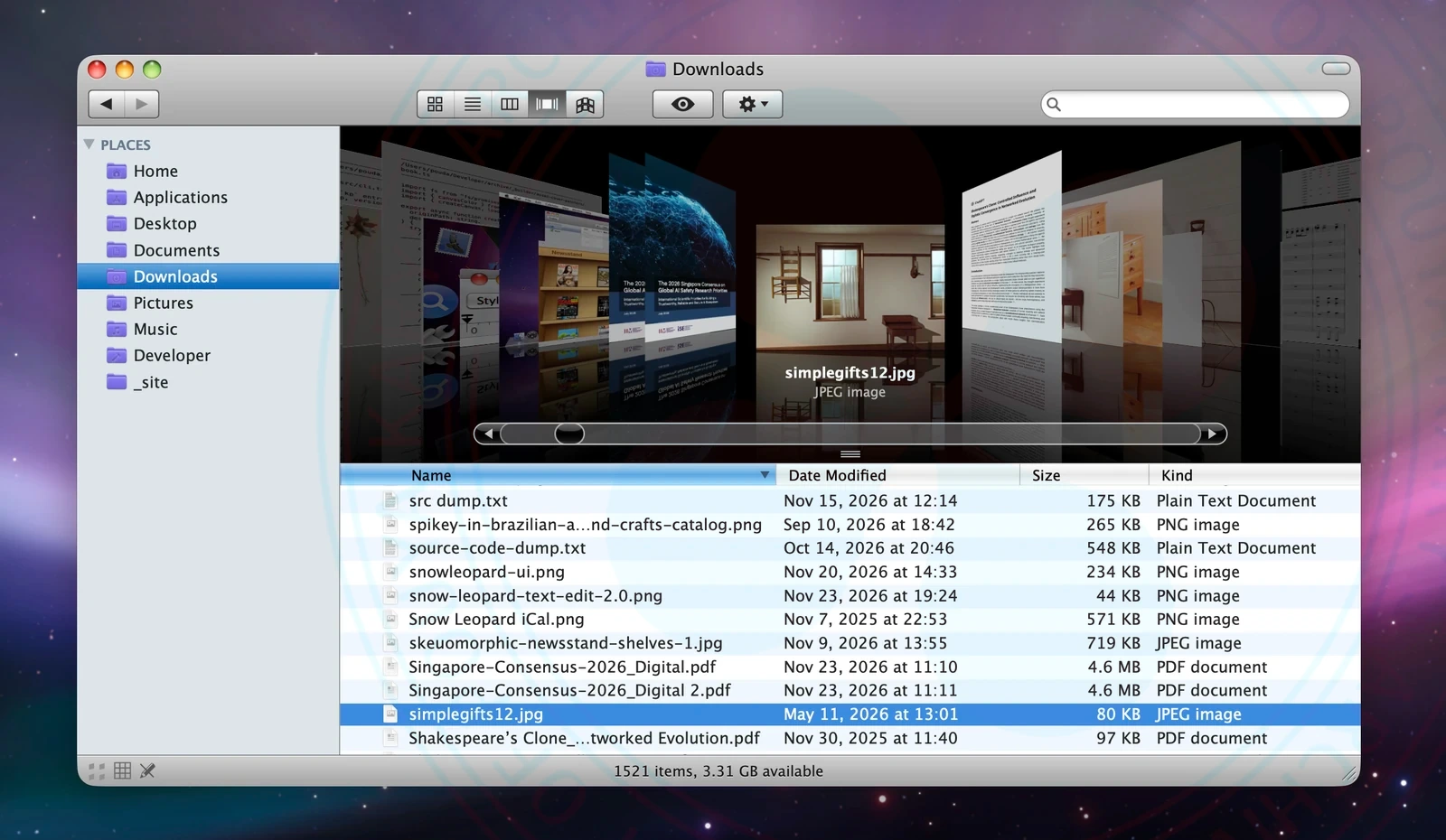
The coverflow in the original Leopard had many touches, like a more dramatic perspective, the tiles coming to front while being focused, and getting slowly darker to the ends. I got them working.
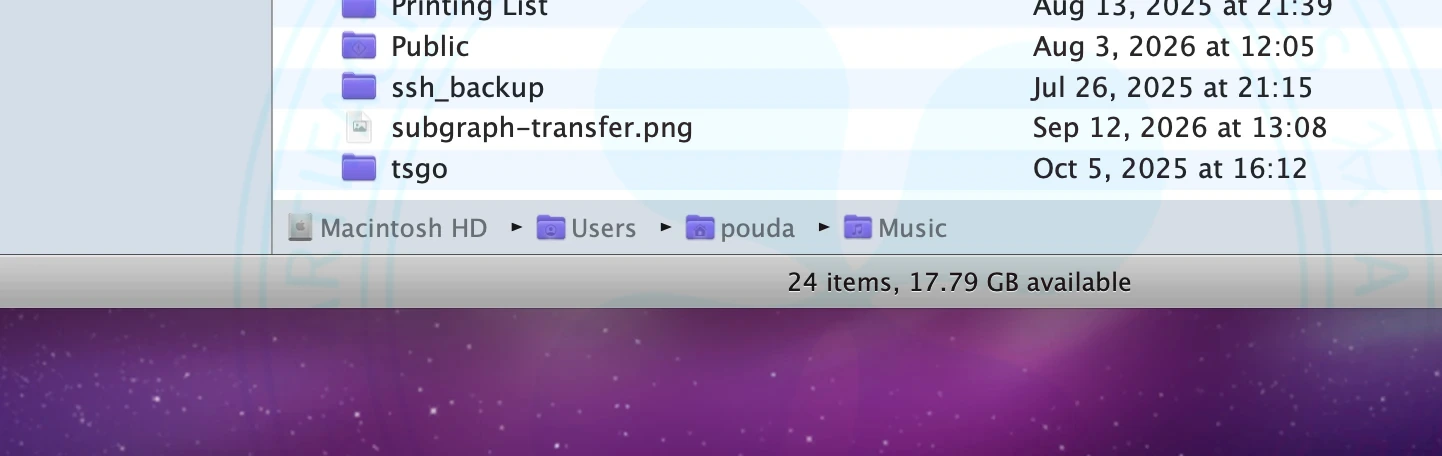
A also added the Path Bar and made Astro go add every option in the menubar of the original to mine.
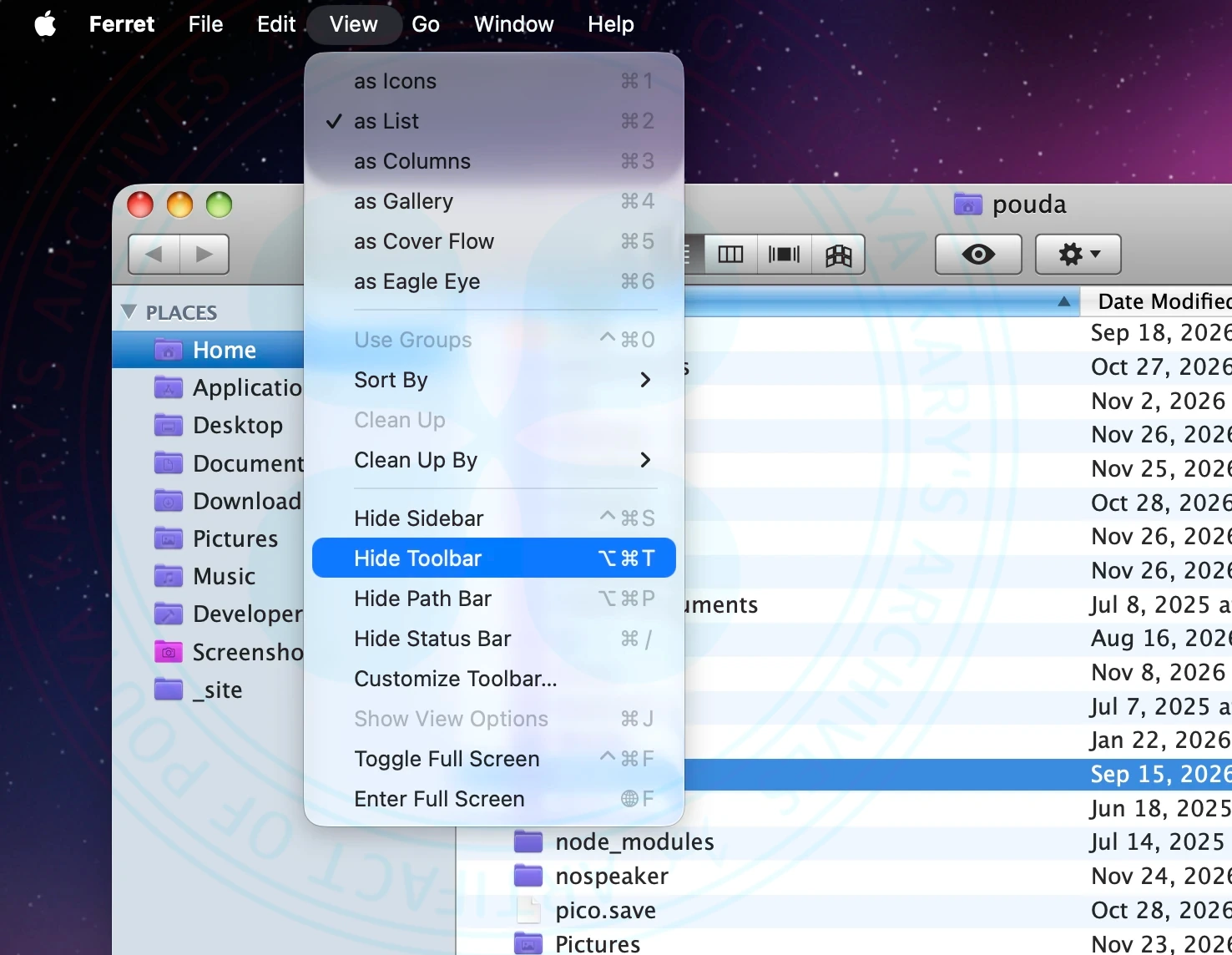
Path Bar in Ferret (2/2)
This day got spent getting many of the icons built using Core Graphics (everything in Ferret is Core Graphics so they look sharp and be algorithmic). I worked to recreate the scrollbar of the Coverflow. It may look like an innocent thing but if you look at the buttons at the ends of it and their flares you see thy are nothing but easy. The last image is a blueprint I made for Astra just to notice the differentiation between the border radious and the flare curve. Many other aspects of the UI was also fixed, like little borders and everything.
Progress on Ferret , Coverflow Scrollbar (2/5)
Progress on Ferret , Coverflow Scrollbar (3/5)
Progress on Ferret , Coverflow Scrollbar (4/5)
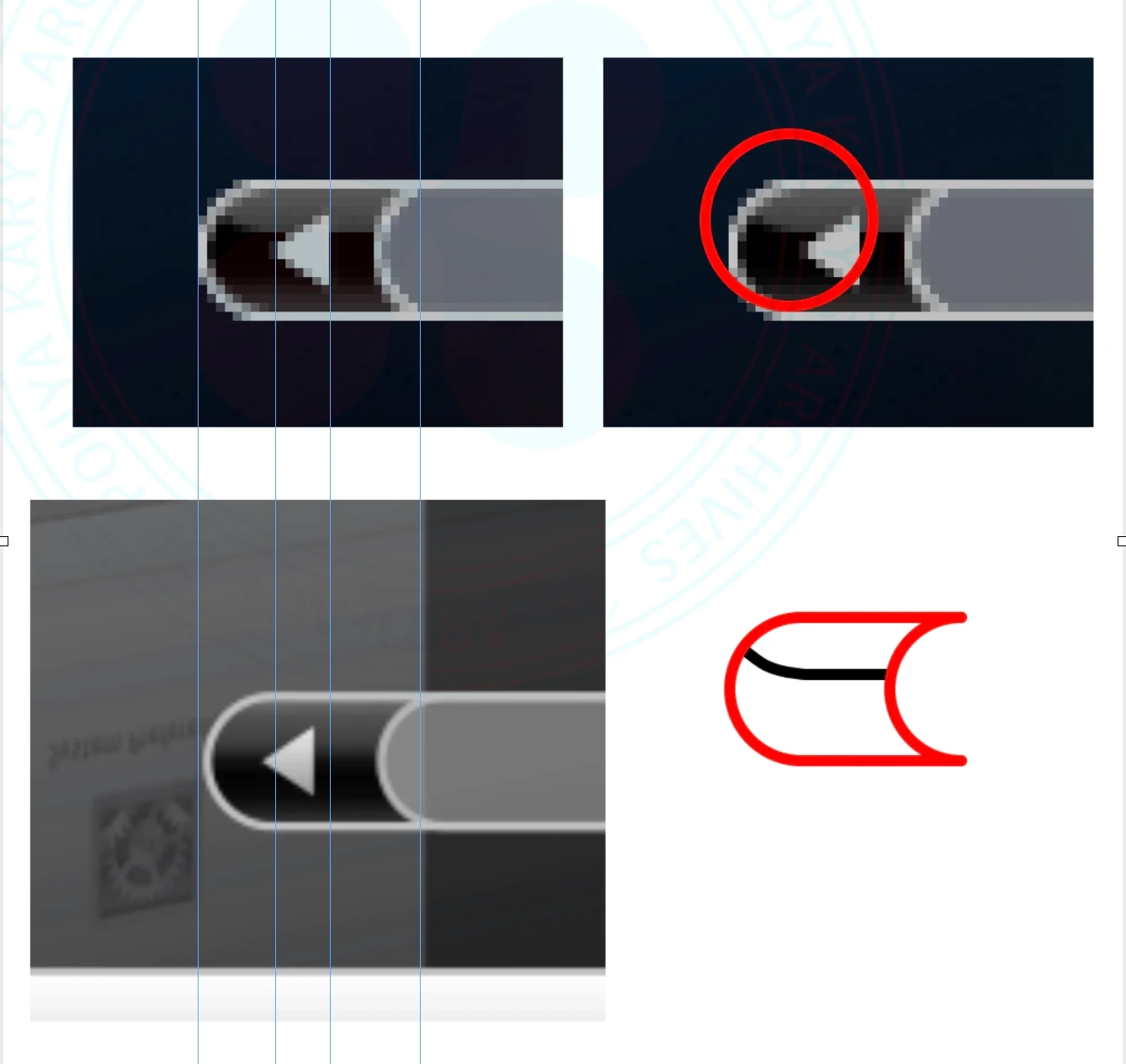
Progress on Ferret , Coverflow Scrollbar (5/5)
We introduce Mem0, a scalable memory-centric architecture that addresses this issue by dynamically extracting, consolidating, and retrieving salient information from ongoing conversations. Building on this foundation, we further propose an enhanced variant that leverages graph-based memory representations to capture complex relational structures among conversational elements. Through comprehensive evaluations on the LOCOMO benchmark, we systematically compare our approaches against six baseline categories: (i) established memory-augmented systems, (ii) retrieval-augmented generation (RAG) with varying chunk sizes and k -values, (iii) a full-context approach that processes the entire conversation history, (iv) an open-source memory solution, (v) a proprietary model system, and (vi) a dedicated memory management platform. Empirical results demonstrate that our methods consistently outperform all existing memory systems across four question categories: single-hop, temporal, multi-hop, and open-domain. Notably, Mem0 achieves 26% relative improvements in the LLM-as-a-Judge metric over OpenAI, while Mem0 with graph memory achieves around 2% higher overall score than the base Mem0 configuration. Beyond accuracy gains, we also markedly reduce computational overhead compared to the full-context approach. In particular, Mem0 attains a 91% lower p95 latency and saves more than 90% token cost, thereby offering a compelling balance between advanced reasoning capabilities and practical deployment constraints.
We introduce Zep, a novel memory layer service for AI agents that outperforms the current state-of-the-art system, MemGPT, in the Deep Memory Retrieval (DMR) benchmark. Additionally, Zep excels in more comprehensive and challenging evaluations than DMR that better reflect real-world enterprise use cases. While existing retrieval-augmented generation (RAG) frameworks for large language model (LLM)-based agents are limited to static document retrieval, enterprise applications demand dynamic knowledge integration from diverse sources including ongoing conversations and business data. Zep addresses this fundamental limitation through its core component Graphiti—a temporally-aware knowledge graph engine that dynamically synthesizes both unstructured conversational data and structured business data while maintaining historical relationships. In the DMR benchmark, which the MemGPT team established as their primary evaluation metric, Zep demonstrates superior performance (94.8% vs 93.4%). Beyond DMR, Zep’s capabilities are further validated through the more challenging LongMemEval benchmark, which better reflects enterprise use cases through complex temporal reasoning tasks. In this evaluation, Zep achieves substantial results with accuracy improvements of up to 18.5% while simultaneously reducing response latency by 90% compared to baseline implementations. These results are particularly pronounced in enterprise-critical tasks such as cross-session information synthesis and long-term context maintenance, demonstrating Zep’s effectiveness for deployment in real-world applications.