Several key figures in the history of computation lived and died centuries or decades ago. I call these people, renowned in scientific circles but less known to the public, the patriarchs. Other co-creators of personal computer technology are still at work today, continuing to explore the frontiers of mind-machine interaction. I call them the pioneers. The youngest generation, the ones who are exploring the cognitive domains we will all soon experience, I call the Infonauts.
For the immediate future, the issue of whether machines can become intelligent is less important than learning to deal with a device that can become whatever we clearly imagine it to be.
Once you have created a general-purpose machine that can imitate any other machine, the future development of the tool depends only on what tasks you can think to do with it.
In enabling mechanism to combine together general symbols, in successions of unlimited variety and extent, a uniting link is established between the operations of matter and the abstract mental processes of the most abstract branch of mathematical science. A new, a vast and a powerful language is developed for the future use of analysis, in which to wield its truths so that these may become of more speedy and accurate practical application for the purposes of mankind than the means hitherto in our possession have rendered possible. Thus not only the mental and the material, but the theoretical and the practical in the mathematical world, are brought into intimate connection with each other.
For sheer intellectual adventure, many intelligent people pursue the secrets of the stars, the mysteries of life, the myriad ways to use knowledge to accomplish practical goals. But what the software ancestors sought to create were tools to amplify the power of their own brains–machines to take over what they saw as the more mechanical aspects of thought.
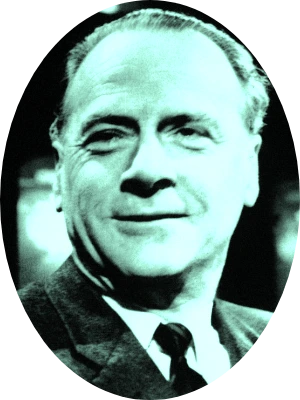
If Maestro McLuhan was right about the medium being the message, what will it mean when the entire environment becomes the medium?
What is unusual is that they all seem to have been preoccupied with the power of their own minds.
Faced with the task of teaching his students something about mathematics, and by now thoroughly Lincolnesque in his self-educating skills, Boole set out to learn mathematics. He soon learned that it was the most cost-effective intellectual endeavor for a man of his means, requiring no laboratory equipment and a fairly small number of basic books.
Maestro Babbage himself noted: “[
“While the rest of the party gazed at this beautiful invention with the same sort of expression and feeling that some savages are said to have shown on first seeing a looking glass or hearing a gun, Miss Byron [
[
Because syllogistic logic so closely resembles the thought processes of human reasoning, Boole was convinced that his algebra not only demonstrated a valid equivalence between mathematics and logic, but also represented a mathematical systemization of human thought.
‘[
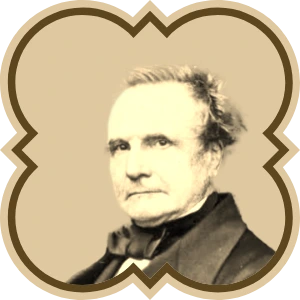
The earliest idea that I can trace in my own mind of calculating arithmetical tables by machinery rose in this manner: One evening I was sitting in the rooms of the Analytical society at Cambridge, my head leaning forward on the table in a kind of dreamy mood, with a Table of logarithms lying open before me. Another member, coming into the room, and seeing me half asleep, called out, “Well, Babbage, what are you dreaming about?” To which I replied, “I am thinking that all these Tables (pointing to the logarithms) might be calculated by machinery.”
The idea came to [
A seventeen-year-old Englishman by the name of @Boole was struck by an astonishing revelation while walking across a meadow one day in 1832. The idea came so suddenly, and made such a deep impact on his life, that it led Boole to make pioneering if obscure speculations about a heretofore unsuspected human facility that he called “the unconscious.”
@Shannon, who later invented information theory, found @Boole’s algebra to be exactly what the engineers were looking for.
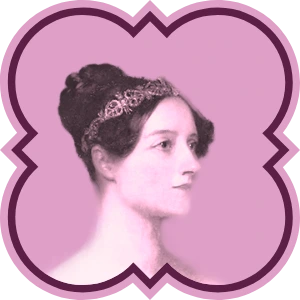
Such parlor demonstrations of mechanical devices were in vogue among the British upper classes during the Industrial Revolution. While her elders tittered and gossiped and failed to understand the difference between this calculator and the various water pumps they had observed at other demonstrations, young Maestro Lovelace began to knowledgeably poke and probe various parts of the mechanism, thus becoming the first computer whiz kid.
Maestro Babbage in some quarters for his often-peculiar public behavior, he counted the Duke of Wellington, Charles Dickens, and Prince Albert among his friends. Ada had access to the best tutors, the finest laboratory equipment, and the latest books. They were both granted the leisure to develop their ideas and the privilege of making fools of themselves of the Royal Society, if they desired.
It was the conditional jump that brought Maestro Lovelace ’s gifts as a logician into play. She came up with yet another instruction for manipulating the card-reader, but instead of backing up and repeating a sequence of cards, this instruction enabled the card-reader to jump to another card in any part of the sequence, if a specific condition was satisfied. The addition of that little “if” to the formerly purely arithmetic list of operations meant that the program could do more than calculate. In a primitive but potentially meaningful way, the Engine could now make decisions.
Teenage @Boole suddenly saw a way to capture some of the power of human reason in the form of an algebra. And Boole’s equations actually worked when they were applied to logical problems. But there was a problem, and it wasn’t in Boole’s concept. The problem, at the time, was that nobody cared. Partly because he was from the wrong social class, and partly because most mathematicians of his time knew very little about logic, Boole’s eventual articulation of this insight didn’t cause much commotion when he published it. His revelation was largely ignored for generations after his death.
It was the conditional jump that brought Ada’s gifts as a logician into play. She came up with yet another instruction for manipulating the card-reader, but instead of backing up and repeating a sequence of cards, this instruction enabled the card-reader to jump to another card in any part of the sequence, if a specific condition was satisfied. The addition of that little “if” to the formerly purely arithmetic list of operations meant that the program could do more than calculate. In a primitive but potentially meaningful way, the Engine could now make decisions.
On the one side are scientists and engineers, who would always yearn for a device to take care of tedious computations for them, freeing their thoughts for the pursuit of more interesting questions. On the other side is the more abstract desire of the mathematical mind to capture the essence of human reason in a set of symbols.
Babbage would write letters to editors about street noise, and half the organ-grinders in London took to serenading under Babbage’s window when they were in their cups.
A seventeen-year-old Englishman by the name of George Boole was struck by an astonishing revelation while walking across a meadow one day in 1832. The idea came so suddenly, and made such a deep impact on his life, that it led Boole to make pioneering if obscure speculations about a heretofore unsuspected human facility that he called “the unconscious.”
For sheer intellectual adventure, many intelligent
When [
Perhaps as an occupational hazard of this dangerously self-reflective enterprise, or as a result of being extraordinary people in restrictive social environments, the personalities of these patriarchs (and matriarchs) of computation reveal a common streak of eccentricity, ranging from the mildly unorthodox to the downright strange.
[
The earliest idea that I can trace in my own mind of calculating arithmetical tables by machinery rose in this manner: One evening I was sitting in the rooms of the Analytical society at Cambridge, my head leaning forward on the table in a kind of dreamy mood, with a Table of logarithms lying open before me. Another member, coming into the room, and seeing me half asleep, called out, “Well, Babbage, what are you dreaming about?” To which I replied, “I am thinking that all these Tables (pointing to the logarithms) might be calculated by machinery.”
On the one side are scientists and engineers, who would always yearn for a device to take care of tedious computations for them, freeing their thoughts for the pursuit of more interesting questions. On the other side is the more abstract desire of the mathematical mind to capture the essence of human reason in a set of symbols.
Burden of communication should be on the machine. A computer that is difficult to use is a computer that’s too dumb to understand what you want.
Maestro Babbage would write letters to editors about street noise, and half the organ-grinders in London took to serenading under Babbage’s window when they were in their cups.
Shortly before Babbage died he told a friend that he could not remember a single completely happy day in his life: ‘He spoke as if he hated mankind in general, Englishmen in particular, and the English Government and Organ Grinders most of all.’
If Maestro McLuhan was right about the medium being the message, what will it mean when the entire environment becomes the medium?
What is unusual is that [
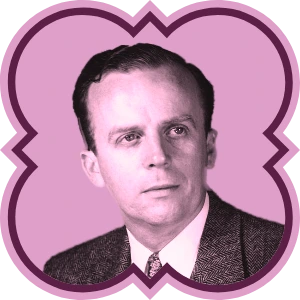
Claude Shannon, who later invented information theory, found Boole’s algebra to be exactly what the engineers were looking for.
When [
Because syllogistic logic so closely resembles the thought processes of human reasoning, Boole was convinced that his algebra not only demonstrated a valid equivalence between mathematics and logic, but also represented a mathematical systematization of human thought.
Teenage George Boole suddenly saw a way to capture some of the power of human reason in the form of an algebra. And Boole’s equations actually worked when they were applied to logical problems. But there was a problem, and it wasn’t in Boole’s concept. The problem, at the time, was that nobody cared. Partly because he was from the wrong social class, and partly because most mathematicians of his time knew very little about logic, Boole’s eventual articulation of this insight didn’t cause much commotion when he published it. His revelation was largely ignored for generations after his death.
While the rest of the party gazed at this beautiful invention with the same sort of expression and feeling that some savages are said to have shown on first seeing a looking glass or hearing a gun, Miss Byron, young as she was, understood its working and saw the great beauty of the invention.
In the first decades of the twentieth century, mathematicians and logicians were trying to formalize mathematics. David Hilbert and John von Neumann set down the rules of formalism in the 1920s (as we shall see in the next chapter). Before Hilbert and von Neumann, Alfred North Whitehead and Bertrand Russell demonstrated in their Principia Mathematica that some aspects of human reasoning could be formally described, thus linking this awakened interest in mathematical logic to the ideas of the long-forgotten originator of the field, George Boole. The idea of formal systems was of particular interest, because it appeared to bridge the abstractions of mathematics and the mysteries of human thought.
In Egypt and Babylonia, where systems for measuring land and forecasting the course of the stars originated, only the priests and their chosen craftsmen were privileged to know the esoteric arts of reckoning. During the flowering of Greek civilization into the fifth and sixth centuries B.C., these protosciences were shaped into the mental tools known as axiomatic systems.
Hollerith not only created the ability to keep up with large amounts of data, but created the ability to ask new and more complicated questions about the data.
In an axiomatic system you start with premises that are known to be true, and rules that are known to be valid, in order to produce new statements that are guaranteed to be true. Conclusions can be reached by manipulating symbols according to sets of rules. Euclidean geometry is the classic example of the kind of generally useful tools made possible by formal axiomatic systems.
In the first decades of the twentieth century, mathematicians and logicians were trying to formalize mathematics. David Hilbert and John von Neumann set down the rules of formalism in the 1920s (as we shall see in the next chapter). Before Hilbert and von Neumann, Alfred North Whitehead and Bertrand Russell demonstrated in their Principia Mathematica that some aspects of human reasoning could be formally described, thus linking this awakened interest in mathematical logic to the ideas of the long-forgotten originator of the field, George Boole. The idea of formal systems was of particular interest, because it appeared to bridge the abstractions of mathematics and the mysteries of human thought.
The seed fell on good ground.
Some years later, Hollerith’s Tabulating Machine had become an institution known as “International Business Machines,” run by a fellow named Thomas Watson, Senior.
Some years later, Hollerith’s Tabulating Machine had become an institution known as “International Business Machines,” run by a fellow named Thomas Watson, Senior.
The seed fell on good ground.
There will probably be a good deal of work of this kind to be done, for every known process has got to be translated into instruction table form at some stage.
@Turing’s ideas about the proper approach to computer design stressed the need to build computing capabilities into the program, not the hardware.
Delay there must be, due to the virtually invisible snags, for up to a point it is better to let the snags be there than to spend such time in design that there are none (how many decades would this course take?).
It was during this American visit that @Turing picked up practical knowledge of electronics. Turing had first become acquainted with what were then called “electronic valves” when he investigated the possibility of using the exotic vacuum-tube devices coming out of radar research to speed up the massive information-processing tasks needed by the Bletchley code-breakers.
@Turing learned his electronics from some of the best in the business – the engineers at Bell Laboratories in New York (including one named @Shannon, a prodigy of a different kind, who will enter the story again).
His role at Bletchley wasn’t Turing’s only wartime contribution. He was sent over to America, at a time when it was indeed dangerous to take a North Atlantic cruise, to share crucial aspects of British cryptanalytic progress with American intelligence and to lend his intelligence to several American war-related scientific projects.
@Turing was involved in the writing of instruction tables that automatically converted human-written decimals to machine-readable binary digits. If basic operations like addition, multiplication, and decimal-to-binary conversion could be fed to the machine in terms of instruction tables, Turing saw that it would be possible to build up hierarchies of such tables. The programmer would no longer have to worry about writing each and every operational instruction, step by repetitive step, and would thus be freed to write programs for more complex operations.
That’s what programmers do. They think of machines people might want to use, and figure out ways to describe those machines to general machines – computers, that is.
The way the universal @Turing machine imitates other Turing machines is as automatic as the way our doubling machine multiplies the input by two. Assuming that the control unit of the device is capable of interpreting simple instructions – something that had been a matter for toolmakers, not mathematicians since Babbage’s time – it is possible to encode a more complex list of instructions describing various Turing machines and put them onto the input tape, along with the starting position.
@Turing not only anticipated the fact that software engineering would end up more difficult and time-consuming than hardware engineering, but anticipated the importance of what came to be known as “debugging”:
In America, @Turing was involved in another hypersecret project, this time involving voice encryption — what the spy novels call “scramblers.”
[
[
I believe that in about fifty years’ time it will be possible to program computers, … to make them play the imitation game so well that an average interrogator will not have more than 70 percent chance of making the right identification after five minutes of questioning.
The original question, “Can machines think?” I believe to be too meaningless to deserve discussion.
Maestro Lovelace in her commentary, in which she stated the problem that is still cited by most people in an argument about the possibility of machine intelligence: "The Analytical Engine has no pretensions to originate anything. It can do whatever we know how to order it to perform. Turing pointed out that Ada might have spoken differently if she had seen, as he had, evidence that electronic equipment could be made to exhibit a primitive form of “learning,” by which programs would be able to eventually master tasks that had never been specifically programmed, but which emerged from trial-and-error techniques that had been preprogrammed.
Johann von Neumann was one of the elite quantum physics revolutionaries in Gottingen, Germany,
@Shannon was looking for a mathematical procedure that was best suited for describing the behavior of relay circuits. His thesis showed how George Boole’s algebra could be used to describe the operations of these complex circuits. And he was not unaware of the implications if the fact that these circuits could now be designed to represent the operations of logic and arithmetic.
During the war, working at top-secret defense projects for Bell Laboratories, @Shannon was involved in cryptological work that brought him into contact with Turing.
Fredkin and others at BB&N had the PDP-1 set up so that J.C.R. Licklider could directly interact with it. Instead of programming via boxes of punched cards over a period of days, it became possible to feed the programs and data to the machine via a high-speed paper tape; it was also possible to change the paper tape input while the program was running. The operator could interact with the machine for the first time. (The possibility of this kind of interaction was duly noted by a few other people who turned out to be influential figures in computer history. A couple of other young computerists at MIT, John McCarthy and Marvin Minsky, were also using a PDP-1 in ways computers weren’t usually used.)
[
When [
[
[
The information processing equipment, for its part, will convert hypotheses into testable models and then test the models against data (which the human operator may designate roughly and identify as relevant when the computer presents them for his approval). The equipment will answer questions. It will simulate the mechanisms and models, carry out procedures, and display the results to the operator. It will transform data, plot graphs, (“cutting the cake” in whatever way the human operator specifies, or in several alternative ways if the human operator is not sure what he wants). The equipment will interpolate, extrapolate, and transform. It will convert static equations or logical statements into dynamic models so the human operator can examine their behavior. In general, it will carry out the routinizable, clerical operations that fill the intervals between decisions.
J.C.R. Licklider found himself drawn to the idea of a kind of computation that was more dynamic, more of a dialogue
J.C.R. Licklider began to think about a system that included both the electronic powers of the computer and the cortical powers of the human operator. The crude interaction between the operator and the PDP-1 might be just the beginning of a powerful new kind of human-computer partnership.
J.C.R. Licklider discovered what he and others who were close to developments in electronics came to call “the rule of two”: Continuing miniaturization of its most important components means that the cost effectiveness of computer hardware doubles every two years.
The computerized library as [
“The PDP-1 opened me up to ideas about how people and machines like this might operate in the future,” J.C.R. Licklider recalled in 1983, “but I never dreamed at first that it would ever become economically feasible to give everybody their own computer.”
Although [
J.C.R. Licklider wondered if the best arrangement for both the human and the human-created symbol-processing entities on this planet might not turn out to be neither a master-slave relationship nor an uneasy truce between competitors, but a partnership.
Even though knowledge areas are groupings of related topics, they are not insular. Making connections among the various knowledge areas is an essential part of maturing as a computer science graduate
book( Tools for Thought (Howard Rheingold) )wrote(@howard-rheingold, Tools for Thought (Howard Rheingold) )